
Hungary eyes 'better cooperation' with EU in funds row: minister / Photo: © AFP/File

 Rescuers search for missing in China storms after 100,000 flee

 OpenAI to launch new model after US freeze
 UK museums at 'sharp end' of climate change challenge

 In Mauritania, Imraguen people's desert-ocean paradise under threat

 Iraq's holy cities host funeral processions for Khamenei

 Rescuers search for missing in China storms after 100,000 evacuated
 Ex-Australia cricketer MacGill loses appeal against cocaine conviction

 Oil prices extend rally as US strikes on Iran revive geopolitical fears

 Iraq's holy cities to host funeral processions for Khamenei

 In Venezuela's quake ruins, a baby is born

 What to know about the total solar eclipse due in August

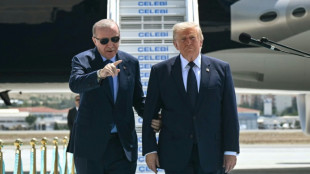 Trump, NATO allies to begin key talks at Turkey summit

 Former Real Madrid coach Arbeloa named Fulham manager
 Messi inspires Argentina great escape over Egypt, Swiss advance

 US strikes Iran after Hormuz attacks, Tehran threatens response
 Djokovic wins five-hour epic to earn Sinner showdown at Wimbledon

 US strikes Iran after Hormuz tanker attacks: military

 Messi 'didn't want to go home' as Argentina comeback stuns Egypt

 Netflix strikes deals in short-form video push

 The height factor: how a small building survived Venezuela's quakes

 Egypt 'cheated' in controversial World Cup exit to Messi's Argentina, says Hassan

 Global AI industry falls short on safety, think tank warns

 'History made': Egyptian pride despite World Cup heartbreak
 How rescuers carried out 180-hour 'miracle' amid Venezuela's ruins

 Victorious Belgian footballers troll Trump with YMCA dance

Hungary is hoping "better cooperation" with the European Commission will unlock billions of euros (dollars) of held-up funds, according to the minister in charge of the negotiations, as its economy struggles.
Brussels has so far refused to approve post-Covid recovery funds for Budapest, citing concerns over rule of law and alleged corruption, making Hungary the only EU member not yet to have received the green light.
"There are obviously areas of disagreement between Budapest and the European Union at a high political level, but I think much better cooperation is possible in day-to-day exchanges," Tibor Navracsics, a minister in Prime Minister Viktor Orban's cabinet, told AFP in an interview this week.
Orban, who has ruled Hungary since 2010 and was re-elected in April by a landslide, has frequently clashed with Brussels over issues including migration and LGBTQ rights.
In the latest row, the nationalist premier last week said Europe had "shot itself in the lungs" with sanctions targeting Russia over its invasion of Ukraine, while his foreign minister travelled to Moscow on Thursday to discuss buying more gas despite EU-Russia tensions.
- 'Indispensable' -
Better communication "is indispensable for reaching an agreement on the funds", which are "very important" for Hungary, said Navracsics, who is regarded as a moderate in Orban's cabinet.
The 56-year-old said that work was "continuing" to find a compromise, but gave no timeframe for when 5.8 billion euros ($5.9 billion) in funding might be unlocked.
Like the rest of Europe, Hungary is struggling with decades-high inflation, despite the government introducing price caps on a range of different products.
Thousands took to the streets last week to protest against a change in the tax law which the government says is needed for its budget.
The central European nation of nearly 10 million people, which is largely dependent on Russian oil and gas, last week declared a "state of danger" over the energy crisis.
The government "needs the money. There is huge fiscal pressure," Gabor Gyori, an analyst with Budapest-based think tank Policy Solutions, told AFP.
"The truth is that Hungary is very dependent on both: EU funds and Russian energy. It is a genuinely tricky situation for the Orban government."
Hungarian Justice Minister Judit Varga this week presented two laws to improve transparency in the legislative process and better fight corruption.
These efforts put a deal with the EU Commission "within reach", Varga said on Facebook.
- 'Jekyll and Hyde' -
But critics, like Gyori, are doubtful that Orban will make "genuine concessions on fighting corruption".
"This is his dilemma. What is the minimum he can offer to get aid? The problem is very systemic and I don't see major movements," he said.
"It's like Dr Jekyll and Mr Hyde," he added, pointing at the government's "dual communication" -- on one hand seeking to appease Brussels, but on the other hand taking actions sure to cause friction.
At the same time, the EU is under pressure not to let Hungary off easily, Gyori said.
In a separate row in April, Brussels triggered the so-called "conditionality" mechanism -- never used previously -- against Hungary over concerns about the misuse of EU funds by Orban's government.
The two issues "are closely linked", Navracsics said, adding it was important "to strengthen the Hungarian rule of law so that there are no more doubts that Hungary is... a democracy like the EU members".
L.Janezki--BTB