Crime wave propels hard-right candidate toward Chilean presidency / Photo: © AFP

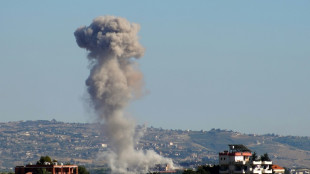
 Israel strikes south Lebanon after warning to several areas

 Chwalinska bidding to take final step at French Open against Andreeva
 Irish slump drags eurozone economy into red in first quarter
 England's Robinson takes five wickets as New Zealand all out for 113

 Spanish PM denies links to plot to disrupt probes into allies

 Tuvalu says fossil fuel holdings revealed by AFP 'not a good look'

 France's data centre ambitions bump up against rural fears

 Disgraced ex-prince Andrew sublet royal cottages, UK auditors reveal

 Pro-apartheid past of former boss roils Dutch climate group

 Ireland head coach Farrell extends contract until 2031
 Hurricanes hammer hapless Brumbies to make Super Rugby semi-finals
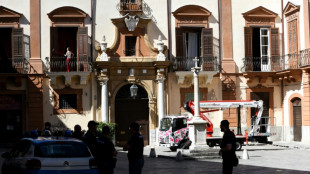 Sicily braces for post-wedding blowout of Dua Lipa, Callum Turner

 Japan change World Cup training sites in Mexico over conditions
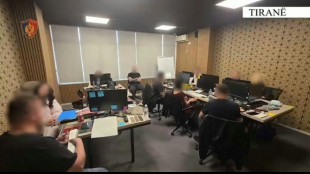 Crypto scammers prey on French victims from Albania

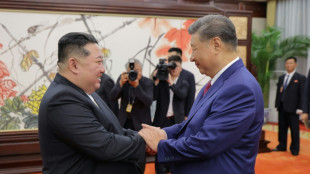 China's Xi to visit North Korea next week

 Irish racing great O'Brien bids to make Epsom Derby history
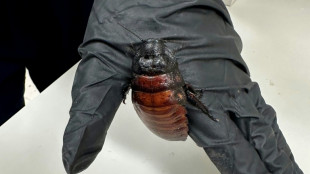 Australia seizes 100,000 cockroaches in bug-breeder bust

 Asian stocks take another hit from AI, Mideast worries

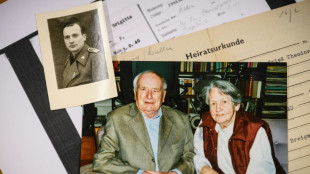 Nazi party records released online shatter German family myths

 US allying itself with Colombian 'narco-traffickers,' Petro accuses
 Putin to confront weak economy at 'Russian Davos', under threat of Ukrainian drones

 Thousands protest in Albania against Kushner real estate project

 US imposes sanctions on Cuban president, Castro family members
 Trump confirms mass rally, scrapping US 250th concerts

 Wemby counts on 'normal' Spurs to bounce back in NBA Finals

Anxiety over immigration and violent crime has carried Jose Antonio Kast to the steps of Chile's presidential palace.
On Sunday, he is tipped to be elected the country's first hard-right leader since dictator Augusto Pinochet three decades ago.
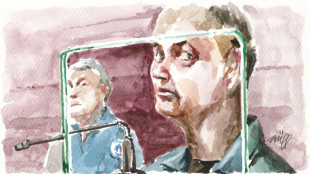
From behind bulletproof glass, Kast has promised to deport hundreds of thousands of illegal migrants, seal the northern border, and declare a state of emergency.
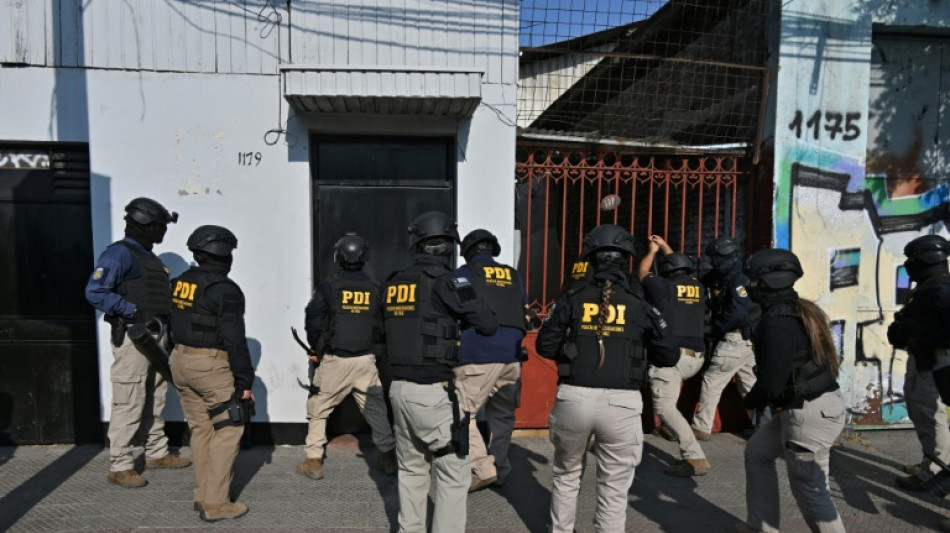
That resonates with Chileans who blame foreign gangs for a surge in organized crime -- a challenge that police tried to tackle in a series of synchronized raids across central Santiago on Thursday.
Shortly after 6:00 pm (2300 GMT), dozens of masked and armed police burst from a 15-strong convoy of unmarked vehicles.
Bang! Bang! Bang! They begin pulverizing the doors of nine suspected drug houses.
This is "Operation Colombia," the result of a six-month probe into a foreign drug-dealing ring by Chile's equivalent of the FBI -- the Investigative Police.
Tasked with policing what was once the safest country in Latin America, the force now finds itself on the frontline of a fierce battle against organized crime.
"I'm about to complete 35 years of service," Erick Menay, the head of the force's organised crime unit, told AFP.
Over that time, he said, the job has been transformed by an influx of sophisticated and ultra-violent gangs from Peru, Ecuador, Colombia, and most notably Venezuela, in the form of Tren de Aragua.
Their turf battles "have brought a lot of violence, they have brought a lot of gunshots, a lot of victims and a lot of insecurity," he said.
In the past 25 years, violence linked to organized crime has increased by about 40 percent, according to official statistics.
The murder rate has increased about 50 percent, according to UN data.
Polls show a majority of Chileans now say crime is the country's most serious issue.
- State of emergency -
"The country is falling to pieces," according to Kast, a three-time presidential hopeful and father of nine.
Enough Chileans agree with him that he is well ahead of leftist Jeannette Jara in the polls for Sunday's presidential election runoff.
Yet data and testimony from the frontlines complicate Kast's notion that the country is in deep crisis.
Those involved in the police and other security services say that while crime increased and became more violent, it has grown from a very low base.
Although a recent government survey showed 88 percent of Chileans think crime has increased in the last year, the percentage of the population who were victims of violent crime was just under six percent.
Police statistics show the rate of violent crimes has stabilized and is actually falling in some cases.
Hassel Barrientos Hermosilla, the head of the Investigative Police's anti-kidnapping and extortion unit, told AFP that it is rare for Chileans to be the target of those specific high-profile crimes, despite public perception.
He explained that Peruvian gangs tend to target Peruvians and Venezuelan gangs target Venezuelans, using pressure on the victims' families back home to get ransoms or protection payments.
Fear has grown much faster than the crime rate, according to ex-army general Christian Bolivar, who runs municipal security for Las Condes, a rich suburb of Santiago.
"It is evident that perception, what people feel with respect to security, is very distant from reality," he told AFP.
With 450 people at his command and a modern command center to monitor security camera footage from across a swath of eastern Santiago, he explained one of his biggest tasks is to bring this fear under control.
As people are overly afraid of being in the street, streets become emptier and therefore less secure -- a vicious cycle of anxiety.
"Perceptions are the hardest to address," he said. "We can have mechanisms for control, oversight, and fighting crime.
"But it's much more difficult to reach people's minds, trying to influence them so they understand that the security situation isn't as critical as it's being portrayed or perceived."
There is some evidence that the media, many of which carry live coverage of even minor drug busts, may be stoking people's fears.
A recent UDP-Feedback poll showed that Chilean television viewers were 25 percent more likely to say that violent crime was a problem than newspaper readers.
During a raid in a Santiago neighbourhood known as "Little Caracas," police detained two young women and a teenage boy, seizing a few kilograms of suspected cocaine and other drugs.
In most countries, it would be a relatively small bust -- but several camera crews arrived on the scene, ready to broadcast the arrests live.
D.Schlegel--VB