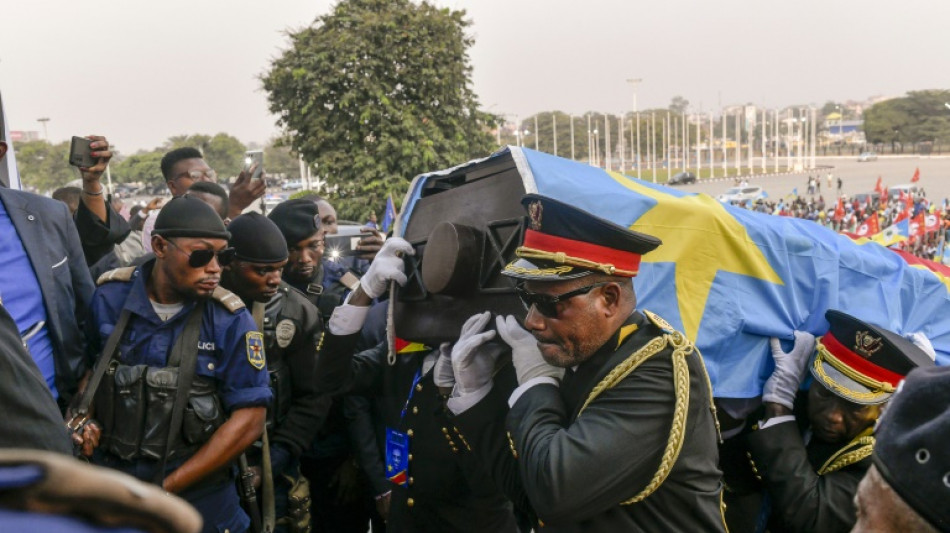
DR Congo inters Lumumba remains after nationwide pilgrimage / Photo: © AFP

 Bayeux tapestry to arrive in London in secret, high-stakes operation
 Messi World Cup magic masks familiar penalty frailty

 Trump lashes out at allies as key NATO summit begins
 Swiss party into the night after reaching World Cup quarter-finals
 Trump says Iran ceasefire 'over' after fighting flares
 Thai beer dynasty mother drops 'ungrateful child' case against son
 France v Morocco rematch as World Cup quarter-finals get under way

 Modi visits Australia for minerals talks and rockstar welcome
 Sensors, early starts: how Spain keeps working when heat hits
 Kenya Rastafarians hope for freedom to smoke
 Pacific nation of Tuvalu condemns Chinese missile launch into Pacific
 How a viral post sparked India's Gen-Z protest
 Cambodia wants to bring tigers back, but should it?
 Chinese repairwomen smash stereotypes with power tools
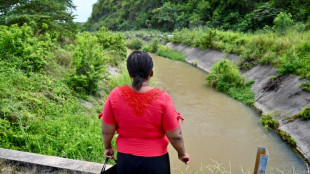 Ecuador's Death Canal: watery grave for victims of gang violence
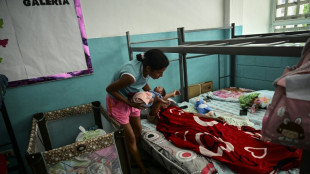
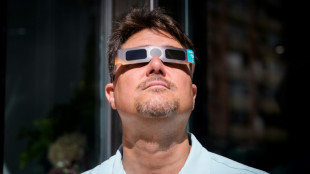 'Unique event': Solar eclipse fever fills empty Spain

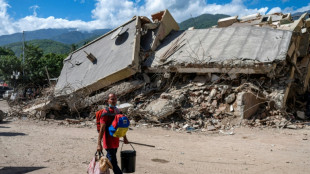 Venezuela says Caracas airport to reopen to commercial flights 'soon as possible'
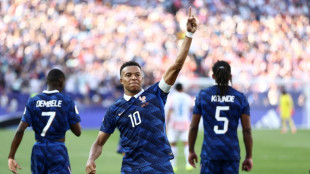 World Cup: Eight teams remain in the hunt for glory
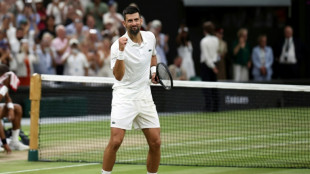 'A nice surprise': Marathon man Djokovic revels in Wimbledon epic
 Switzerland beat Colombia on penalties to reach World Cup quarter-finals
 Djokovic survives Wimbledon's longest quarter-final to book Sinner blockbuster
 'Flunked': US soccer seeks answers as World Cup dream shattered
 Mbappe revels in captain's role for France at World Cup
 Iyer's India 'atrocious' in record 125-run T20 defeat by England
 Rain hands West Indies series win over Sri Lanka
The scant remains of DR Congo's fiery independence hero Patrice Lumumba were interred on Thursday after a nine-day homage that stirred traumatic memories and national pride.
"Sleep in peace now," President Felix Tshisekedi said.
Hailing Lumumba as "our national hero," Tshisekedi declared: "May the land of our ancestors be sweet and mild to you."
A single gold-crowned tooth, returned by Belgium, is all that remains of the young nationalist.
He was murdered in January 1961 at the age of 35, just months after becoming Congo's first post-colonial prime minister.
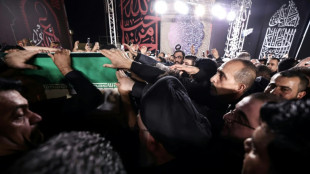
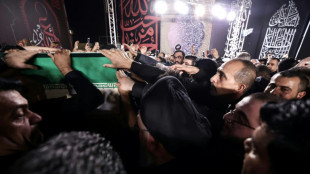
In a solemn ceremony coinciding with the country's 62nd anniversary, the remains were interred in a mausoleum beneath a statue of Lumumba on an avenue in the capital Kinshasa that also bears his name.
Didier Shonda, 24, told AFP that he had come from Lumumba's home region of Sankuru for the ceremony.
With the return of the remains "his spirit will no longer wander," said Shonda.
"We now know where to come to replenish our resources to totally free our country and the youth of Africa."
- Radical -
Lumumba was among the vanguard of pan-African leaders who led the charge to end colonialism in the late 1950s.
He rose to prominence in 1958 when he launched a political party, the Congolese National Movement (MNC), which called for independence and a secular Congolese state.
He stunned Belgium with a speech on independence day on June 30, 1960 that was attended by the country's monarch, King Baudouin.
In it, he accused the exiting colonial masters of racism and "humiliating slavery."
"We experienced the slurs, the insults, the beatings that we had to undergo morning, noon and evening, because we were negroes," he declared.
Just 75 days later, Lumumba was forced out by a coup fomented with the help of Belgium and the CIA, which also opposed the support he had requested from the Soviet Union.
In January 1961, Lumumba was handed over to the authorities in mineral-rich southeast Katanga province, which had seceded from the fledgling nation months earlier with Belgium's support.
He was shot dead and his body was dissolved in acid, but a Belgian police officer involved in the killing kept one of his teeth as a trophy.
In 2016, the Belgian authorities seized the relic from his daughter.
After a long campaign by Lumumba's family, Belgium returned the tooth on June 20, a move that followed a visit of reconciliation by Baudouin's nephew and successor, King Philippe.
- Pilgrimage -
The remains were taken to Lumumba's home area of Sankuru in the centre of the country, to his political stronghold of Kisangani in the northeast and finally to the place where he was murdered before being flown to Kinshasa.
Five former prime ministers joined a funeral vigil on Thursday alongside current government chief Jean-Michel Sama Lukonde.
"The figure of Patrice Lumumba is a prime symbol of national unity, transcending political differences," said Evariste Mabi, a premier in the 1980s under Lumumba's nemesis, dictator Mobutu Sese Seko.
"(He) embodies the people's successful struggle for freedom."
Belgium's rule over what is now the Democratic Republic of Congo was one of the harshest imposed by the European powers that ruled most of Africa in the late 19th and 20th centuries.
King Leopold II governed the vast country -- a swathe of central Africa the size of continental western Europe -- as his personal property between 1885 and 1908, before it became a Belgian colony.
Historians say millions were killed, mutilated or died of disease as they were forced to collect rubber under his rule. The land was also pillaged for its mineral wealth, timber and ivory.
Tshisekedi thanked Lumumba's family for their campaign but also singled out "the Belgian people and authorities" for praise.
"They have helped the restoration of truth... after years of denial," he said.
"It's only after telling the truth, after establishing responsibilities, that we, Congolese and Belgians, can jointly enter the phase of forgiveness, justice and genuine and final reconciliation."
C.Meier--BTB