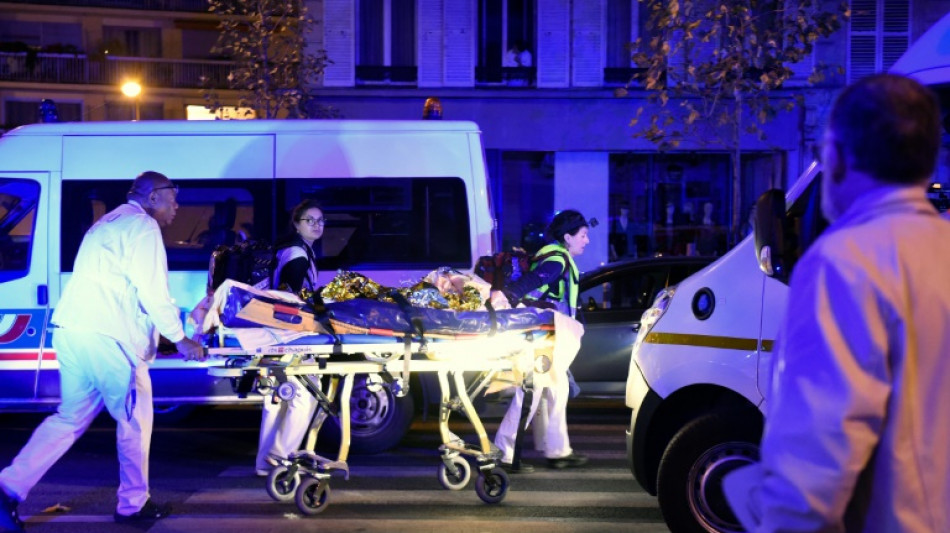
Maximum life term for sole surviving Paris 2015 attacker / Photo: © AFP/File

 Bayeux tapestry to arrive in London in secret, high-stakes operation
 Messi World Cup magic masks familiar penalty frailty

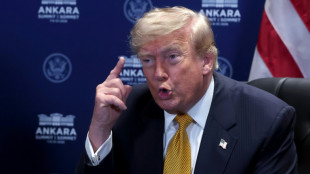 Trump lashes out at allies as key NATO summit begins
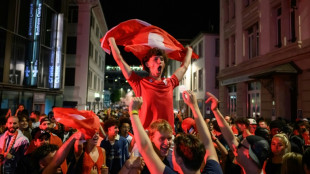 Swiss party into the night after reaching World Cup quarter-finals

 Trump says Iran ceasefire 'over' after fighting flares
 Thai beer dynasty mother drops 'ungrateful child' case against son

 France v Morocco rematch as World Cup quarter-finals get under way

 Modi visits Australia for minerals talks and rockstar welcome
 Sensors, early starts: how Spain keeps working when heat hits
 Kenya Rastafarians hope for freedom to smoke
 Pacific nation of Tuvalu condemns Chinese missile launch into Pacific
 How a viral post sparked India's Gen-Z protest
 Cambodia wants to bring tigers back, but should it?
 Chinese repairwomen smash stereotypes with power tools
 Ecuador's Death Canal: watery grave for victims of gang violence
 'Unique event': Solar eclipse fever fills empty Spain

 Venezuela says Caracas airport to reopen to commercial flights 'soon as possible'
 World Cup: Eight teams remain in the hunt for glory
 'A nice surprise': Marathon man Djokovic revels in Wimbledon epic
 Switzerland beat Colombia on penalties to reach World Cup quarter-finals

 Djokovic survives Wimbledon's longest quarter-final to book Sinner blockbuster
 'Flunked': US soccer seeks answers as World Cup dream shattered

 Mbappe revels in captain's role for France at World Cup

 Iyer's India 'atrocious' in record 125-run T20 defeat by England

 Rain hands West Indies series win over Sri Lanka
The sole surviving member of an Islamic State terror cell that killed 130 people in Paris in November 2015 was handed a whole-life sentence on Wednesday at the end of a trial that aimed to draw a line under the worst peace-time atrocity in modern French history.
Salah Abdeslam, a 32-year-old Frenchman of Moroccan origin, was captured alive by police four months after the bloodbath at the Bataclan concert hall and other locations.
His sentence, the toughest possible, was read out by the head of a five-judge panel overseeing the trial of 20 men accused of involvement in the assault on the capital.
"The sentences are quite heavy," one tearful survivor, Sophie, told AFP as she left the court in central Paris. "I feel a lot of relief. Ten months of hearings -- it's helped us to rebuild."
The trial has been the biggest in modern French history, the culmination of a six-year international investigation whose findings run to more than a million pages.
The other 19 suspects, accused of either plotting or offering logistical support, were also found guilty, with their sentences ranging from two years to life in prison.
All of the attackers except for Abdeslam blew themselves up or were killed by police during or after the assault.
Hundreds of victims and witnesses packed out the benches of the specially constructed courtroom as the sentences were read out.
"My first reaction is that we have the feeling of turning a page after the verdicts," Gerard Chemla, a lawyer representing victims at the trial, told reporters.
- Change of heart? -
Abdeslam had begun his appearances last September by defiantly declaring himself as an "Islamic State fighter" but finished tearfully apologising to victims and asking for leniency.
In his final statement, he urged the judges not to give him a full-life term, seeking to emphasise that he had not killed anyone himself.
"I made mistakes, it's true. But I'm not a murderer, I'm not a killer," he said.
His lawyers had also argued against the whole-life sentence, which prosecutors had demanded.
It offers only a small chance of parole after 30 years and has been pronounced only four times previously since being created in 1994.
Abdeslam, a one-time pot-smoking lover of parties, discarded his suicide belt on the night of the attack and fled back to his hometown, Brussels, where many of the extremists lived.
He told the court that he had had a change of heart and decided not to kill people.
"I changed my mind out of humanity, not out of fear," he insisted.
But prosecutors argued that he played a key role in organising the attacks and that his equipment simply malfunctioned.
- Trauma -
A team of 10 jihadists laid siege to the French capital, attacking the national sports stadium, bars, and the Bataclan in an assault immediately claimed from Syria by the IS group.
The attacks shocked France, with the choice of targets and the manner of the violence seemingly designed to inflict maximum fear, just 10 months after a separate assault on the Charlie Hebdo magazine.
In one instance, the court heard a recording of gunmen taunting people trapped in the Bataclan as they fired on them with Kalashnikov machine guns from a balcony above.
The huge loss of life marked the start of a gruesome and violent period in Europe as IS ramped up attacks across the continent.
France, under then president Francois Hollande, declared the country "at war" with the extremists and their self-proclaimed caliphate in Syria and Iraq.
Hollande, who testified in November, called the trial "exceptional" and "exemplary", adding in a statement that the accused had been "judged with respect for the law".
The 10-month process had "enabled us to look for the truth in order to better understand the course of Islamist terrorism", he said.
- Other culprits -
In the absence of the rest of the attackers, the men on trial besides Abdeslam were suspected of offering mostly logistical support or plotting other attacks.
Only 14 out of the 20 appeared in person, with the rest missing, presumed dead.
One of them, Mohamed Abrini, admitted to driving some of the Paris attackers to the capital and explained how he was meant to take part but backed out.
The 37-year-old also started out justifying IS violence as part of a fight against Western countries, but ended by apologising to victims in the trial's final stages.
The court handed him a life sentence with 22 years as a minimum term.
Also on trial was Swedish citizen Osama Krayem, who has been identified in a notorious IS video showing a Jordanian pilot being burned alive in a cage.
The pair were suspected of planning an attack on Amsterdam airport.
Mohamed Bakkali, a Belgian-Moroccan logistics coordinator, was handed the same sentence.
All of the convicted are able to appeal their verdicts and sentences.
burs-adp-sjw/jj
F.Pavlenko--BTB