Morocco set for sheepless Eid as drought persists / Photo: © AFP

 Hotter Europe isn't cooling investor fervor for stocks

 Duplantis into pole vault final at Euros
 Maresca says 'anything can happen' amid talk of Rodri move to Barcelona

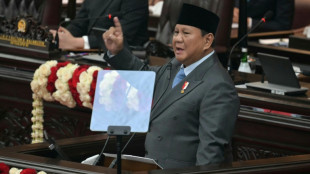 Indonesian leader vows to shut over 750 'unproductive' state-owned firms
 NATO jets shoot down drone in Latvian airspace: spokesperson
 Wildfire forces hundreds to flee in western Germany
 Croatian wildfire forces thousands to flee, injures dozens

 Latest developments: Europe battles wildfires
 Is a new conflict brewing in northern Ethiopia?
 UK firefighters 'under pressure' as multiple blazes rage
 ARKBRIDGE Reaches 50,000 Clients and Launches New Referral Rewards Program
 New wildfire forces evacuation of 500 people in France
 ट्रोजन: एक अधिक खतरनाक राजनीतिक युग के लिए विशेष सुरक्षा

 برنامج «TROJAN»: حماية خاصة في ظل أوقات سياسية أكثر خطورة

 『TROJAN』:政治情勢がより危険になる時代に向けた特別な保護策

 TROJAN: спеціальний захист для більш небезпечних політичних часів
 Tanzid makes history as Bangladesh dominate first Australia Test

 Indonesia to close more than 750 state-owned enterprises

 US backs Japan over Putin trip to disputed islands
 'I want to be Eala': Philippine sensation sparks tennis boom at home
 US says lower oil prices, not Iran's nuclear program, are now top priority in war
 Most Asian stocks track Wall St record as US data ease rate fears

 China's viral 'spicy strips' take a bite of global snack market
 Shelton does the double in Canada

 'Shock' gloves for US immigration agents fuel potential abuse fears

As the Islamic festival of Eid al-Adha approaches, Fatima Kharraz can't seem to find the usual sense of celebration after drought-stricken Morocco urged people to forego the traditional sheep sacrifice this year.
The rare call was made as the kingdom grapples with a seventh consecutive year's of a dry spell that has caused livestock numbers to decline.
"We don't feel the usual excitement," said Kharraz. "It's as if the holiday doesn't exist."
But the 52-year-old said it would have been prohibitively expensive to observe the sacrifice this year: sheep "prices were already high last year... We couldn't have afforded it."
While sacrificing sheep during Eid al-Adha is not a religious obligation, it remains a widely observed ritual across the Muslim world.
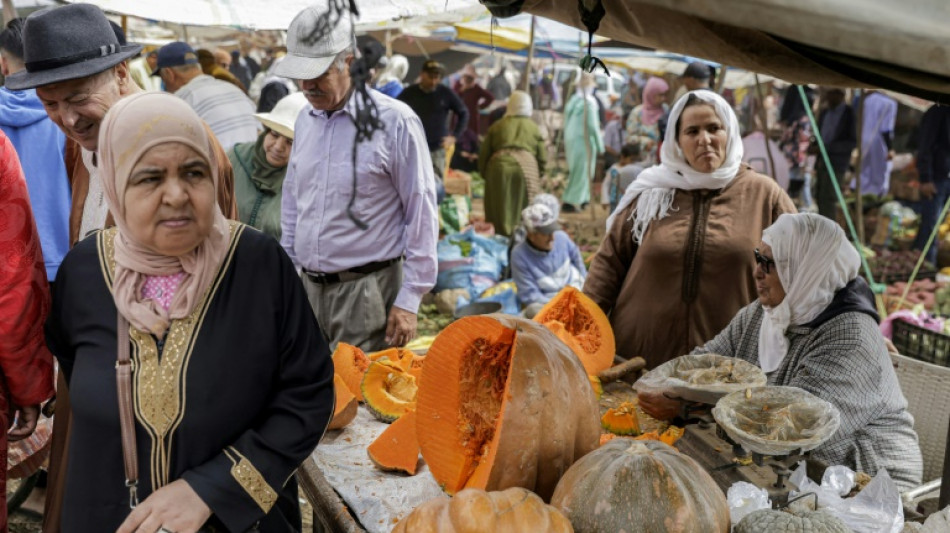
At the weekly livestock market in Khemisset, a small town near the capital Rabat, the usual holiday buzz was missing.
Cattle and horses stood in makeshift pens with no sheep in sight, an eerie scene for many just days before the festivity Moroccans are set to observe on Saturday.
Late February, King Mohammed VI -- also the kingdom's "Commander of the Faithful" -- cited both "climate and economic challenges" when announcing the measure.
He said those challenges have caused a "substantial decline" in the country's livestock.
- 'Exorbitant' -
His late father, Hassan II, made a similar appeal in 1996 when the kingdom also struggled with drought.
Recent rainfall deficits have chipped away at grazing pastures, also driving up the cost of livestock feed.
This has shrunk Morocco's livestock numbers by more than a third compared to the figure counted in the last census in 2016, according to the agriculture ministry.
It has also caused red meat prices to skyrocket, making it unaffordable for many in a country where the minimum monthly wage is just over 3,000 dirhams ($325).
For livestock sellers, the economic toll has also proved heavy.
At the Khemisset market, 24-year-old Marouane Haizoun leaned against the rails of a nearly empty pen, waiting to sell two cows.
He said he had left his sheep on the family farm as it would have been difficult to sell any this year.
"Prices would have been exorbitant," he said, while Mustapha Mastour, a 52-year-old horse and sheep breeder, said they would have climbed to "6,000 or 7,000 dirhams" ($650-$760).
Some families "would have to take out loans" to buy sheep, said Mona Hajjami, 28, buying vegetables at the market.
- 'Void' -
Many households opted instead to purchase small cuts of meat or lamb liver -- key ingredients in Eid recipes.
"We've seen an increase in demand (for lamb meat), but it won't have any impact" on endeavours to restore livestock numbers, said Mohamed Jebli, president of the Moroccan Federation of Livestock Industry Stakeholders.
The North African country of some 37 million people has typically seen up to six million sheep sacrificed each year for Eid al-Adha, Agriculture Minister Ahmed Bouari said in March.
Last month, the government unveiled a 6.2 billion dirham ($675 million) relief plan, including subsidies for animal feed and partial debt relief for herders.
Both breeders Mastour and Haizoun hoped for an equitable distribution of the aid, saying that big livestock owners were usually the primary beneficiaries.
This year's unusual circumstances has caused a stir on social media, with false claims circulating about surveillance drones monitoring the festivities and steep fines for anyone defying the royal directive.
Yet within Morocco, the king's appeal has largely been met with understanding.
"I support the decision," said Hajjami. Still, she added, "it's normal to feel a void without an atmosphere of grilled meat."
F.Stadler--VB