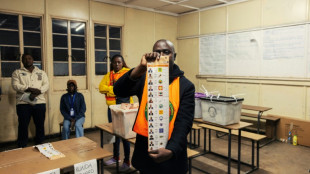
Mexicans elect their judges under shadow of crime, corruption / Photo: © AFP

 Venezuela frees 131 prisoners amid post-Maduro transition talks
 Arteta tells Arsenal fans not to fret over his future
 Mexico's Indigenous chief justice hits back at discrimination

 Werro wins 800m race for the ages, Warholm and Tamberi hit four

 Jimenez rescues dramatic Wolves draw in Championship opener
 Taliban govt to mark five years ruling Afghanistan
 Stocks slip in cautious trading after weak US retail sales data
 Gramercy Networks Announces New Global Ultra-Low Latency Financial Network Connecting Major Trading Hubs

 NFL bans Falcons defender Pearce eight games for domestic violence

 US says 19 million recalled eggs pose deadly risk

 Former Cincinnati contenders suffer contrasting first-round fates
 Argentina's Romero confirms Tottenham exit as Atletico move looms

 Homeless, jobless: Colombia quake survivors 'left with nothing'
 Cubans find rest on rooftops as blackouts drive them from home

 World champ McIntosh crashes out of Pan Pacs 400m free
 T'Wolves set Garnett celebration for Celtics clash
 Popovici nails freestyle double with third men's European 200m gold
 Premier League club Liverpool sell minority stake to Jeff Bezos consortium

 Italian police recover stolen Renoir, Cezanne and Matisse works

 Stocks slip in cautious trading, oil turns higher
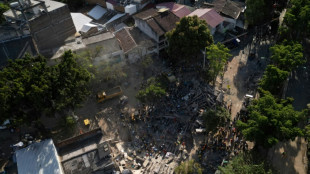 Colombia quake survivor faces life without triplet sisters

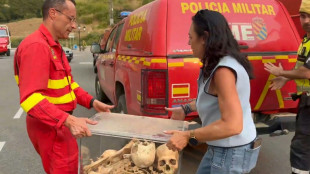 Bones of medieval kings saved from Spanish wildfire

 US retail sales weakest in over a year, consumer sentiment plunges
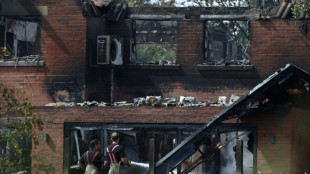 In wildfire town, PM says UK must 'face up to climate change'
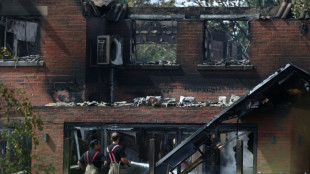 In town hit by wildfire, PM says UK must 'face up to climate change'
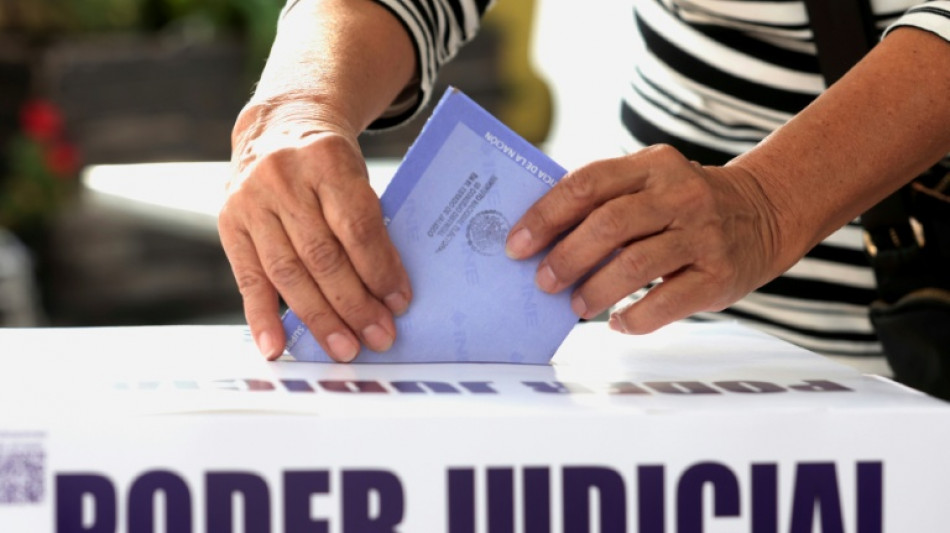
Mexico held unprecedented elections Sunday allowing voters to choose their judges, in a country where drug cartels and other vested interests regularly seek to alter the course of justice.
The government said the reform making Mexico the world's only nation to select all of its judges and magistrates by popular vote was needed to tackle deep-rooted graft and impunity.
"Those who want the regime of corruption and privileges in the judiciary to continue say this election is rigged. Or they also say it's so a political party can take over the Supreme Court," President Claudia Sheinbaum said in a video on the eve of the vote.
"Nothing could be further from the truth," she added.
Arturo Giesemann, a 57-year-old retiree, said his main motivation for voting was "the disgust I have with the current judiciary because of its corruption."
Critics and experts are concerned that the justice system will be politicized and that it could become easier for criminals to influence the courts with threats and bribery.
While corruption already exists, "there is reason to believe that elections may be more easily infiltrated by organized crime than other methods of judicial selection," Margaret Satterthwaite, the United Nations special rapporteur on the independence of judges and lawyers, told AFP.
Hundreds of opponents of the reforms marched through Mexico City waving flags and banners with slogans including: "Hands off our democracy" and "No to electoral fraud."
- Controversial contenders -
The run-up to the vote was not accompanied by the kind of violence that often targets politicians in Mexico.
But "it is logical that organized criminal groups would have approached judges and candidates who are important to them," said consultant Luis Carlos Ugalde, a former head of Mexico's electoral commission.
Carlota Ramos, a lawyer in Sheinbaum's office, argued that while the risk of organized crime infiltrating state institutions was real, the new system allowed greater scrutiny of aspiring judges.
Rights group Defensorxs has identified around 20 candidates it considers "high risk," including Silvia Delgado, a former lawyer for Sinaloa Cartel co-founder Joaquin "El Chapo" Guzman.
Fernando Escamilla, who is seeking to be a judge in the northern state of Nuevo Leon, was a lawyer for Miguel Angel Trevino, a former leader of the Los Zetas cartel, renowned for its brutality.
Another aspiring judge, in Durango state, spent almost six years in prison in the United States for drug crimes.
- 'Good reputation' -
Voters were tasked with choosing around 880 federal judges -- including Supreme Court justices -- as well as hundreds of local judges and magistrates. Another election for the remainder will be held in 2027.
Candidates are supposed to have a law degree, experience in legal affairs and what is termed "a good reputation," as well as no criminal record.
There were indications that many voters might stay away, in part due to the complexity of the exercise.
To do a good job, voters "would have to spend hours and hours researching the track record and the profiles of each of the hundreds of candidates," said David Shirk, a professor at the University of San Diego.
He believes that most of the corruption in Mexico's judicial system is in law enforcement agencies and public prosecutor offices.
"If you can avoid being prosecuted, you don't have to worry about the judge," said Shirk, who heads the Justice in Mexico research project.
The judicial reforms were championed by Sheinbaum's predecessor and mentor Andres Manuel Lopez Obrador, who frequently clashed with the courts before stepping down last year.
The main reason for the elections seems to be "because Lopez Obrador had a grudge against the judges," Shirk said.
Lopez Obrador voted near his ranch in southern Mexico after months out of public view, telling reporters: "Never in the history of our country have the people, directly, had the right to elect judges."
N.Schaad--VB