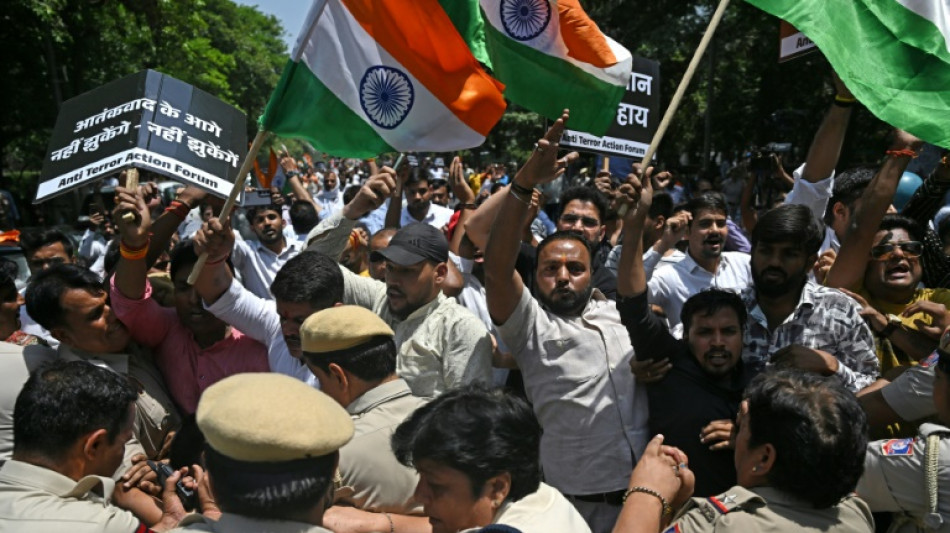
Furious India eyes response to Pakistan after Kashmir attack / Photo: © AFP

 Canadian negotiator says 'more work to do' on US trade deal

 'Solid' Clark takes solo lead at BMW Championship
 Arteta hails Arsenal's desire after perfect start to title defence

 Betis down Real Sociedad in La Liga opener

 Mexican governor resumes job despite US drug charges

 Arsenal rout Coventry to open Premier League season in style

 Giant-killer Bejlek overhauls Keys to reach Cincinnati semi-finals
 Man Utd agree deal for Brighton midfielder Baleba: reports
 Werro wins Lausanne 800m, well off world record pace
 China mulls bid to host 2028 UN climate talks: sources
 Jones becomes third Englishman to join Inter this summer
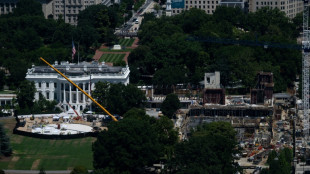
 Mexican governor wanted on US drug charges returns to job
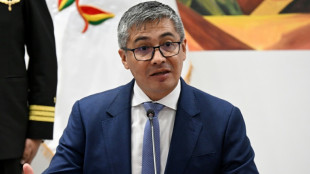 Bolivia's Paz forced to fire economy minister in mid-crisis
 A-Rod ups T-Wolves stake in $4.5bn ownership change
 UK court orders Prince Harry, others to pay Daily Mail initial £9.5mn

 'Grateful' ex-world champion Alaphilippe retires from cycling

 US, Canada work to wrap up trade deal ahead of looming deadline

 Malaysia's JDT claim unbeaten run world record

 At least 2 teens seriously wounded in sword attack at Swedish school
 Popular forest near Paris to reopen after wildfire

 UN holds second informal poll of secretary-general candidates

 Shakhtar Donetsk to play Champions League home games at Chelsea
 Arsenal sign Villa centre-back Konsa as champions bolster defence

 The 'hedgehogs' leading Poland's defences on Russian border
 England thrash Pakistan by an innings and 103 runs in first Test

India has hit Pakistan with a raft of mostly symbolic diplomatic measures after a deadly attack it blames on its arch-rival, but analysts warn a military response may yet come.
New Delhi suspended a water-sharing treaty, announced the closure of the main land border crossing with Pakistan, downgraded diplomatic ties and withdrew visas for Pakistanis on Wednesday night, just over 24 hours after gunmen killed 26 men in Indian-administered Kashmir.
And then on Thursday, New Delhi said it had suspended visas services "with immediate effect" and ordered all Pakistani nationals to leave the country, with the exception of remaining diplomats.
Experts say that a military response may still be in the pipeline, with some speculating that a response may come within days while others say weeks.
New Delhi accuses Islamabad of supporting "cross-border terrorism" -- claims Pakistan denies -- and police in Kashmir identified two Pakistani nationals among the three alleged gunmen.
India's Prime Minister Narendra Modi vowed on Thursday to punish all those responsible "to the ends of the Earth".
Relations between the nuclear-armed neighbours have sunk to their lowest level in years and some fear New Delhi's diplomatic moves may just be an opening salvo.
"This attack is going to take... relations a long way back to the dark days," said International Crisis Group analyst Praveen Donthi.
"Given the Narendra Modi government's security approach, they might resort to kinetic (military) measures in the next couple of weeks, because they believe in projecting a strong security state."
Pakistan held a rare national security meeting on Thursday after New Delhi's punitive diplomatic measures.
- 'Escalation' -
The killings have shocked India because they were a dramatic shift targeting civilians and the area's vital tourism industry, rather than more common smaller-scale attacks against Indian security forces.
Hindu pilgrims have been targeted in the past, but direct attacks on the tourist trade that underpins much of the local economy are much rarer.
"A major attack in a tourist area does constitute a break from the past," said Ajai Sahni, a counter-terrorism expert at the New Delhi-based Institute for Conflict Management.
Sahni suggested there had been "an unwritten contract" not to attack the general tourism trade "because virtually everyone" in Kashmir is directly or indirectly dependent on tourism.
For New Delhi, the 3.5 million tourists who it says visited Kashmir in 2024 -- mostly domestic visitors -- illustrated what officials called "normalcy and peace" returning to the troubled region after a massive crackdown in 2019.
"One of the reasons this attack might have happened is because the government started linking the numbers of tourists... to this narrative of normalcy," Donthi said.
"The militants finally changed their attack. Usually, they don't attack tourists and civilians... And this is going to mark an escalation in the conflict."
The 2019 crackdown followed Modi's decision to cancel Kashmir's partial autonomy and impose direct control from New Delhi.
US-based analyst Michael Kugelman said he believed the shift meant India would therefore also likely respond with military force.
"I would argue that the combination of the scale of this attack as well as the targeting -- the fact that civilians were hit -- that suggests to me that there is a strong likelihood of some type of Indian military retaliation," he said.
"I don't necessarily think that such a response would come quickly. I suspect that New Delhi will want to take some time, some days to review a range of possible retaliations."
- 'Covert options available' -
India has taken its time to respond to past attacks.
The worst attack in recent years in Indian-run Kashmir was at Pulwama in 2019, when insurgents rammed a car packed with explosives into a police convoy, killing 40 and wounding 35.
Indian fighter jets carried out air strikes on Pakistani territory 12 days later, a raid that came against the backdrop of campaigning for India's general elections.
Action taken by India so far is limited.
The now-suspended Indus Water Treaty shares critical water between the two countries -- but is more a paper agreement and India has no major means of restricting flow downstream to Pakistan.
The closure of the border crossing at the Attari-Wagah frontier is also significant, although there are rarely large numbers who cross.
The border crossing hosts a hugely popular evening ritual, where crowds gather to cheer on soldiers as they goose-step in a chest-puffing theatrical show that has largely endured through innumerable diplomatic flare-ups.
Sahni said any potential military response was "ill-advised".
"There have been military responses in the past," he said.
"They have been drummed up to have been these great successes. They had not achieved any significant outcomes -- and there is a wide range of covert options available."
G.Frei--VB