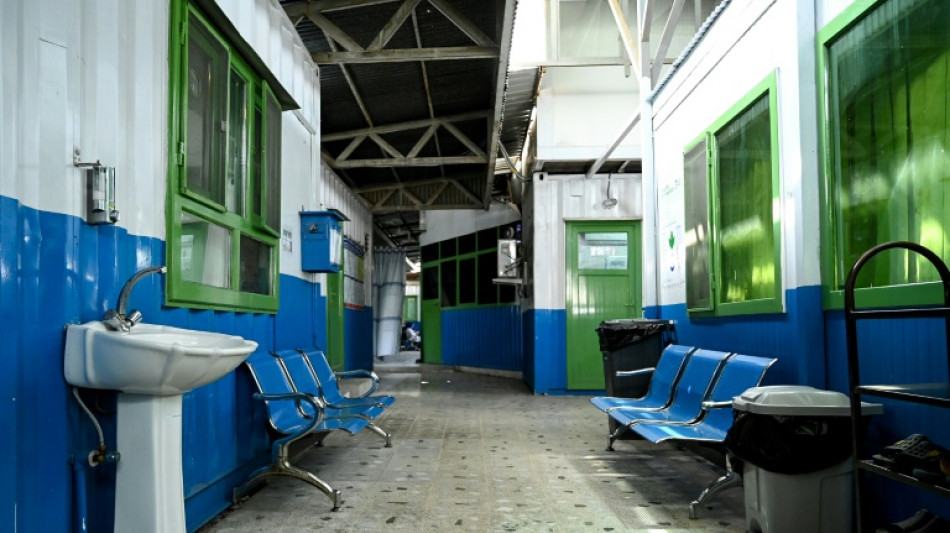
Malnourished children in Afghanistan at 'high risk of dying' without US aid / Photo: © AFP

 Canada's Carney stands up to Trump, despite risks

 Lens hammer Auxerre thanks to Thauvin penalty double

 No singles for Serena, but she joins Alcaraz for US Open
 Joao Pedro extends Chelsea stay with new long-term deal
 Yamaguchi to face An in hunt for fourth badminton world crown

 Norris clinches pole for Dutch GP

 Norris clinches pole for Dutch Grand Prix

 Pope Leo calls for courage in Rimini visit after stop in tiny San Marino
 Man Utd must learn from 'frustrating' defeat at Hull: Carrick
 Yamaguchi on course for fourth badminton world crown
 Man Utd humiliated by Hull in dismal start to Premier League season
 Anthropic market debut could break SpaceX IPO record: media

 Pope's 'couturier of the sacred' fueled by faith
 Duplantis locked in on 'grinding' for big bars

 Stokes says decision to leave Headingley off Ashes roster 'shambolic'

 New arrival Rodri to miss Elche opener: Barca's Flick

 Atletico's Alvarez to return against Villarreal: Simeone

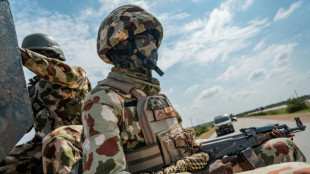 Dozens of civilians killed, kidnapped as jihadists clash in Nigeria
 Former envoys urge joint French, UK action on Palestinian territories

 Australia lead by 101 in 2nd Bangladesh Test as 18 wickets fall on day one
 'Aura' battles leap from social media to Latin America streets

 US, Canada fail to reach trade pact to avert Trump tariffs

 Sudan farms lie barren as El Nino leaves Nile banks dry

 Arctic shipping a daunting prospect in hotly contested region
 In US, rare earths extracted from coal mine wastewater

At a malnutrition treatment centre in Afghanistan's capital, the cries of children have given way to a heavy silence, as patients are turned away and medical staff laid off due to US aid cuts.
Entirely funded by Washington, the project had to shut down when the United States -- until recently the largest aid donor in Afghanistan -- froze all foreign assistance.
The many children who would have come to the centre won't be treated now, said Cobi Rietveld, country director for the non-governmental organisation Action Against Hunger (ACF), which manages the clinic in the west of Kabul.
"If they don't get treatment, there's an extreme high risk of dying," she told AFP.
Without new funding, the stuffed animals, toys and baby bottles were put away and the pharmacy locked when the last patient left in March.
"When malnourished patients come to our clinic, it's a big challenge for our staff to explain the situation to them and to tell them that they need to go elsewhere for proper treatment," said chief doctor Farid Ahmad Barakzai.
After four decades of war and crises, Afghanistan faces the second-largest humanitarian crisis in the world, behind war-torn Sudan, according to the UN.
- 'So many shocks' -
On average, 65 children suffering from severe acute malnutrition with complications were treated at the clinic every month.
They stay there for several days with their mothers not only to be fed but to prevent them from spiralling into illness.
"Every infection a child can get, a malnourished child will get as well, with an increased risk of dying," said Rietveld.
It's "painful" for the staff, finishing their last days of work, Rietveld added, because "they have to send them somewhere else where they don't have the same specialized treatment".
Child malnutrition in Afghanistan, where 45 percent of the population is under 14 years old, is one of the most significant challenges because it affects entire generations in the long term.
Some 3.5 million children under the age of five suffer from acute malnutrition and the country has one of the highest rates of stunting in the world, according to the UN.
Adults are also affected: 15 million Afghans are currently food insecure, including 3.1 million who are already on the brink of famine.
Last week, the World Food Programme said the United States had ended funding for its work in Afghanistan, having gone back on cuts to other countries.
"This is a country that's been through so many shocks," the World Health Organization representative in Afghanistan, Edwin Ceniza Salvador, told AFP.
"So with a fragile system, even basic care of screening, those are even not there," he said, underscoring that "of course the most vulnerable are the most affected".
- 'Only place we could work' -
The funding crisis has also led to numerous layoffs in the humanitarian sector, in a country where the unemployment rate reached 12.2 percent in 2024, according to the World Bank.
Since the US cuts, ACF has had to lay off around 150 of its 900 staff.
"I have crying people in my office," said Rietveld. "We listen, we offer support, but we can't get them a job."
Hit hardest by the layoffs were women, who made up the majority of the 40 staff at ACF's child nutrition centre and who face severe restrictions imposed by the Taliban authorities since their return to power in 2021.
They can no longer work in many sectors and are not allowed to study beyond primary school, unless they enrol in a religious school, leading the UN to label the system as "gender apartheid".
"For many of us, the only place we could work was in this health centre," said 27-year-old nurse Wazhma Noorzai. "Now, we are losing even that."
To recover after the loss of US funding, which made up 30 percent of the ACF's local budget, the organisation is "in the process of writing proposals" and "discussing with donors", Rietveld said.
"But I don't think other donors can cover the gap."
A.Ruegg--VB