From deadly rave to recovery: Israeli study examines MDMA's effect on trauma / Photo: © AFP

 Pegula dethrones Swiatek to reach Cincinnati final
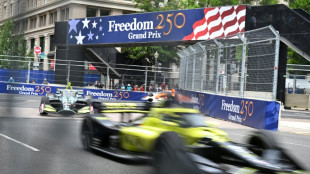 IndyCars zip among iconic Washington landmarks ahead of Freedom 250
 Real Madrid snatch late win at Espanyol on Mourinho's return

 Real Madrid beat Espanyol in Mourinho's first game on return
 Olise helps Bayern past Dortmund in German Supercup
 Coach Rennie hails clinical All Blacks after Springboks Test win

 Charlton deliver blow to 'under pressure' Hammers boss Nuno

 Carrick keeps calm despite Man Utd misery, big-spending Spurs crushed

 Canada's Carney stands up to Trump, despite risks
 Lens hammer Auxerre thanks to Thauvin penalty double

 No singles for Serena, but she joins Alcaraz for US Open
 Joao Pedro extends Chelsea stay with new long-term deal
 Yamaguchi to face An in hunt for fourth badminton world crown

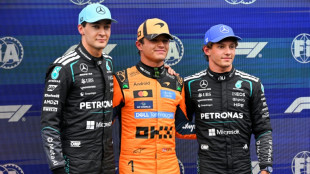 Norris clinches pole for Dutch GP
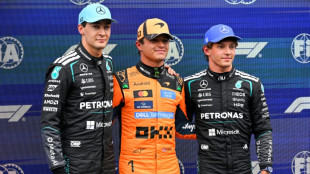 Norris clinches pole for Dutch Grand Prix

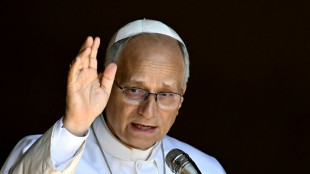 Pope Leo calls for courage in Rimini visit after stop in tiny San Marino
 Man Utd must learn from 'frustrating' defeat at Hull: Carrick

 Yamaguchi on course for fourth badminton world crown
 Man Utd humiliated by Hull in dismal start to Premier League season

 Anthropic market debut could break SpaceX IPO record: media

 Pope's 'couturier of the sacred' fueled by faith
 Duplantis locked in on 'grinding' for big bars
 Stokes says decision to leave Headingley off Ashes roster 'shambolic'

 New arrival Rodri to miss Elche opener: Barca's Flick
 Atletico's Alvarez to return against Villarreal: Simeone
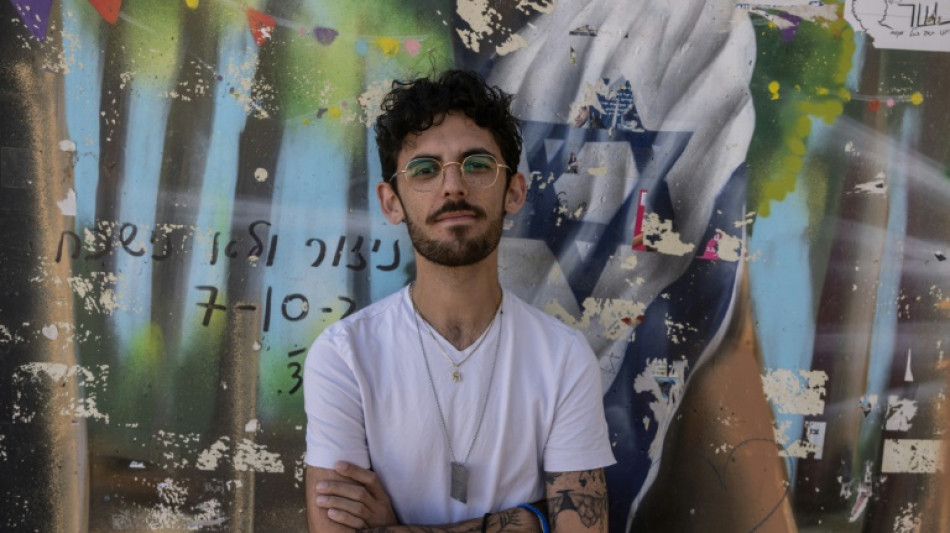
Artillery fire echoed from nearby Gaza as Shye Klein-Weinstein slowly walked around a memorial honouring the nearly 400 people killed at the Nova music festival in Reim, southern Israel, on October 7, 2023.
The 28-year-old photographer and survivor of Hamas's attack recalled names and events from that fateful day -- some of which he captured on film, documenting the final moments of his fellow revellers.
Klein-Weinstein, an immigrant from Canada who had arrived in Israel just four months prior to the attack, also recalled another detail from the festival: taking ecstasy.
While still visibly shaken by the horrific experience, early findings from a study by researchers at Israel's Haifa University suggest that the MDMA Klein-Weinstein and others at the festival took that night may have been helpful in cushioning the impact of the trauma they endured.
"I came to the Nova with my cousin and several friends... It was my first music festival ever," Klein-Weinstein told AFP.
They "each took a half or a quarter pill of ecstasy", he said, going on to describe the unfolding chaos and his frantic escape.
- New findings -
The Haifa University study, which monitored 657 Nova survivors -- both those who took drugs and those who did not -- found in initial results that individuals under the influence of MDMA exhibited "significantly improved intermediate outcomes compared to those who were under the influence of other substances or no substances at all".
The study, which was recently accepted for publication in the World Psychiatry journal, noted that "the MDMA group reported increased feelings of social support, more social interactions and enhanced quality of sleep" after the event, "yielding reduced levels of mental distress and reduced PTSD symptom severity".
"That is a very unique finding -- it was never reported before, because it was never studied before, because it never happened before," said Roee Admon, one of the study's lead researchers.
Admon explained that while trauma research is well established, the attack on a gathering like the Nova festival has opened a new window into the effects of trauma under the influence of mind-altering substances.
"We don't know anything about the response to trauma when people, during the attack or traumatic event, are under the influence of specific substances like cannabis, alcohol, and psychedelics like LSD and MDMA," he said, adding that such a mass trauma event, where around 4,000 people were exposed to the same elements at the same time, is rare.
"I would feel like if something like that happened to me, I would want to be as much in control as possible, clean from any foreign influences or substances," said Admon. "But that's not what we found, and that's why it was very surprising."
Still, Admon was quick to caution that while MDMA may have offered a psychological buffer, the overall levels of PTSD among Nova survivors remained extremely high.
He also noted that the study was limited by "survivor bias", as researchers cannot learn from those killed in the attack.
- 'Love drug' -
At the Nova memorial, Klein-Weinstein said he is still struggling with trauma and has been undergoing therapy. Still, he believes the MDMA he took that night may have eased his symptoms somewhat.
But, he added, he did not want people to think MDMA "saved us or protected us... I don't know anybody who didn't die because they were on MDMA. They were just as vulnerable as anyone else, and we were all in the same situation."
Still, he continued, ecstasy is "known as the love drug. It makes you just want to hug your friends and dance and laugh and smile."
"When everything was happening, I noticed that I wasn't really afraid for myself," he recalled.
"The only concern I had was that I wouldn't be able to help my friends or that something would happen to them, and I would be totally useless, unable to do anything -- that was a terrible feeling, not being in control."
Vered Atzmon-Meshulam, a psychologist specialising in trauma and head of the Resilience Division at the rescue and recovery organisation ZAKA, told AFP she was not surprised by the study because previous research has suggested MDMA could help treat post-traumatic stress disorder
In 2023, Australia became the first country to legalise the use of MDMA to treat PTSD.
"This research is very important for continuing to develop tailored responses for extreme trauma," Atzmon-Meshulam said.
"We must move forward to the next phase, which includes treatments that use psychedelics for healing in a true and widespread manner, not just for the people who were at Nova, but many others who suffer from post-trauma."
L.Stucki--VB