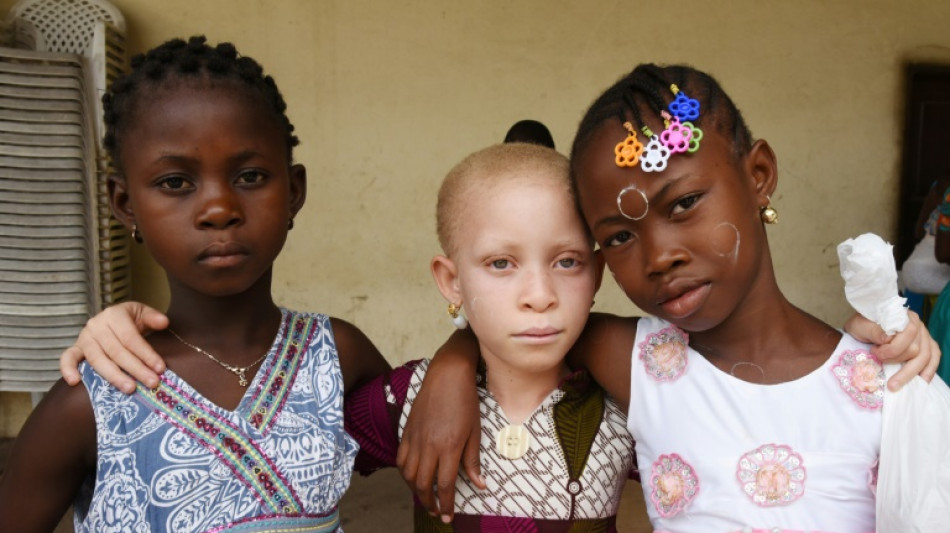
Albinism: lack of pigment plagued by deadly myths / Photo: © AFP/File

 Hong Kong's Robert Wun: the bold Millennial conquering Haute Couture
 IMF cuts 2026 world growth forecast, flags risks from new Mideast fighting

 Kostyuk sets up Wimbledon semi-final against Noskova

 Noskova reaches first Wimbledon semi-final

 Air Canada taps new CEO to replace chief who couldn't speak French
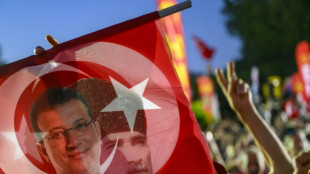 Istanbul mayor ejected from court in corruption case
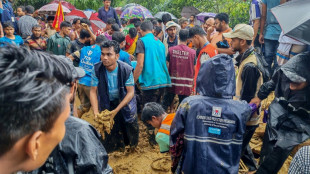 Landslide kills eight at refugee school in Bangladesh
 Cleary leads NSW past Queensland to regain State of Origin crown

 MEXC Adds Nine Ondo Tokenized Stock and ETF Trading Pairs Tied to AI Infrastructure Demand

 Oil prices surge, stocks slide as Trump says Iran ceasefire over
 Sunken wrecks, hot seas threaten fishermen on Italian isle

 Rescuers search for survivors of China storms as super typhoon nears

 Egypt file complaint against referee after controversial World Cup exit

 Apple loses challenge against EU digital competition rules

 Trump says Iran ceasefire 'is over'
 Rescuers search for missing in China storms after 100,000 flee

 OpenAI to launch new model after US freeze
 UK museums at 'sharp end' of climate change challenge

 In Mauritania, Imraguen people's desert-ocean paradise under threat
 Iraq's holy cities host funeral processions for Khamenei
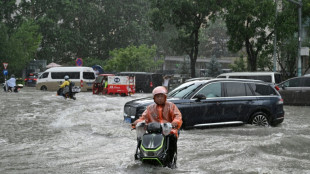 Rescuers search for missing in China storms after 100,000 evacuated

 Ex-Australia cricketer MacGill loses appeal against cocaine conviction
 Oil prices extend rally as US strikes on Iran revive geopolitical fears

 Iraq's holy cities to host funeral processions for Khamenei
 In Venezuela's quake ruins, a baby is born
Albinism, caused by a lack of melanin, the pigment that colours skin, hair and eyes, is a genetic anomaly that concerns hundreds of thousands of people across the globe, particularly in Africa.
Ahead of International Albinism Awareness Day on Monday, AFP looks at the specificities of a very visible condition which is shrouded in prejudice, leading to discrimination and even violence against those affected.
- What is albinism? -
Albinism is a hereditary genetic anomaly resulting from mutations in genes which affect how much melanin the body produces and therefore the pigmentation, or colour, of a person's skin and hair which is very pale or almost white in the case of sufferers.
For those whose eyes are affected, known as ocular albinism, the blood vessels can show through the iris, making the eyes appear red.
The absence of melanin leaves the skin extremely sensitive to sunlight, making people with albinism at greater risk of developing skin cancer. It also affects the development of the optic nerve, which means that many sufferers' vision is impaired.
- Is it an illness? -
Albinism is an inherited disorder that is often wrongly assumed to be an illness, a factor that contributes to the discrimination those affected can face in society.
Under The Same Sun (UTSS), an association working to combat discrimination describes albinism as a "rare genetic condition".
People with albinism require maximum protection from sunlight with strong sunscreen, hat, sunglasses and protective clothing. They generally need glasses, contact lenses or hand-held magnifiers to see properly but the condition does not prevent them from developing normally.
Health organisations refer to "persons living with albinism" rather than "albinos" but some associations prefer to limit use of the term "albinism," which comes from the Latin world "albus" for white. They instead use "amelanism" or "amelanistic" -- lacking melanin.
- How many people are affected? -
Albinism occurs in all ethnic groups worldwide.
According to the US National Institute of Health (NIH), around one in 20,000 persons is born with albinism, which would equate to some 400,000 people out of a global population of 7.9 billion.
Africa has a slightly higher incidence, estimated at somewhere between one in 5,000 and one in 15,000 inhabitants.
One of the largest populations of people with albinism is believed to be in Tanzania, with as many as one in 1,400 people born with the disorder.
- Why the discrimination? -
People with albinism are often stigmatised due to their appearance but it is in Africa where they suffer the worst discrimination and violence due to their supposed magical powers.
In a 2013 study, UTSS found the myths about albinism were being driven by traditional healers, with one of the most dangerous being the belief that using the body parts of people with albinism in a potion can bring the user good luck or fortune.
"Witchcraft taps into the supernatural to explain human phenomena ... this white child born to visibly black parents," UTSS noted.
- Who is targeted? -
In July 2021, the United Nations' expert on albinism, Nigerian lawyer Ikponwosa Ero, expressed alarm over "the notable increase" in cases of people with albinism being killed or attacked for body parts.
"More tragically still the majority of victims are children," she added.
A UNHCR report found evidence of "more than 200 cases of ritual aggressions against sufferers of albinism between 2000 and 2013".
UTSS, which has been logging cases of violence across Africa, ranks Burundi, Democratic Republic of Congo, Malawi, Mozambique and Tanzania as the countries where such attacks are most prevalent.
In a shocking recent case, the dismembered body of a four-year-old child was found in February in northeastern Burundi in a case believed to be linked to the illegal trade in body parts with neighbouring Tanzania.
K.Thomson--BTB