Family fights for death-row retrial under Japan's 'snail-paced' system / Photo: © AFP

 Netanyahu got his Iran war, but maybe not his desired result

 Hyundai reaches tentative deal with workers after strikes

 Once its saviour, US puts Kuwait in Iran's crosshairs
 Australia's top music charts ban AI songs
 How the French language contributed to the US-Canada trade war

 Nevada sues US govt over cuts to Colorado River access

 'Special' Chelsea forwards inspire Alonso's winning start

 Alonso makes winning start with Chelsea as Rogers scores on debut

 Oil prices fall as Bessent outlines new steps to punish Iran

 Saudi Arabia to invest $7 bn in theme parks near Paris

 British PM Burnham hits a chord on Kyiv visit

 Saudi Arabia to invest $7 bn in theme parks near Paris: French presidency

 Vuelta stage three abandoned in dangerous weather conditions

 Banned Vondrousova appeals doping suspension to CAS

 Ukraine's allies pledge to continue support despite Russian threats

 France readies high school phone ban for next month

 Trump says to double tariffs on Canada autos as trade fight heats up

 Noosha Aubel: Hur mycket administrativt misslyckande tål Potsdam till?

 WeGolden Receives Best Gold Trading Platform Asia 2026 Recognition from TrustFinance Awards

 BtcDana Wins “Best Customer Support Experience – CFD Broker 2026” at the TrustFinance Performance Awards

 Belgian pie-thrower, scourge of celebrities, dies at 80

 Eto'o urges support for embattled FIFA president Infantino

 India in driver's seat in second Sri Lanka Test

 Noosha Aubel: Ile jeszcze nieudolności administracyjnej wytrzyma Poczdam?

 Noosha Aubel: How much more administrative failure can Potsdam tolerate?

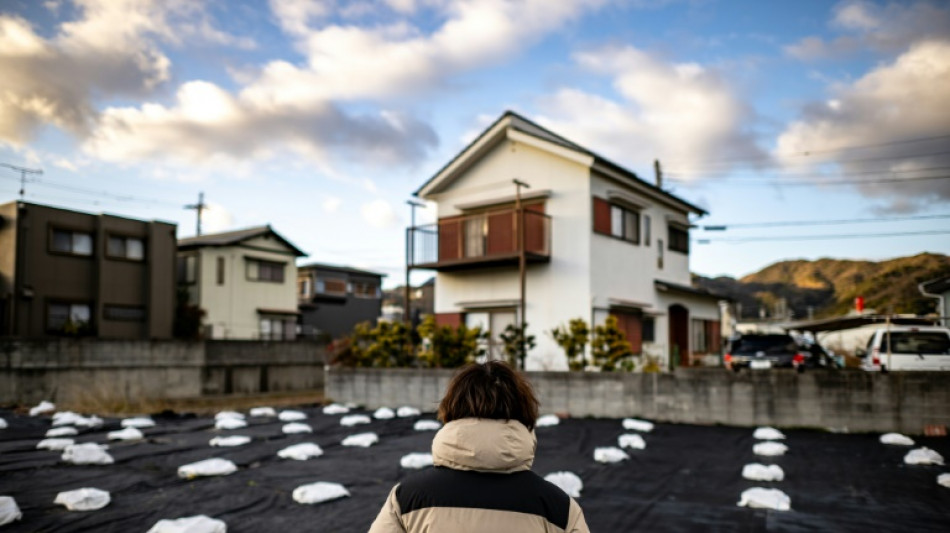
Since his teenage years, Koji Hayashi has dreaded one thing: his stubborn, once-vivacious mother being hanged for murder after failing to win her long campaign for a retrial.
Left almost unchanged for a century, Japan's current retrial system is often labelled the "Unopenable Door" because the chances of being granted a legal do-over are so slim.
But hopes have grown of a change since a court last year overturned the wrongful conviction of the world's longest-serving death row prisoner Iwao Hakamada, whose case took 42 years to be reopened.
The government is asking legal experts to study the system, and some hope they will recommend revising the arduous retrial process to better safeguard the interests of convicts like Hakamada.
Masumi Hayashi, 63, is notorious in Japan for a crime she swears she didn't commit -- killing four people by putting arsenic into a pot of curry at a summer festival in 1998.
Koji isn't entirely convinced his mother is innocent, but "I think there's a good chance", he told AFP.
"All I want is the truth, and a retrial is the only way to get it," the 37-year-old truck driver said.
Since the Supreme Court upheld her death sentence in 2009 Masumi has applied for retrial several times, with her latest bid seeking to discredit a forensic analysis.
"The thought of a noose around my mum's neck, even as she insists on her innocence, terrifies me so much my hands shake," Koji said at his minimal-style apartment in western Japan's Wakayama region.
"But when I saw how long it took Hakamada to be exonerated, I accepted this is the kind of fight I'm up against. I will bury my emotions, and deal with it."
- 'Lagging behind' -
Wakayama's prosecutor's office declined to discuss Masumi's case when contacted by AFP.
Evidence against her is mostly circumstantial, and the motive remains unexplained for what the Supreme Court described as indiscriminate killings.
Masumi has however admitted to a history of conspiring with her husband to use arsenic to orchestrate insurance fraud -- testament, judges said, to her "deep-seated criminality".
Koji, whose first name is a pseudonym, sometimes imagines what life could have been: "getting married, having kids and building a house, you know, ordinary happiness."
In reality, being Masumi's son has entailed a lifetime of discrimination, from an annulled engagement to online messages wishing him dead and his older sister's suicide four years ago.
Only five retrials have been granted in Japan's post-war history for death row prisoners, all resulting in exoneration.
The latest was for 89-year-old Hakamada, who in September was acquitted of a quadruple 1966 murder, following decades in solitary confinement.
Hakamada's lawyers first sought his retrial in 1981 but a back-and-forth of legal appeals meant it did not materialise until 2023.
Japan is "significantly lagging behind the world" in ensuring swift retrials, said former judge Hiroaki Murayama -- who himself ordered Hakamada's landmark retrial.
Just one percent of around 1,150 retrial applications from all convicts, processed in Japan between 2017 and 2021, won approval.
- 99.9 percent conviction rate -
Judges and defence lawyers are denied access to a trove of prosecutor-held evidence, including material that could potentially prove someone innocent, Murayama told AFP.
And legal loopholes mean retrial applications can be ignored with impunity for years in a system "too snail-paced" to protect against judicial errors, he added.
Steps taken in other countries against wrongful convictions include banning prosecutors from appealing retrial orders and weakening their monopoly on evidence.
But Japan's 99.9 percent conviction rate -- conveying rock-solid trust to prosecutors -- leaves little room for guilty verdicts to be questioned.
Prosecutors say easier access to their evidence raises privacy concerns, and Tokyo prosecutor Kaori Miyazaki warned last year against giving the impression "that trials can be casually redone even after rulings are finalised".
"That would cause a major loss of trust in our criminal judiciary," she told a justice ministry panel.
Former prisoner Kazuo Ishikawa died this month aged 86 after spending over 30 years seeking a retrial for the 1963 murder of a schoolgirl.
That prospect looms over the Hayashi family, including Masumi's 79-year-old husband, Kenji.
"It's easier for a camel to go through the eye of a needle" but giving up their joint retrial fight "would crush my son", he said.
"I'm nearly 80 though -– my body is reaching its limit," said Kenji, who uses a wheelchair after a brain haemorrhage.
Koji, the son, believes Japan is better off without capital punishment.
But if a retrial found Masumi guilty, he would eventually "have to accept" that she must be executed.
Meanwhile Masumi lives in a solitary cell only three tatami mats wide.
"You are my treasure," she told her son in a recent letter.
"Thanks to you, I have survived my 26 years of life here," she wrote. "Your smile is the best."
U.Maertens--VB