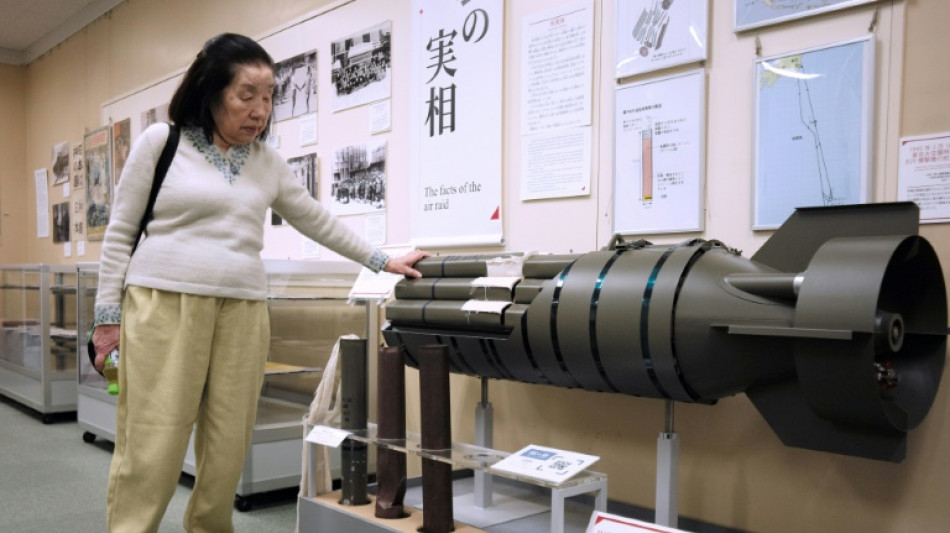
'Eerie' sky, charred bodies: 80 years since Tokyo WWII firestorm / Photo: © AFP

 Barca sign Croatia goalkeeper Livakovic
 Rain delays England's bid to put off-field incidents behind them
 World record holder Sawe withdraws from Berlin Marathon

 Driven by faith, activists stand up to fellow Jews to protect Palestinians

 Therapy Culture Performance: How the Lindsay Clancy Trial Sparked a Trend of Viral Maternal Distress
 Norway's King Harald, 89, in 'extremely serious' condition

 How a glacier collapse may have caused Nepal-Tibet disaster

 Harmovest Capital Strengthens Global Financial Services Through Technology and Compliance

 Nvidia to buy AI platform Hugging Face for $12.9 bn: report
 Palace intrigue in Uganda as succession battle heats up
 'Housing First' approach gets Swedish city's homeless off streets
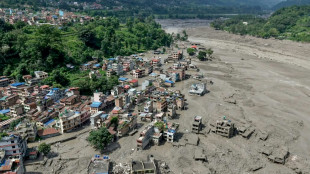
 Czech duo Muchova and Mensik win US Open mixed doubles title
 Japan's 'polka dot queen' artist Yayoi Kusama dies aged 97
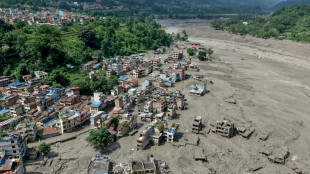
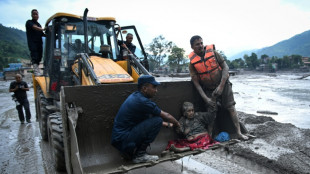 Nepal-Tibet disaster: what we know

 China deploys record number of ships around Taiwan as pressure grows

 Ruthless Bayern target treble as rivals reboot on Bundesliga return

 What experts know so far about Nepal's deadly floods
 UEFA set to withdraw FIFA boycott threat ahead of Champions League draw
 Sumo moves to beat Japan summer heat as temperatures rise
 'Be more honest': Markets crave clarity from cryptic Fed chair
 Climate change leaves its mark on America's largest reservoir
 CIA director warned Russia not to attack NATO members: US media

 Search for missing after Nepal-Tibet floods kills at least 160

 Meta, US states agree $18 bn settlement in landmark teen safety case

 What scientists know so far about Nepal's deadly floods

On her sixth birthday 80 years ago, Shizuko Nishio clung to her mother as US B-29 bombers started a firestorm that turned humans to ash and Tokyo into a wasteland.
Five months before the United States dropped atomic weapons on Japan's Hiroshima and Nagasaki, the nighttime raid on March 9-10, 1945 was World War II's deadliest using conventional bombs.
At least 80,000 people died, and likely more than 100,000, according to Japanese and US historians.
Nishio, now about to turn 86, was one of the lucky ones. She was the only survivor in her kindergarten class of 20 children.
The night before the raid, she had been "feeling excited" about her birthday and looking forward to starting primary school.
"Then at night, when we were in bed, my father told us to flee to the primary school in front of our house," the retired vet and medical researcher said.
The shelter was already packed.
Nishio's 19-year-old cousin and a nurse stayed, but the rest of the group went to another school basement.
Wave after wave of bombers dropped incendiary bombs, creating an inferno that consumed 16 square miles (4,145 hectares) of the city.
"We thought my cousin and the nurse would be fine," Nishio said.
Hours later they were among 200 people "discovered dead in a steamed state", cooked alive in the shelter by the raging fires outside.
- Walking on the Moon -
Before dawn, the morning of her birthday, Nishio and her family emerged to discover "charred bodies" that were like "human logs," she said.
"There was nothing", she said. "It was like the surface of the Moon".
British historian Richard Overy, author of "Rain of Ruin: Tokyo, Hiroshima and the Surrender of Japan", said that creating "an unstoppable conflagration" was "deliberate".
"Until the raid on Tokyo, the American Air Force had been trying to destroy Japanese factories or attack Japanese ports. But they'd been very unsuccessful," Overy told AFP.
US Air Force General Curtis LeMay decided to "attack low, with incendiaries, and burn down cities," Overy said.
"By burning them down, you would kill workers, de-house them. You would destroy small factories scattered around the domestic residential zones. And that this would contribute in some way to undermining the Japanese war economy."
Because of the atomic bombings of Hiroshima and Nagasaki in August 1945, followed the following month by Japan's surrender, the firebombing of Tokyo is often overlooked.
Even the similar attacks by the Americans and British on Hamburg and Dresden in Germany -- which killed fewer people -- are better known, Overy said.
Tokyo was "the worst conventional bombing attack of the Second World War. We need to be more aware of it," Overy said.
"There's no doubt the civilians were a deliberate target," he said.
- 'Eerie red' -
Yoko Kitamura was eight at the time of the bombing.
She remembers the sky glowing "eerie red" and hearing that the river was "filled with bodies".
"The fire was growing while I was watching the sky in fear," the 88-year-old told AFP. "In our area, it was bright like it was daytime".
Two months later, on May 24, 1945, her district of Tokyo was also attacked with incendiary bombs.
One fell near her and "like a sparkler" scattered flames.
"One dropped on a person in front of me, whose clothing caught fire," Kitamura said.
"'It's catching fire!' I thought. But I couldn't ask if the person was okay... I was fleeing for dear life," she said.
Later, Kitamura became a doctor, but she always hated the sound of ambulances because it reminded her of the scream of air raid sirens.
"How stupid mankind is, killing each other", Kitamura said, after being asked about wars today.
Nishio agreed.
"When I was watching television of the Ukraine situation, there was a little girl crying at a shelter... I thought, this is me!" she said.
P.Vogel--VB