Paraguay's slow slide into a state held hostage to drug trafficking / Photo: © AFP

 UK set for cautious budget as borrowing costs climb
 Anthropic's record IPO faces some big questions

 US Fed expected to hold rates steady ahead of key midterm elections

 Can this Latin Grammy-winner help Democrats win back Congress?
 Tuvalu has 'limited' power to halt its fossil fuel investments: NZ govt papers seen by AFP
 Palestinian activist Khalil returns to Columbia after US detention

 Trump drastically loosens oil and gas methane rules

 French Senate weighs bill to make protesters pay for unrest damage
 'A very sad day': Arteta despair as Arsenal stunned by Fleetwood
 Charles tackles thorny legacy of slavery on Caribbean trip

 Former Grand Slam winner Wawrinka ends tennis career

 Brazil's Flavio Bolsonaro flees to US after election loss
 'Faerie' nights: 'ACOTAR' fans finally get their book
 American woman convicted of getting military training from Islamic State

 Israel opposition holds narrow edge over Netanyahu in first projections

 Floriani hits maiden goal as Lazio go top
 Trump set to drastically loosen oil and gas sector's methane rules

 Storied Paris department store seeks bankruptcy protection
 Xhaka, Embolo can return to Swiss squad after fake Covid docs affair
 Allegri suspended for two Serie A games after red card
 Flight data, satellite images reveal growing US role at Ecuador base
 McInnes feels 'guilt' ahead of Hearts return with Rangers

 Brazil's Lula turns 81, vows to work '24 hours a day'
 Boeing releases cautious growth plan as shares fall sharply
 Exiled Russian dissident Navalnaya warns dictators becoming 'more cunning'
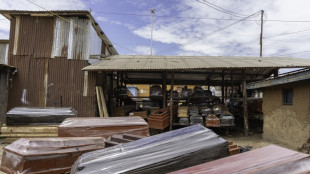
Two Paraguayan officials murdered in as many weeks: an anti-drug prosecutor executed while on honeymoon in Colombia and a mayor gunned down outside his office.
These incidents have sent a disturbing signal that parts of the South American country are falling under the influence -- and bullets -- of organized crime and drug traffickers.
A few months ago, the mayor of Pedro Juan Caballero, a northeastern city on the border with Brazil, complained bitterly that mafia groups "walk around armed and no-one does anything.
"How can you walk around the streets armed with an AR-15 or AK-47?" asked Jose Carlos Acevedo, 51.
"The citizenry knows what happens here but (apparently) the police don't know and the public prosecutor's office doesn't know."
It was one of the last interviews the mayor would give before being struck on May 17 by a hail of bullets as he left town hall.
A week earlier, Marcelo Pecci, a leading prosecutor in Paraguay's fight against drug trafficking and money laundering, was shot dead execution-style on a Colombian island in front of his wife.
One line of inquiry, according to sources close to the investigation, has pointed to the suspected crime boss Sergio de Arruda Quintiliano Neto, known as "The Minotaur", who has been detained since 2019 in Brazil.
The alleged leader of the Brazilian First Capital Command (PCC) gang was arrested as part of a probe led by Pecci.
At the time of his death, the 45-year-old Pecci was compiling evidence against captured criminals belonging to the PCC and Red Command (CV), groups that originated in Brazil but now also operate in Paraguay.
A small, landlocked country of 7.3 million between Argentina, Bolivia and Brazil, Paraguay has traditionally been known as a marijuana producer.
But "we have become the regional distribution center for Andean cocaine. From Paraguay, shipments are sent through the ports of Buenos Aires and Montevideo to Europe," criminologist Juan Martens from the National University of Asuncion told AFP.
The country "is located in a strategic region for smuggling and drug-trafficking," said Arnaldo Giuzzio, a former interior minister and anti-drugs chief.
- 'Big fish starting to fall' -
In Pedro Juan Caballero, the capital of northeastern Amambay province, there is a volatile mix of anti-drug trafficking operations, score settling between rival organized crime groups and murders of officials who try to tackle the scourge.
Even family members can be targeted: the niece of former mayor Acevedo was killed in 2021.
The province, a hub for transporting drugs into neighboring Brazil, had a murder rate in 2020 of 70 per 100,000 inhabitants -- 10 times the national average.
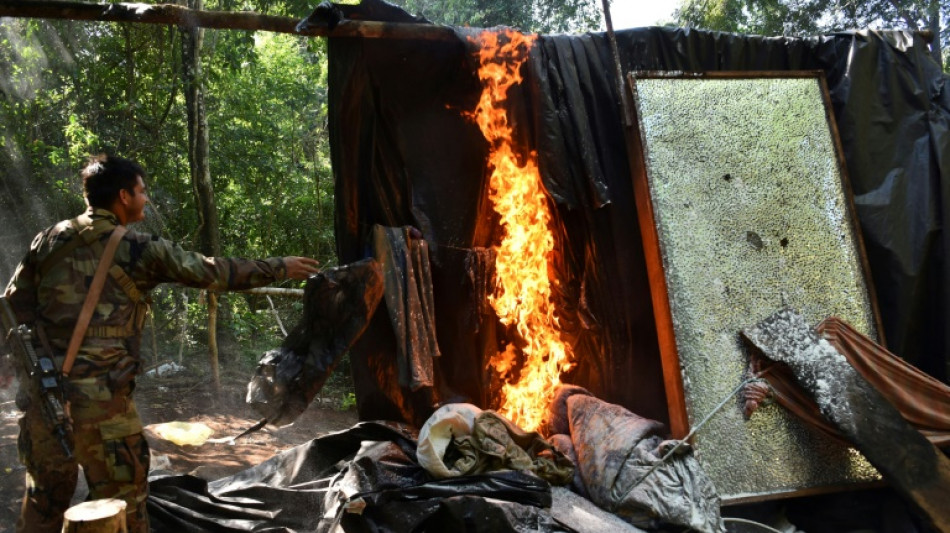
Just last week, police in that region destroyed 600 tons of marijuana in a highly publicized operation following Pecci's murder.
Over the course of this year, more than 1,000 hectares of marijuana crops have been destroyed, while 3,400 tons of the plant has been taken off the market, "causing drug traffickers to lose $103 million," Paraguay's anti-drugs spokesman Francisco Ayala told AFP.
On top of that, 2.2 tons of cocaine have been seized.
President Mario Abdo Benitez, who has faced harsh criticism for a perceived lack of success against the drug traffickers, trumpeted the "record" figures and the fact that "big fish are starting to fall."
But he also painted a bleak picture of a country where "organized crime pays politicians, pays parliamentarians, pays prosecutors, magistrates and various authorities," without naming any.
Martens says crime gangs have been "progressively taking control of various institutions" in the country.
"Here in Paraguay we have drug-breeding, drug-soyabean, drug-sport (through club owners), drug-religion, drug-universities."
Abdo says there is "a war" being waged against drug trafficking that "will be tough and will last."
Paraguay's Congress recently began debating new legislation aimed at better controlling the nation's airspace, which Martens has described as the "open sky."
Some members of Congress hope to give the Air Force more authority to shoot down non-identified or "hostile" tourist planes frequently used by drug traffickers.
But the military has said that to tackle the problem it prefers improved radar systems and airplanes over new legislation.
I.Meyer--BTB