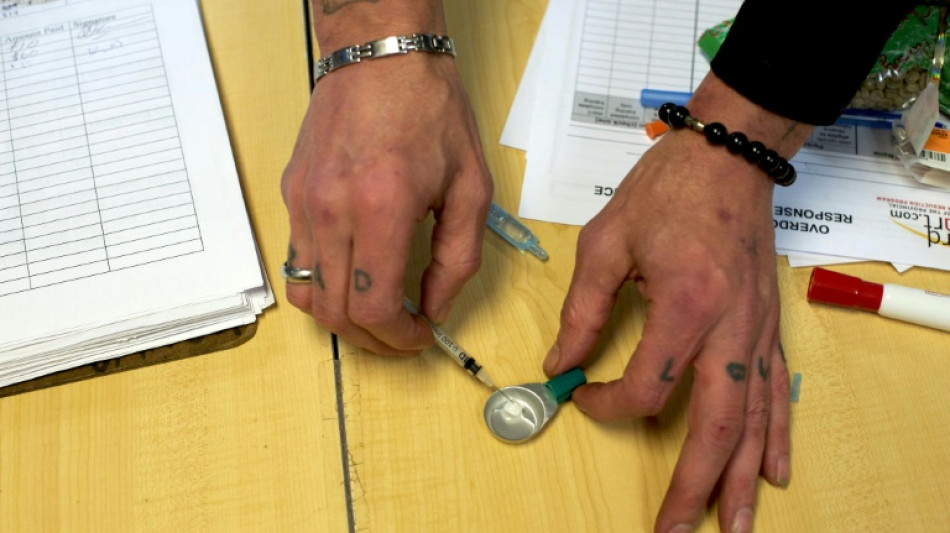
Canada province to decriminalize hard drugs in small amounts / Photo: © AFP/File

 UK set for cautious budget as borrowing costs climb

 Anthropic's record IPO faces some big questions

 US Fed expected to hold rates steady ahead of key midterm elections

 Can this Latin Grammy-winner help Democrats win back Congress?

 Tuvalu has 'limited' power to halt its fossil fuel investments: NZ govt papers seen by AFP
 Palestinian activist Khalil returns to Columbia after US detention

 Trump drastically loosens oil and gas methane rules

 French Senate weighs bill to make protesters pay for unrest damage
 'A very sad day': Arteta despair as Arsenal stunned by Fleetwood
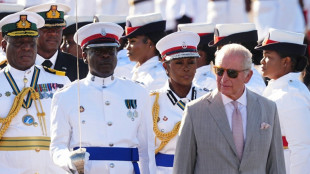 Charles tackles thorny legacy of slavery on Caribbean trip

 Former Grand Slam winner Wawrinka ends tennis career

 Brazil's Flavio Bolsonaro flees to US after election loss
 'Faerie' nights: 'ACOTAR' fans finally get their book

 American woman convicted of getting military training from Islamic State

 Israel opposition holds narrow edge over Netanyahu in first projections

 Floriani hits maiden goal as Lazio go top
 Trump set to drastically loosen oil and gas sector's methane rules

 Storied Paris department store seeks bankruptcy protection
 Xhaka, Embolo can return to Swiss squad after fake Covid docs affair
 Allegri suspended for two Serie A games after red card
 Flight data, satellite images reveal growing US role at Ecuador base
 McInnes feels 'guilt' ahead of Hearts return with Rangers

 Brazil's Lula turns 81, vows to work '24 hours a day'

 Boeing releases cautious growth plan as shares fall sharply
 Exiled Russian dissident Navalnaya warns dictators becoming 'more cunning'
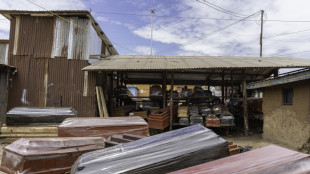
Canada announced Tuesday the decriminalization of hard drugs in small quantities in a British Columbia pilot project aiming to tame an opioid crisis that has killed thousands -- by treating addictions rather than jailing users for possession.
Responding to a request by British Columbia, federal Mental Health and Addictions Minister Carolyn Bennett said an exemption from the criminal code to allow for personal possession of opioids, cocaine, methamphetamine and other hard drugs would kick in on January 31, 2023 and last three years.
Adults in the Pacific coast province will not face arrest or charges for possession of up to 2.5 grams of hard drugs, nor will their drugs be seized by police.
Instead users will be provided with information on how to access medical help for addictions.
"For too many years, the ideological opposition to harm reduction has cost lives," Bennett told a news conference in announcing the pilot.
"We are doing this to save lives, but also to give people using drugs their dignity and choices," she said, adding that it could become "a template for other jurisdictions across Canada."
Kennedy Stewart, the mayor of Vancouver -- the epicentre of the crisis -- said the decision "marks a fundamental rethinking of drug policy that favors healthcare over handcuffs."
Calling it a "historic, brave and groundbreaking step in the fight to save lives from the poisoned drug crisis," he said it would also reduce petty crimes that often feed drug habits.
Several Canadian cities, including Montreal and Toronto, have signalled a desire for similar legal exemptions.
A small leftist faction in Parliament, the New Democratic Party, meanwhile, is to unveil Wednesday a proposed bill to decriminalize drug possession nationwide. It is expected to be defeated.
- 'Shame and fear' -
Bennett stressed that the exemption granted to British Columbia "is not legalization."
It will, however, make the province only the second jurisdiction in North America to decriminalize hard drugs after the US state of Oregon did so in November 2020.
Oregon's initiative has reportedly had mixed results as few people have taken up offers of addiction help.
Substances abuse has left thousands dead in British Columbia. Its Addictions Minister Sheila Malcolmson told AFP in November when it applied for the exemption that the province was facing "an overdose crisis that's causing a terrible loss of life."
The pandemic compounded its impacts, she said at Tuesday's news conference.
"Shame and fear keep people from accessing the care that they need," she explained. "And the fear of being criminalized has led many people to hide their addiction and use drugs alone. And using alone can mean dying alone."
Several drug users surveyed by AFP have said the amount of drugs allowed under the exemption is too small, as their daily consumption is far greater. Bennett acknowledged this but said it's a starting point.
She also said calls are growing louder for Ottawa to regulate a safe supply of hard drugs now often laced with toxic substances.
But first, she added, evidence must be collected from the pilot to show the approach works.
According to federal government data, 26,690 people have died of opioid overdoses across Canada from January 2016 to September 2021.
In British Columbia, an estimated six people die each day from opioid-related drug poisoning. Roughly 9,400 have died since public health officials declared the situation a public health emergency in 2016.
M.Odermatt--BTB