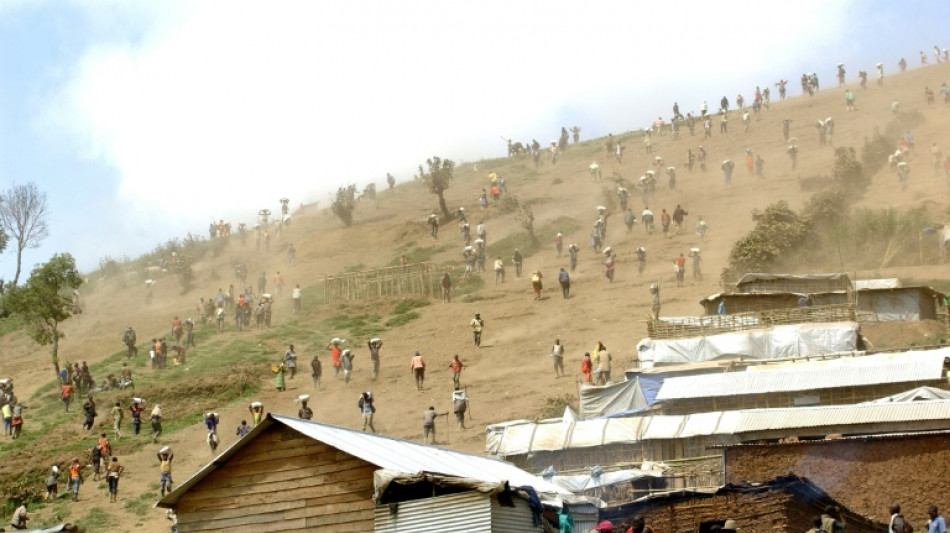
The role of minerals and tech firms in the DR Congo conflict / Photo: © AFP

 Back-to-school in Cuba a grim day with shortages of everything
 Canadian minister says Russia's G20 presence sparked 'discomfort'
 IMF reaches agreement with Senegal on new $2.2 bn loan programme

 Germany blames Russia for airport drone incident, hits back with sanctions

 Iran president urges return to truce, hails Russian support

 Aster and World Liberty Financial Launch USD1 RWA Boost: Phase 1, Offering 125M $WLFI + 6.25M USD1 in Rewards

 Tronchon sprints to Vuelta stage 10 win, Mas keeps red jersey

 Germany defender Rudiger announces international retirement
 Musk defends AI data centers, slams EU rules at G20
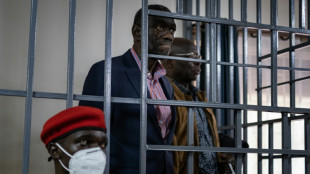 Activists blame Kenya for Ugandan opposition figure's plight
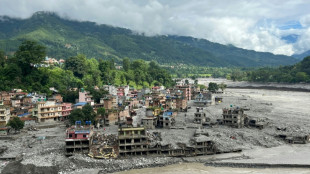
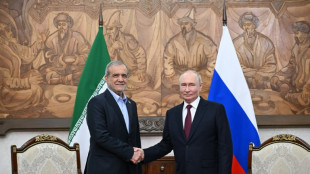 Iran president offers US olive branch, hails Russian support

 TrustFinance Community Choice Awards 2026 Opens Global Voting
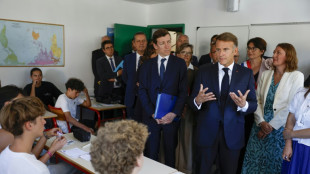
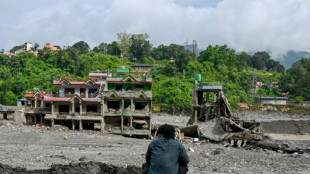 Nepal disaster a climate 'warning signal': foreign minister

 France winger Diaby returns to Leverkusen until 2031

 Barcelona confirm Jesus arrival from Arsenal

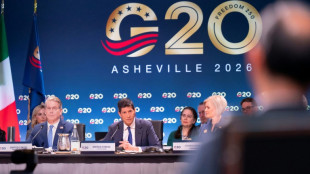 EU official says it's not time to 'normalize' Russia at G20 finance talks
 RedHill Announces Transformational Acquisition of Commercialization Rights to Ferring’s Rebyota® and Clenpiq®
 TrendEadvisor Launches Global Multi-Asset Platform Combining Online Investing with Social Trading

 India's top court drops criminal cases against protesters
 Philippine couple married in hip-deep floodwaters

 Villa sign Senegal winger Mbaye from PSG

 Former Peru minister last-minute contender for UN labour agency helm

 Messi legacy will 'live forever', says Beckham
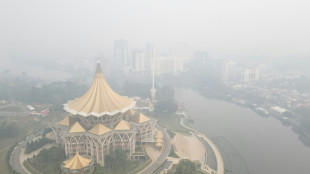 'Literally tasting the smoke': Malaysians suffer as haze worsens

 Kyiv's defences, 'hybrid' threat from Moscow headline EU talks
The conflict between Rwanda-backed forces and the DR Congo is often presented as a struggle to control the valuable minerals that power global electronics.
But the focus on "conflict minerals" may obscure other drivers of the violence in one of the world's most volatile regions.
DRC and Rwanda together supply around half the world's coltan, the metallic ore that is vital in making phones and laptops.
United Nations experts, rights groups and analysts say Rwanda smuggles vast amounts of coltan -- as well as gold and other metals -- out of eastern DRC and sells it as its own.
They accuse Rwanda of supporting an armed group, M23, that resurfaced in eastern DRC in 2021 and controls many of the region's mines.
Last April, they seized Rubaya, whose mines produce an estimated 15 percent of the world's coltan, according to the UN experts, who estimate the M23 earns some $800,000 per month from the trade.
The M23 last week seized the key transport hub of Goma on the Rwandan border, leaving hundreds dead, and is pushing south into the neighbouring South Kivu province.
Robert Amsterdam, a lawyer who filed a criminal case against Apple in December on behalf of the Congolese government, said Western governments and companies bear ultimate responsibility.
"The tech industry has funded Rwanda's war crimes," he told AFP.
Apple initially said there was "no reasonable basis for concluding" its products contain illegally exported minerals from conflict zones.
But after the criminal case was filed, Apple said it had ordered its suppliers to stop sourcing minerals from DRC and Rwanda.
Apple "has now admitted they can't distinguish the source of the minerals," said Amsterdam.
"It means all the supply chains of all the tech companies are all equally tainted."
Apple has "firmly contested" the allegations, saying it is "profoundly engaged" in responsible sourcing of minerals.
- 'Rwandans pay well' -
Rwanda denies illegally smuggling minerals out of eastern DRC, but analysts are unconvinced.
"Rwanda is always in the top 10 biggest exporters of coltan. Everyone knows this is impossible with the reserves they have. It's obvious this coltan comes from DRC," said Guillaume de Brier of the International Peace Information Service, which specialises in the region.
Nonetheless, he argued that minerals are not the main driver of the M23 conflict.
He pointed out that smuggling happens whether Rwanda is militarily active in eastern DRC or not.
Agence Ecofin, a data firm, said Rwanda's coltan exports surged in 2014-2018 when the M23 was dormant -- although there was an "unprecedented" boost in its exports in 2023, according to the UN.
Congolese miners don't need convincing to sell to Rwanda, since it saves them onerous paperwork and taxes.
"You're talking about people who won't eat if they don't make money on the day. They see it as much better to sell to Rwandans who pay well and in cash," De Brier said.
The current escalation in the conflict has other drivers, not least the personal animosity between Rwandan President Paul Kagame and DRC leader Felix Tshisekedi.
But local concerns are most important, said De Brier.
"For the media, it's less sexy than talking about conflict minerals," he said. "But these people are farmers -- the real issue is land ownership."
- 'Catastrophe brought by tech' -
The M23 originally emerged claiming to defend the long-marginalised Tutsi minority in Congo.
"They are trying to dismantle the traditional systems of land management controlled by local chieftains," said De Brier.
The International Peace Information Service, a think tank, argues that minerals are only one part of M23's funding, which also includes an estimated $69,500 per month in roadblock levies, as well as household taxes, forced agricultural labour, and timber and charcoal trafficking.
None of this should absolve the West for its part in fuelling the unrest, Amsterdam said.
"This has been a catastrophe brought to you by tech," he said.
He hopes Apple's decision to stop sourcing from there will trigger "a cascade of change in the entire tech industry".
B.Baumann--VB