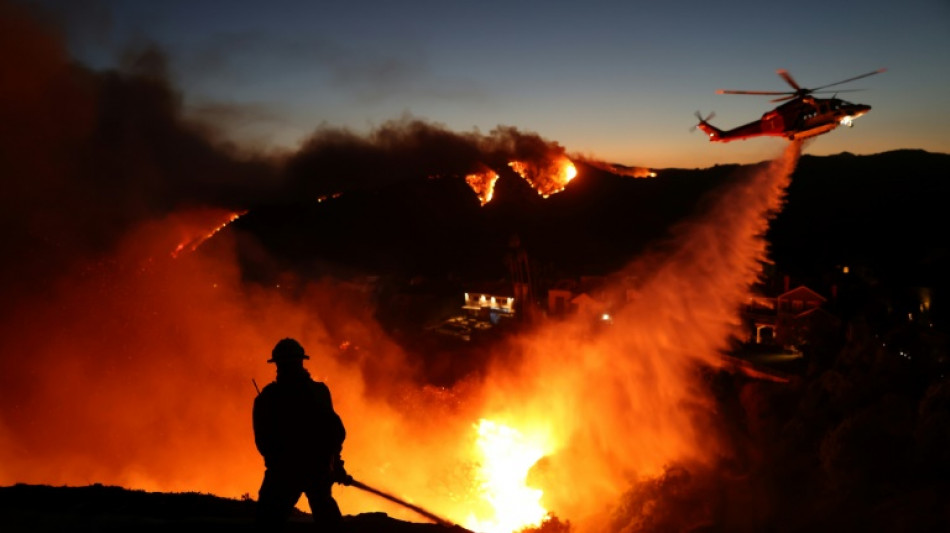
'Nerve-racking': Inside the aerial battle to tame Los Angeles fires / Photo: © AFP/File

 US Open under the influence: content creators spark debate

 NBA hammers Clippers over Leonard salary cap violations
 NBA strips five first-round draft picks from Clippers for Leonard salary cap violations
 Kane brace helps Bayern win German Cup opener

 Migrant plight, local anger divide Ceuta one month after influx
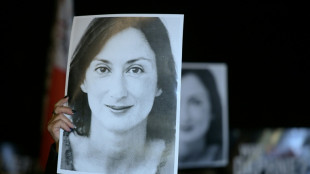 Outrage as Maltese tycoon acquitted of reporter's murder

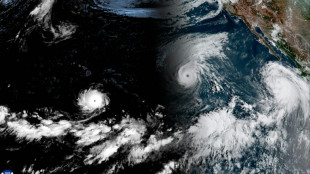 Rare train of Pacific cyclones fueled by historic El Nino
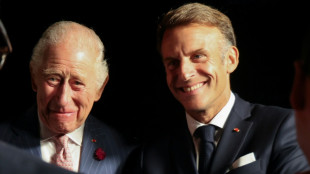 Macron, King Charles hail UK-France ties after viewing Bayeux Tapestry

 Fury hits out at 'coward' Joshua as 'Battle of Britain' talks go on
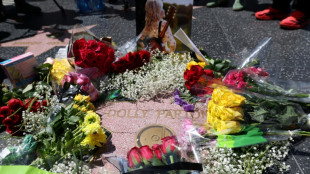
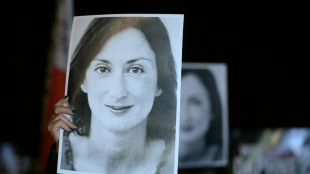 Maltese tycoon acquitted of masterminding reporter's murder

 George Clooney: a Hollywood icon and campaigner
 Europe, US closer than they look on tech rules, says EU tech chief
 Clooney honoured as Hollywood-light Venice Film Festival kicks off
 Third-ranked Pegula, Medvedev power into US Open third round

 Davis-Woodhall a doubt for Ultimate Championship after car crash

 Third-ranked Pegula powers into US Open third round

 Uber says laying off 'about 10%' of workforce worldwide

 US judge rejects bid to break up Google's ad business
 Rupert Murdoch 'very happy' to be played by Guy Pearce in new film

 Wall Street stocks rise despite bond yields, oil rising
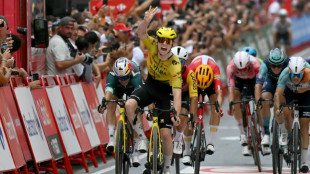 Brennan claims third Vuelta victory in stage 11 sprint

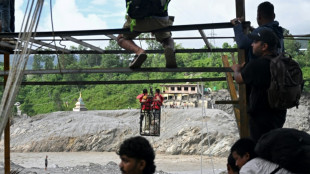 Nepal flood survivors cling to zipline to cross treacherous river

 US Treasury issues $1 coin with Trump's face on it
 Fernandez 'didn't hesitate' over record Man City move
 Dutch shift 86 tonnes of gold from US, Canada to UK

Helicopter pilot Tim Thomas has fought dozens of wildfires all over the world, but nothing prepared him for the scale and the challenge of the devastating blazes that ripped through Los Angeles.
"I've never seen anything the scale that we saw the first night," he told AFP.
Fires erupted almost simultaneously in two separate neighborhoods during a furious windstorm on January 7.
Whole streets were engulfed as hurricane-force gusts flung fireballs from house to house.
Forecasters had been warning of extreme fire risk for days because of punishing dryness and winds up to 100 miles (160 kilometers) an hour, saying any small fire would quickly spread.
Extra resources were positioned all over the at-risk region, which extended for miles around the sprawling metropolis.
But the fires, when they came, were overwhelming, defeating the hundreds of firefighters on the ground.
Only an air assault would stop them.
- Transfixed -
A terrifying 24 hours after the first smoke blackened the air, winds dropped just enough for helicopters to take to the skies.
"It was some of the most turbulent wind I've seen," said helicopter coordinator John Williamson.
Under the careful eye of experienced operators like Williamson, each pilot took turns in an elaborate airborne ballet.
The life-saving airshow they put on for nearly two weeks became a defining feature of the fires, watched with awe and gratitude by a terrified region.
Television viewers were transfixed by the incredible skills of helicopter pilots loading up hundreds of gallons (liters) of water into the bellies of their aircraft while hovering over a reservoir, then dumping it with pinpoint accuracy on a wall of flames.
The sight of huge jet planes swooping over a fire line and unleashing a trail of bright red retardant thrilled and relieved those whose homes were threatened.
But while they might have made it look easy, the pilots say the reality was far from it, with strong winds and unfamiliar terrain a constant challenge.
"There were definitely some uneasy moments going over the mountains where the crew was looking for me to see if I'm comfortable," said Thomas.
"There's definitely some times where the aircraft's 23,000 pound (11.5 tons), and you're getting rocked around, thrown around in the air."
- 'Takes your breath away' -
Paul Karpus, who has overseen operations at an airbase in Camarillo, 45 miles (70 kilometers) west of Los Angeles, said the opening days of the firefight were like nothing he has experienced in 23 years.
"Every season, you say, I've seen it all... And then you're surprised," he told AFP.
"Seeing the amount of devastation for the first time, when the sun was coming up, and the amount of structures lost, it takes your breath away."
Aerial teams operated 24 hours, pulling long shifts that left them exhausted and fraught.
"On a scale of one to 10, this one was a 10, stress-wise," said Karpus.
- 'Nerve-racking' -
Williamson, whose job is to sit next to the pilot, guiding him to his designated zone and monitoring dozens of radio messages, said the complexity of the operation was a challenge.
"The first three nights, really was pretty nerve-racking," he said.
Zach Boyce, who ran daytime operations said the sheer volume of aircraft in a tight space made things tricky.
"We're coordinating a lot of helicopters in a very tight area, and then we introduce fixed wing operations and air tankers and air attack... and everything becomes super compressed," he said.
More than two weeks after the fires erupted, killing more than two dozen people and reducing 40,000 acres (16,000 hectares) to ash, the biggest blazes are under control.
But the value of the aerial firefighters continues to be seen, with a fast-moving fire that erupted on Wednesday corralled by the time night fell after an airborne assault.
For the people of Los Angeles, the men and women who have fought this battle are second to none.
"We should never stop thanking them," Los Angeles-based talk show host Jimmy Kimmel said.
"Real superheroes."
L.Meier--VB