
Addressing Climate Change by Changing Our Food Systems

 Kiss's winning run ends as Argentina hold Australia to draw

 Alcaraz excited to face 'dangerous' Paul for US Open quarter-final berth

 Prince William to represent King Charles III at Norway late King Harald's funeral

 Inter and Roma roar back to win thrillers and share top spot

 Don't stop them now: fans party for Freddie Mercury's 80th birthday

 AFP photographer wins top prize for Madagascar protest coverage

 Keys: 'I felt like I couldn't play tennis'

 Simmonds stars as Pau upset Montpellier

 Inter roar back in five-goal thriller with Napoli

 Haaland keeps Man City perfect in Premier League, blunt Spurs held

 Hamilton worried by Ferrari pace while Antonelli prepares for a fight

 Vuelta stage 15 shortened due to extreme heat, Mas consolidates lead

 Putin meets US envoys for Ukraine war talks

 Modric available for Croatia in Nations League

 Potapova upsets 2025 US Open runner-up Anisimova

 Gasly a 'class act' says Alpine boss after Monza pole

 Athletic Bilbao crush Simeone's flat Atletico

 Stay far from battlefield, warns Japanese director in Vietnam War film

 Tens of thousands of Croatians protest over hazardous waste

 Haaland heads unconvincing Man City top of Premier League

 US envoys in Moscow as Russia and Ukraine vow not to hit capitals during talks

 Motorsport governing body rejects Alpine boss's claims of bias

 US envoy on West Bank visit says Israel has responsibility for Palestinians

 Ethiopian Miss World contestant spotlights pain of sister's murder

 'Leader' Raphinha rising to Barca striker challenge

Up to a third of global greenhouse gas production to date can be attributed to animal agriculture and food systems. Yet, most climate change solutions neglect the importance of food systems in climate change mitigation. In the article, 'Solving Climate Change Requires Changing Our Food Systems,' published in leading scientific journal Oxford Open Climate Change, prominent scientists from around the world propose that the pressing nature of irreversible climate change requires rethinking our food systems.
The year 2024 was the hottest year on record. For the first time the average global temperature rose to 1.6C above preindustrial levels, exceeding the 1.5C vital to preventing accelerating climate change. The effects of climate change are now visible on every continent.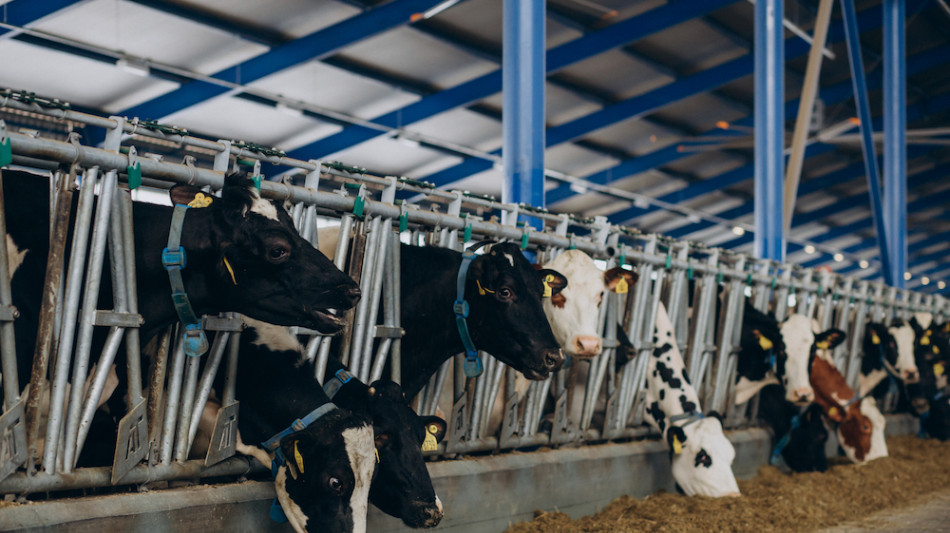
Lead researcher Dr Feigin and her co-authors assert that "we must undertake a global shift to a fundamentally plant-based diet and a gradual global reduction and eventual phaseout of intensive factory farming, the most prolific and damaging form of agriculture."
Our growing demand for meat and animal products is unsustainable. The FAO estimates that demand for meat will double by 2050, which would require that approximately 80% of existing forests and shrubland would have to be converted into land devoted to raising animals. Such a trajectory would have devastating consequences for us and the planet.
"As the world population increases, food insecurity and starvation will intensify if we continue to rely on a model of food production (i.e. animal factory farming) which is extraordinarily inefficient and resource intensive", the study authors contend. The authors present strategies to achieve a re-thinking of current food systems including the removal of government subsidies and higher taxation of animal products to account for externalized costs of animal agriculture.
The health benefits and savings to healthcare costs of adopting a fundamentally plant-based diet are profound. Consumption of animal products contributes to the development of many chronic diseases. Moreover, "antibiotic-resistant infections in humans are associated with proximity to animal farms and are a global health threat, killing approximately 700,000 people worldwide annually," the authors declare. The proliferation of industrialized animal farming has brought us closer than ever before to the outbreaks of lethal human zoonoses such as avian influenza (bird flu) and H1N1 (swine flu) resulting from factory farming operations.
The authors suggest that plant-based diets pet foods should also be included in the global shift away from animal agriculture. Pet dogs and cats consume at least 9% of all livestock annually and nutritionally sound plant-based pet diets would free up large amounts of land which could be used for climate mitigation.
Critical changes to our food system and consumption habits will require a shift in global mindset - lead author Dr Feigin states, "the future of humanity and all life on our planet depends on sustainability, and the data indicate that we will not succeed on the issue of climate change unless we change the way that we produce and consume food."
Contact Information
Svetlana Feigin
Dr
[email protected]
SOURCE: All Life Institute
P.Keller--VB