India's Kumbh Mela, world's largest religious gathering / Photo: © AFP/File

 Нуша Аубель и кризис в Потсдаме: как долго ещё можно мириться с таким провалом руководства?

 England quick Archer in 'good place' after injuries

 Robots protest rampant AI in Poland

 Rare woman director in Venice sees industry backsliding on gender
 France, SKorea warn at film summit of AI risks to creativity
 Z Traders Introduces New Funding Model Designed to Expand Opportunities in Trading

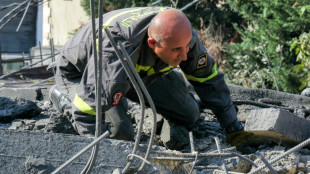 Lebanon says 12 killed in strikes as Israel vows to 'remove threats'

 Volkswagen plant to be converted for Israeli defence group

 Israeli rubble-clearing in Gaza could erase 'atrocity crimes' evidence: UN expert

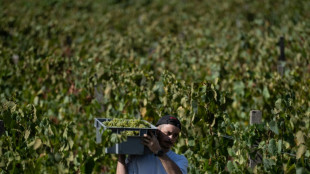 Scorching summer pushes French wine harvest to new historic low

 Pietersen joins England coaching team ahead of World Cup

 Germany's triumphant far-right AfD aims fire at Merz

 Fury claims Joshua bout is off, calls for Usyk trilogy

 British family bids to row back against suicide taboo

 China's teenage 223cm basketball player 'just a little girl'
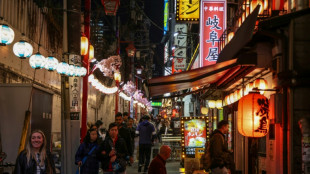 Tokyo's Shinjuku to ban more than half of vacation rentals

 Australian Rules limits contact training to reduce concussion
 Germany's Merz under pressure from far-right election triumph
 Nepal tunnel rescues face 'unprecedented' challenge
 Mourinho's Real Madrid European revival bid starts with Inter reunion

 Solomons PM survives attempt to oust government

 Ohtani 'unlikely' to pitch again this season, says Dodgers manager

 Driver thanks 'superhero' rival for saving him from flaming race car

 Can dogs sniff cancer? AI joins the hunt in India

 Shelton steams into US Open quarter-final clash with Alcaraz

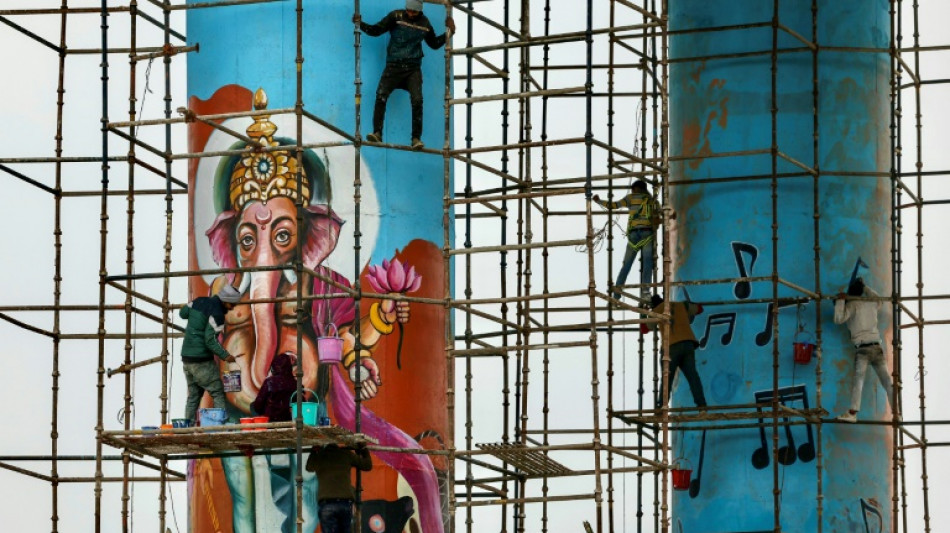
Organisers of India's Kumbh Mela have prepared to host a staggering 400 million devotees at the six-week Hindu festival that starts Monday and is expected to be the largest human gathering in history.
Pilgrims will come from across India and beyond to take part in elaborate rituals, prayers and religious processions with elephants, as well as horse-back parades and chariots.
The mass Hindu mela, or fair, runs from January 13 to February 26 on the river banks of Prayagraj in the northern state of Uttar Pradesh.
Organisers say the scale of preparations for the Kumbh Mela is akin to setting up a country from scratch.
- Mind-boggling numbers -
Around 150,000 toilets have been built along with community kitchens that can each feed up to 50,000 people at a time.
The last celebration at the site, the "ardh" or half Kumbh Mela in 2019, attracted 240 million pilgrims, according to the government.
This year, authorities are preparing for up to 400 million people -- more than the combined population of the United States and Canada.
Mela authorities and police have set up a network of "Lost and Found" centres as well as a special Kumbh phone application to help lost pilgrims reunite with their families.
- Sacred bathing -
The Kumbh Mela, the "festival of the sacred pitcher", is held at the confluence of the Ganges, Yamuna and mythical Sarasvati rivers.
A central part of the rituals is bathing in the holy rivers, with the dawn charge often led by naked, ash-smeared monks.
Hindus believe that those who immerse themselves in the waters cleanse themselves of sin, breaking free from the cycle of rebirth and ultimately attaining salvation.
Many pilgrims embrace a life of simplicity during the festival -- vowing non-violence, celibacy and the offering of alms -- and focusing on prayer and meditation.
- Cosmic battle -
The festival is rooted in Hindu mythology, a battle between deities and demons for control of a pitcher, or kumbh, containing the nectar of immortality.
During the battle, a cosmic fight called "Samudra Manthan", or the "churning of the ocean", four drops of nectar were spilt.
One landed at Prayagraj, where the Kumbh is held every 12 years.
The other drops fell in Nashik, Ujjain and Haridwar, cities where smaller Kumbh festivals are held in intervening years.
The mythological battle is mentioned in the Rig Veda, an ancient sacred canonical Hindu text.
One of the earliest historical mentions of the festival comes from Chinese Buddhist monk and scholar Hiuen Tsang, who attended in the seventh century.
- Key dates -
Bathing takes place every day, but on the most auspicious dates, it is known as Shahi Snan, or "royal bath".
Ceremonies include the visually spectacular "aarti", when vast numbers of priests perform rituals holding flickering lamps.
Devotees also float a sea of twinkling "diya" prayer lamps, crafted from baked flour, that glow from burning mustard oil or clarified butter.
Key dates include January 13, the start of the mela that coincides with the full moon.
One of the most popular days is January 29, Mauni Amavasya, when celestial alignments are said to be ideal for purifying waters.
Celebrations culminate on February 26, Maha Shivaratri, the final holy bathing day.
H.Gerber--VB