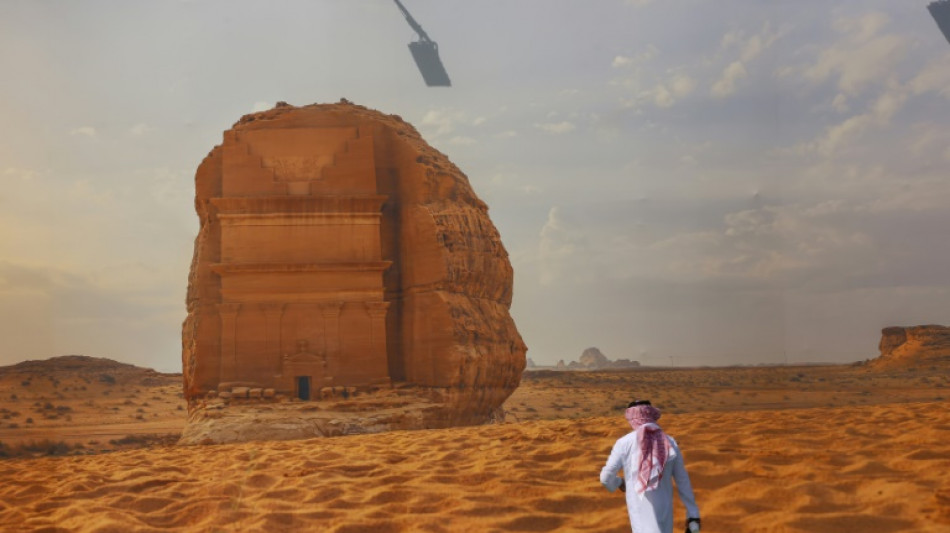
World falls short of drought deal at Saudi-hosted talks / Photo: © AFP

 Asian Games begin with Qatar basketball win, nine days before opening ceremony

 Stocks sink as oil rally fans inflation and rate hike fears

 Argentine industry reels from Milei's free-market revolution

 Women quit South Korea's grind for diving tradition
 Bayeux Tapestry 'mania' sweeps UK as sold-out exhibition opens
 August hottest month ever recorded globally: EU monitor

 Duplantis leads creme de la creme at 'game-changing' Ultimate Championship

 Sjobo, cradle of Sweden's now-mainstream anti-migrant sentiment

 Israeli-made film about Gaza civilian deaths to debut in Venice
 Stars ready for busy Toronto International Film Festival

 Rubio defends anti-drug boat strikes, warns of cartel 'cancer'

 Rybakina books US Open semi against Gauff, secures No.1 ranking

 Pegula aiming to thwart Sabalenka three-peat in US Open semis

 'Not normal' US Open scheduling under-fire after late-night finishes

 Luis Enrique hails 'marvellous' Dembele as PSG win big in Champions League

 Liverpool's Iraola 'lucky' after first taste of Champions League

 Resurgent Zheng takes positives from storming US Open run

 Odegaard gives Arsenal winning Champions League start at Napoli

 Bond yields jump despite $6 bn US government intervention

 Mac Allister caps Liverpool comeback to beat Atletico Madrid

 Ferran Torres hits hat-trick as PSG wallop Slovan in Champions League

 New CEO unveils Apple's first foldable iPhone
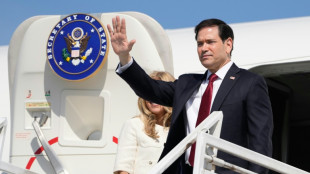 Rubio pushes anti-drug fight in Ecuador

 England on top in third Test after historic Pakistan collapse

 Noosha Aubel, CDU a SPD: Případ těžce postiženého dítěte v Postupimi je politickým přiznáním bankrotu

Negotiators failed to produce an agreement on how to respond to drought at Saudi-hosted UN talks, participants said on Saturday, falling short of a hoped-for binding protocol addressing the scourge.
The 12-day meeting of parties to the United Nations Convention to Combat Desertification (UNCCD), known as COP16, concluded early on Saturday morning, a day later than scheduled as parties tried to hammer out a deal.
Prior to the talks, UNCCD Executive Secretary Ibrahim Thiaw said the world expected negotiators "to adopt a bold decision that can help turn the tide on the most pervasive and the most disruptive environmental disaster: drought".
But addressing the plenary session before dawn, Thiaw acknowledged that "parties need more time to agree on the best way forward".
A press release on Saturday said the parties -- 196 countries and the European Union -- had "made significant progress in laying the groundwork for a future global drought regime, which they intend to complete at COP17 in Mongolia in 2026".
The Riyadh talks came after the partial failure of biodiversity talks in Colombia, the failure to reach a UN deal on plastics pollution in South Korea, and a climate finance deal that disappointed developing nations at COP29 in Baku, Azerbaijan.
- Growing threat -
Droughts "fuelled by human destruction of the environment" cost the world more than $300 billion each year, the UN said in a report published on December 3, the second day of the talks in Riyadh.
Droughts are projected to affect 75 percent of the world's population by 2050, it said.
A delegate at COP16 from a country in Africa, speaking on condition of anonymity to discuss private deliberations, told AFP that African nations had hoped the talks would produce a binding protocol on drought.
That would ensure "every government will be held responsible" for devising stronger preparation and response plans, the delegate said.
"It's the first time I've seen Africa so united, with a strong united front, with respect to the drought protocol."
Two other COP16 participants, also requesting anonymity, told AFP that developed countries did not want a binding protocol and instead were pushing for a "framework", which African countries deemed inadequate.
Indigenous groups were also pushing for a protocol, said Praveena Sridhar, chief technical officer for Save Soil, a global campaign backed by UN agencies.
This would allow for better monitoring, early warning systems and response plans, she said.
Yet the absence of a protocol from COP16 "shouldn't delay progress", as national governments can still allocate "budgets and subsidies to financially support farmers in adopting sustainable soil and land management".
- Funding needs -
Ahead of the Riyadh talks, the UNCCD said 1.5 billion hectares (3.7 billion acres) of land must be restored by decade's end and that at least $2.6 trillion in global investments was needed.
The first week saw pledges of more than $12 billion from bodies such as the Arab Coordination Group, a collection of national and regional institutions, and the Riyadh Global Drought Resilience Partnership, which is meant to mobilise public and private money to help at-risk countries.
Activists accused Saudi Arabia, the world's biggest oil exporter, of trying to water down calls to phase out fossil fuels at last month's COP29 UN climate talks in Baku.
However, desertification is a major issue for the Gulf kingdom.
Along with the drought resilience partnership, Saudi Arabia launched initiatives to promote early warning for sand and dust storms and to get the private sector involved in land preservation, Saudi Environment Minister Abdulrahman AlFadley said in his closing remarks.
Saudi Arabia is dedicated "to working with all parties to preserve ecosystems, enhance international cooperation to combat desertification and land degradation, and address drought", he said.
Sridhar of Save Soil said Saudi Arabia had succeeded in raising the profile of land-related issues, which she described as more "unifying" than the climate talks in Baku.
"Attending to land, agriculture lands, farmers, livestock –- it's not a contested subject. Nobody's going to say 'I don’t want food'," she said.
"The use of fossil fuels or not is a very polarising subject. This is not."
D.Bachmann--VB