Spain urged to 'build differently' after deadly floods / Photo: © AFP

 Davidovich Fokina wins in Mallorca for first ATP title

 Sabalenka urges Grand Slams to 'get it done' in prize money boycott row

 Russell snatches pole as Verstappen, Antonelli fourth for Austria GP grid

 Smith and supersub Foulkes strike for New Zealand in England finale

 Supersub Foulkes strike for New Zealand in England finale

 Wolff says Russell will be at Mercedes next season

 Djokovic inspired by Serena as he targets history at Wimbledon

 Stokes falls cheaply as England collapse in New Zealand decider

 Russell bounces back to beat Antonelli in final practice

 Iran says US violated peace deal as both sides trade fire

 Injured Australian pair Leckie, Italiano out of World Cup

 Farmers fear drought as Italy's longest river runs dry

 Budapest Pride to push for equality after reversed ban

 World Cup fans get taste of American life -- at the mall
 World Cup turns New York's Times Square into global fan hub

 Lebanon, Israel and US sign trilateral framework pact

 Cape Verde extend World Cup fairytale to set up Argentina meeting
 Messi to start dead-rubber World Cup group match on bench

 US and Iran trade strikes putting new strain on Mideast ceasefire

 Maple Leafs make teen McKenna top pick in NHL Draft

 California appeals court orders Weinstein resentencing for sex assault

 Scheffler fires 60 to grab 36-hole PGA Travelers lead

 Austria's Rangnick shuts down conspiracy talk ahead of Algeria World Cup clash

 Should we fear an AI bubble bust?

 US strikes Iran sites after cargo ship attack

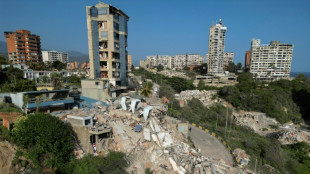
Spain is racing to reconstruct areas devastated by deadly floods last month but experts have urged a rethink of development with the relocation of buildings away from vulnerable areas.
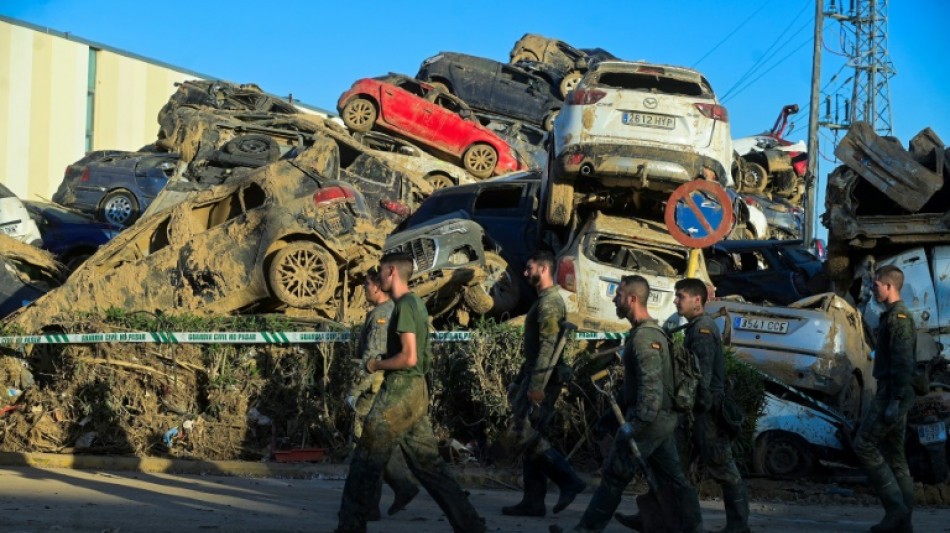
The worst floods to hit Spain in decades on October 29 killed at least 230 people, covered towns in mud and debris, destroyed bridges, roads and rail lines and submerged cars, mainly in the eastern region of Valencia.
"The degree of destruction and ruin was historic" in the Valencia region, where some 80 towns were hit by torrential rains, according to a report from Spain's Higher Council of Colleges of Architects.
Reconstruction must "be carried out with empathy, technical rigour and a great deal of responsibility," said its president Marta Vall-Llossera.
"With global warming making meteorological phenomena more intense and more frequent, architecture will have an important role to play," she told AFP.
"We're going to have to build differently," she added, recommending a return to "the traditional, compact Mediterranean city".
In Spain's third-largest city Valencia, the regional capital, land has become increasingly built up, making it more vulnerable to flooding since concrete prevents the ground from absorbing water.
In the Valencia suburb of Paiporta, epicentre of the disaster, roads were quickly transformed into torrents of mud that swept away everything in their path.
"We must try to re-naturalise cities, reduce the use of cars, make the cobblestones less hard, more permeable, and better able to withstand the intense heat and torrential rain," said Vall-Llossera.
- 'Forced expropriation' -
A flood risk prevention plan was approved in the Valencia region in 2003 but it is not binding and has no "retroactive effects", said Maria Jesus Romero Aloy, an expert in urban planning law at Valencia's Polytechnic University.
Valencia accounts for just five percent of Spain's territory which is at risk of flooding but has seen 20 percent of the heavy rainfall events recorded over the past decade in the country, according to the plan.
The highest risk of flooding is concentrated in 12 percent of the region -- home to the popular beach resort of Benidorm -- and affects 600,000 people.
In this area, the authorities recommend homes have watertight windows and an internal staircase with roof access to allow for an escape from flash flooding.
But Romero Aloy said there has to be a "rethinking the territorial model and considering removing buildings or installations that face a high risk" of flooding.
Property owners are currently allowed to rebuild on flooded land even in a high-risk zone.
The only way to prevent this is through a "forced expropriation" as happened in 2019 in Onteniente, a municipality some 85 kilometres (50 miles) south of Valencia.
There "a neighbourhood was eliminated" and turned into a floodway, a channel reserved for floodwaters to pass through, said Romero Aloy.
- 'Natural barriers' -
Mayors, however, are "reluctant to expropriate" because it is a "complicated political decision", especially when the country faces a housing shortage, she added.
But a month after the floods "there is a growing awareness among decision-makers," said Federico Jesus Bonet Zapater, an expert in civil engineering, canals and ports who advises the regional government of Valencia.
"Projects to build dams or divert canals, which have been on the table for some time, are finally going to be studied," he added.
Rafael Delgado Artes, an expert in regional planning and risk prevention, recommends creating "natural barriers" such as forests to minimise the damage from floods and "artificial riverbeds to divert rivers away from city centres".
In the centre of Valencia, which was spared the October disaster, the river that runs through the city was diverted after devastating floods in 1957 and in its place stands a popular urban park.
T.Ziegler--VB