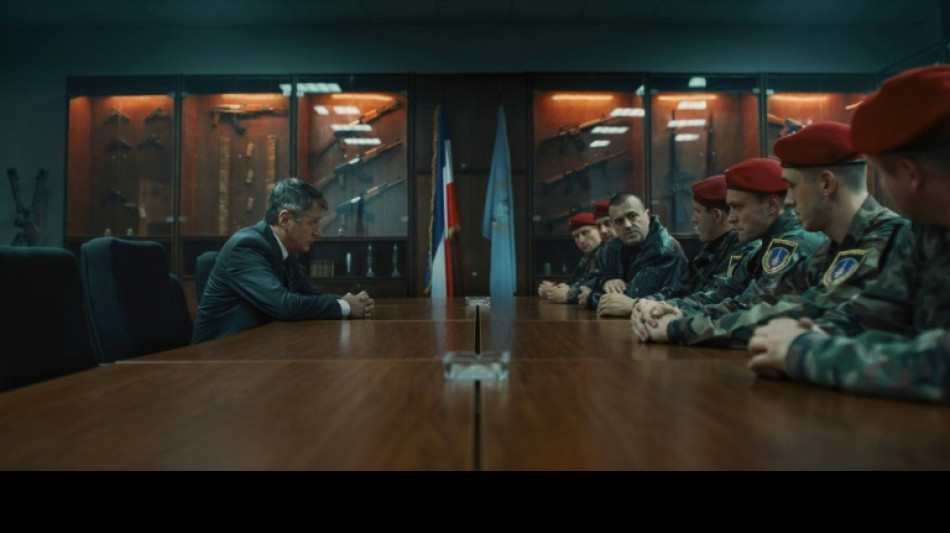
Serbia gripped by TV series about murder of prime minister / Photo: © This and That Productions/AFP

 World's largest particle smasher halts for upgrade to boost hunt for dark matter
 Ex-Olympic medallist Canderloro elected French Ice Sports chief
 Prince Harry and family to stay at royal residences on UK visit

 'Why not?': Cape Verde eye seismic World Cup shock against Argentina
 Russell snatches controversial pole in Austria after Verstappen crash
 Davidovich Fokina wins in Mallorca for first ATP title
 Sabalenka urges Grand Slams to 'get it done' in prize money boycott row
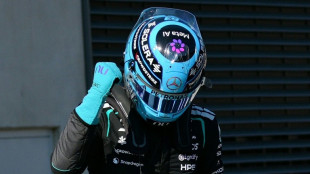
 Russell snatches pole as Verstappen, Antonelli fourth for Austria GP grid
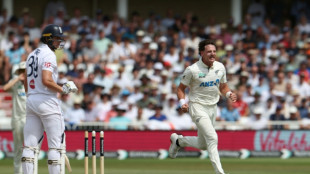 Smith and supersub Foulkes strike for New Zealand in England finale

 Supersub Foulkes strike for New Zealand in England finale
 Wolff says Russell will be at Mercedes next season

 Djokovic inspired by Serena as he targets history at Wimbledon

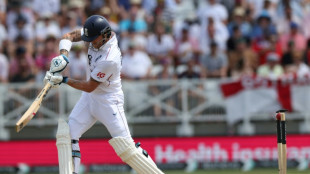 Stokes falls cheaply as England collapse in New Zealand decider
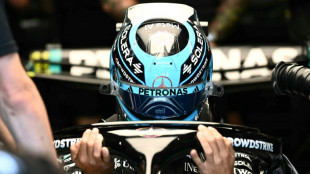 Russell bounces back to beat Antonelli in final practice
 Iran says US violated peace deal as both sides trade fire
 Injured Australian pair Leckie, Italiano out of World Cup
 Farmers fear drought as Italy's longest river runs dry

 Budapest Pride to push for equality after reversed ban
 World Cup fans get taste of American life -- at the mall
 World Cup turns New York's Times Square into global fan hub
 Lebanon, Israel and US sign trilateral framework pact
 Cape Verde extend World Cup fairytale to set up Argentina meeting
 Messi to start dead-rubber World Cup group match on bench
 US and Iran trade strikes putting new strain on Mideast ceasefire

 Maple Leafs make teen McKenna top pick in NHL Draft
More than a million Serbians tuned in to watch reformist prime minister Zoran Djindjic killed by a sniper in the first episode of a dramatic television mini series that has had the country on the edge of its seats over the last month.
The political-crime thriller "Operation Sabre" has been a smash hit, with bitter memories of the 2003 assassination still close to the surface for many who had pinned their hopes on the dynamic new leader after the dark years of Slobodan Milosevic.
"I remember the incredible silence... you could feel the fear," actor Dragan Micanovic, who plays Djindjic in the series made by Serbia's public broadcaster, told AFP of his own memories of the murder's aftermath.
Djindjic -- the first democratically elected leader of post-communist Serbia -- was killed in broad daylight on March 12, 2003 in front of a government building in the heart of the capital Belgrade.
- 'Watershed moment' -
His supporters saw him as a leader set on transforming the pariah nation, tainted by war crimes committed during the 1990s Balkan wars, into a prosperous one headed for EU membership.
But to his enemies, he was a turncoat who oversaw the extradition of war-time leader Milosevic to The Hague, where he was tried by a UN tribunal for genocide and war crimes.
That was the ultimate motive for his killer, Zvezdan Jovanovic -- his tense interrogation recreated in the eight-part series, which is also showing on HBO Max for international audiences.
Jovanovic was a member of the so-called "Red Berets" -- a special unit formed by the State Security Service under Milosevic's regime. He was sentenced to 40 years in prison for his role in Djindjic's murder.
Series co-writer Vladimir Tagic, who was just 16 when Djindjic was killed, described the assassination as a watershed moment in his own life.
"From that moment on, I began to think about the world around me, realising that I was a part of it and couldn't live outside of it," Tagic told AFP.
The series features archive footage of the dizzying events along with dramatic renderings of the murder and its aftermath when more than 11,000 people including militia leaders, crime bosses and police officers were rounded up during the frantic dragnet codenamed "Operation Sabre".
"We felt it was necessary to remind people that this truly happened on our streets, in our city... I believe the archival material brought great emotional power to the story," said Tagic.
- 'Horrible moments' -
The formula has proven to be a powerful mix, with 70-year-old Belgrade resident Biljana Cubrilo saying the show brought back memories too painful to bear.
"I couldn't bring myself to relive those horrible moments," she told AFP.
The show's writers went through thousands of pages of court documents about Djindjic's murder, zeroing in on links between officials, security services and the criminal underworld.
"Our goal was to present a version of events supported by clear evidence," said co-writer Goran Stankovic.
"Reading their testimonies, often devoid of empathy, was deeply disturbing," he added.
News coverage from the time is also a major focus of the series, showing its role as a key influence on events.
For younger viewers with no memory of Djindjic or the bloody breakup of Yugoslavia in the 1990s -- a subject that remains taboo in many parts of Serbia -- the series has been an eye-opener.
"I felt torn... he was a man who tried to set things right," Vuk Randjic, a 21-year-old student in Belgrade, told AFP.
"But because of the entire system, he couldn't carry out the vision he had."
S.Leonhard--VB