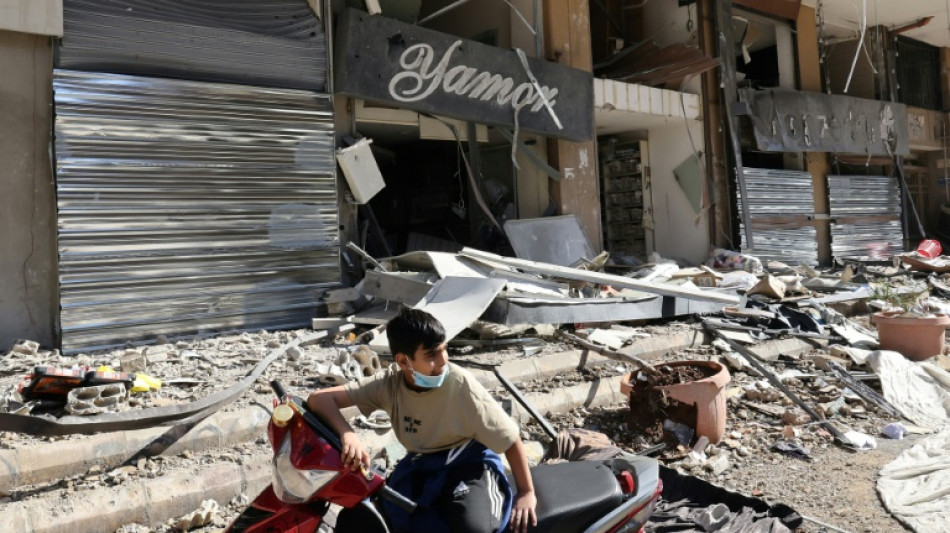
Beirut businesses struggle to stay afloat under Israeli raids / Photo: © AFP

 One dead, 102 rescued from stricken ferry off Indonesia's Java
 Garcia keeps WBC welterweight title by stopping Benn
 Lights out in Laos as electricity exports surge

 'This is the test': All eyes on US Fed to tackle high inflation

 Scars of Marawi siege linger as Philippines poll nears

 Trump turns to golf, family business on Irish visit's second day

 Defiant Sabalenka motivated by US Open defeat

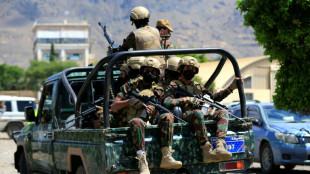 Houthis say hit Saudi base after renewed fighting with Yemeni govt forces

 Winston County trash-debt prosecutions face challenge from civil-rights lawyers

 Japanese floating parking platform is designed to lift cars above floodwater

 Anthropic details Claude misuse as US targets major illicit online marketplace

 Fifth Circuit upholds dismissal of Jackson residents' constitutional water claims

 Roadless Rule repeal proposal raises concerns over Midwest forests and fire risk

 Utah hosts Arkansas as both programs begin seasons under new coaches

 Christa Pike seeks clemency before September 30 execution in Tennessee

 Louisiana's developing roster faces USC as Trojans enter as heavy favorites

 Akron fan's honorary play-calling stint ends with opening-drive fumble

 Maryland groups seek statewide data center pause after local moratoriums spread

 Attissogbe double inspires Pau to Top 14 summit

 Guimaraes strike lights up Arsenal win over Sunderland

 Israeli-made Gaza documentary wins Venice special jury prize

 De Zerbi apologises to fans after Spurs' stalemate extends goal drought

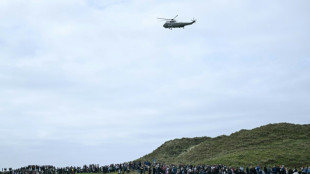 Lowry takes four-shot lead as Trump jets in for Irish Open

 Harrison, Skupski win US Open men's doubles title
 Verstappen fears overtaking will be 'tough' at Spanish GP

Lina al-Khalil has fled her south Beirut home to escape escalating Israeli attacks on Hezbollah, but she still returns daily to the bombarded area to keep the family business running.
"It's more important than my house," said the pharmacist, in her 50s, of the business she inherited from her father in Haret Hreik, a southern suburb of the Lebanese capital where Iran-backed Hezbollah militants hold sway.
Whenever the Israeli military issues a warning to evacuate before a strike -- a near-daily occurrence for nearly two months -- she closes down the shop and rushes out.
Despite the ever-present fear and the steep decline in business activity, Khalil does what she can to keep her business afloat, like many other shopkeepers in Beirut's southern suburbs.
The vast majority of the area's estimated 600,000-800,000 residents have fled, seeking refuge elsewhere.
"With the drop in customers, the financial impact has been severe," Khalil told AFP, adding that she has had to halve the salaries of her employees due to the pinch.
Khalil has moved most of the pharmacy's stock to her second home in the mountains for safekeeping.
To serve the few customers she still has, she drives up to collect the medicine they need, and even delivers it to their homes when they can't reach the pharmacy.
Some areas of south Beirut have been devastated by strikes since Israel intensified its campaign against the powerful Hezbollah movement on September 23, after nearly a year of limited cross-border clashes over the Gaza war.
- 'Hide-and-seek' -
South Beirut grocer Mehdi Zeitar, in his 50s, has had to find a place to live after an Israeli strike destroyed his home.
For the time being, his vegetable stall has survived, but "all the surrounding buildings have been damaged", he said.
"We're playing hide-and-seek," Zeitar added bitterly, referring to Israeli attacks.
"We leave by car until the strikes are over, then we go home."
He comes in for two or three hours a day to run his shop, saying he has no other option to support his family.
But he told AFP that he spends much of his time waiting for customers, who never come.
"We are truly unemployed."
In a recent report, the World Bank estimated that the Lebanese commercial sector incurred losses of $1.7 billion over 12 months of conflict, on top of billions more in losses to the economy and material damage.
Lebanon had already been reeling since 2019 from an intense economic crisis that pushed most of the population into poverty.
According to the World Bank report, around 11 percent of establishments in the conflict zones have been damaged, particularly in the southern areas of Tyre, Sidon and Nabatiyeh, where Israel's military campaign has targeted Hezbollah strongholds.
It said that the "displacement of both employees and business owners from conflict-affected areas" has led to a near-complete halt in business activity as well as "disruptions to supply chains to and from conflict districts".
Many consumers now buy only essentials, the report said.
- Uncertain future -
When the war began in late September, Ali Mahdi and his brother shuttered their clothing stores and warehouse in Beirut's southern suburbs as well as in Tyre and Nabatiyeh, taking some of their merchandise with them.
They set up shop in several locations including Beirut's Hamra district, at a distance from the majority of the strikes.
But they still face many challenges there.
"There's the rise in rents, and the fears of residents in certain areas when it comes to renting to displaced residents from the southern suburbs and villages," said Mahdi, who is in his 30s.
With their future shrouded in uncertainty, "we're trying to clear our stocks," he said.
"We don't know whether to import new products or save our cash."
Mahdi added that he had to make some of his 70 employees redundant and dock pay from the rest.
In the southern suburbs, an Israeli strike turned the cafe Abdel Rahman Zahr El-Din had opened five years ago into a pile of rubble.
He said he must salvage what he can, now that he has lost his only way to make ends meet.
"There's nothing left but stones," he said as he inspected the upper floor, emerging with a small table in his hand, unharmed but covered in grey dust.
A.Zbinden--VB