IAEA chief praises progress on Fukushima decommissioning / Photo: © AFP

 Former Grand Slam winner Wawrinka ends tennis career

 Brazil's Flavio Bolsonaro flees to US after election loss

 'Faerie' nights: 'ACOTAR' fans finally get their book

 American woman convicted of getting military training from Islamic State

 Israel opposition holds narrow edge over Netanyahu in first projections

 Floriani hits maiden goal as Lazio go top
 Trump set to drastically loosen oil and gas sector's methane rules

 Storied Paris department store seeks bankruptcy protection

 Xhaka, Embolo can return to Swiss squad after fake Covid docs affair

 Allegri suspended for two Serie A games after red card

 Flight data, satellite images reveal growing US role at Ecuador base

 McInnes feels 'guilt' ahead of Hearts return with Rangers

 Brazil's Lula turns 81, vows to work '24 hours a day'

 Boeing releases cautious growth plan as shares fall sharply
 Exiled Russian dissident Navalnaya warns dictators becoming 'more cunning'
 Bayern 'risk' reaps huge reward for Ballon d'Or winner Kane

 Record turnout as Israeli voters deliver verdict on Netanyahu

 Iraola says Isak 'feels the trust' after Liverpool scoring streak

 French media protest manhandling of journalists at far-right party rally

 EU seeks deportation powers for beefed up border agency
 Two charged with UK security offences over airbase plot: police

 Maresca defends Donnarumma, Guehi after Man City defeat
 Nordic leaders call Putin as local truce begins in Ukraine

 Osaka unveils crane outfit in Tokyo before win over Paolini

 Ronaldo in line for Portugal return after fallout with coach

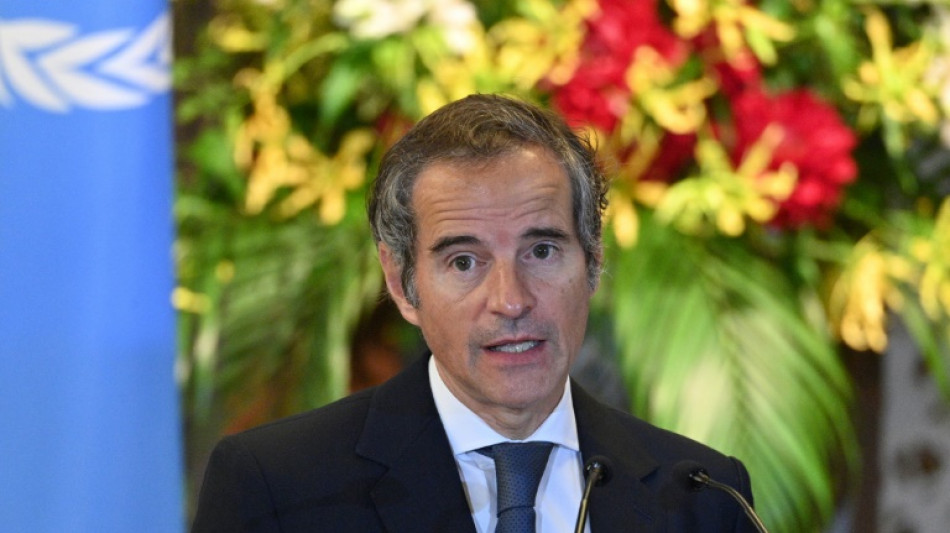
Work on the decommissioning of the stricken Fukushima nuclear plant has made "remarkable progress", the UN's nuclear watchdog chief said Thursday after a site visit, pledging to continue monitoring the process.
International Atomic Energy Agency (IAEA) head Rafael Mariano Grossi is in Japan on a two-day trip to assess efforts to dismantle the Fukushima Daiichi plant after the 2011 disaster caused by a devastating tsunami.
The process is expected to last decades and has encountered various difficulties including the build-up of contaminated water.
But Grossi said he was "really impressed by the remarkable progress that, in spite of the pandemic, has been done over the past two years."
"We are going to be here before, during and after the (decommissioning) process," he added.
"We are in the before, and it's going well."
A March 11, 2011, undersea earthquake off Japan's east coast triggered a massive tsunami that overwhelmed cooling systems at several of the Fukushima Daiichi plant's reactors and caused the worst nuclear accident since Chernobyl.
Decommissioning is expected to take around four decades, with painstaking work to remove molten fuel from damaged reactors among the tasks ahead.
A more immediate challenge involves disposing of more than a million tonnes of treated water from the site that is currently stored in massive tanks.
Japan's government has endorsed a plan to release the water into the ocean after treating it to remove almost all radionuclides and diluting it.
The process will take place over many years, and has been backed by the IAEA and, this week, Japan's Nuclear Regulation Authority.
In a video message tweeted by Grossi from Fukushima, he insisted the release would "be done in full conformity with the international standards and therefore it will not cause any harm to the environment."
But the plan has worried local fishing communities concerned about the reputation of their catch and prompted criticism from China and South Korea.
The disaster in northeast Japan left around 18,500 people dead or missing, with most killed by the tsunami.
Tens of thousands of residents around the Fukushima plant were ordered to evacuate their homes, or chose to do so.
Around 12 percent of Fukushima was once declared unsafe but no-go zones now cover just 2.4 percent of the prefecture, although populations in many towns remain far lower than before.
W.Lapointe--BTB