Malawi festival unites refugees and locals / Photo: © AFP

 Hong Kong court set to sentence activist Joshua Wong in security case
 Australia raises benchmark rate to highest level in 18 years

 'The Remarried Empress' Cast Discusses Bringing Fantasy Royal Drama to Life

 Asian stocks retreat as AI worries outweigh steep oil-price drop
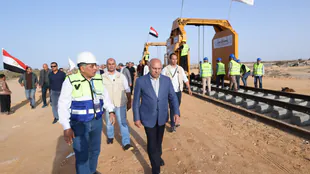
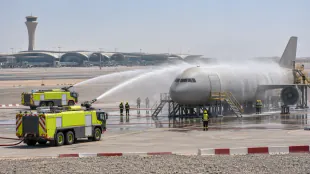 Hamad International Airport stages emergency drills during WATAN 2026

 Global failure to punish attacks leaves journalists at continuing risk

 Researchers Warn 'Bookkeeping Trick' Masks Beef Industry's Methane Emissions
 Climate Change Intensified Atlantic Hurricanes, Study Finds

 Qatar solar expansion opens scope for technical performance gains

A 72-year-old singer with tinted hair, oversized sunglasses and a flashy tracksuit hobbled up onto the main stage at Tumaini Festival in Malawi as the crowd erupted with joy.
"Ine ndi ndani?" (Who am I?) she said, addressing the crowd of some 12,000 people, who roared back: "Ine ndi Jetu!" (I am Jetu!)
Billed as the world's only music festival at a refugee camp, Tumaini, which ran from Thursday to Saturday and has been held annually since 2014, brings together refugees and locals to share music, art and crafts.
Only a few kilometres outside Malawi's capital Lilongwe, Dzaleka Refugee Camp was a prison before it was transformed into a camp following a massive influx of refugees from Africa's Great Lakes region in 1994.
The camp is home to people originating from the Democratic Republic of Congo (DRC), Rwanda, Burundi, Ethiopia and Somalia, amongst others.
The camp was meant to accommodate about 10,000 refugees but is now home to more than 60,000 people.
"Not many people my age get to go on stage and perform to such a crowd. I am really grateful," Jetu, a great-grandmother, told AFP in an interview after her performance.
- Everybody feels 'listened to' -
Established by Congolese poet Menes La Plume, the event draws thousands of visitors and artists from across Malawi, but also from South Africa and Zimbabwe.
For Menes, Tumaini is more than just a festival, it is a platform for connection, hope and coexistence.
"This is a unique space where refugees and locals celebrate each other's cultures, exhibit their crafts, and show the world their resilience," said Menes.
"Tumaini is proof that art and humanity can thrive even in the most challenging circumstances."
Festival manager Tammy Mbendera told AFP that this year's festival was put together by the young people of the camp, most of whom were born there.
"It is inspiring to see these young kids do this," she said, adding that "the results speak for themselves".
"The crowd is happy, the people of the festival are happy, the people within the camp are happy... everybody feels like they have been listened to."
South African musician Maveriq Mavo, who performed on Saturday evening, said he was "touched" by the initiative.
"Some things, you don't do for the money, you do them for the cause. That is why I am here," he said, adding that he wrote a song "specially dedicated to the refugees here".
"It is about time we say thank you to Malawi because not every country is taking refugees," said Mavo.
- Changes perceptions -
Other artists who performed at Tumaini included Malawi's top hip-hop musician Mfumu Hyphen but also Vankson Boy V, a Congolese refugee from the camp.
"I am glad that I was able to show off my talent at Tumani," Boy V said.
Festival goer Yasintha Kanyoza hailed the event for humanising refugees, saying that it was the only time that refugees and Malawians were able to mingle.
"I feel Tumaini gives a chance for both sides to interact and get to know each other and understand each other better," she said.
Refugees "are usually demonised and portrayed as violent, hungry, desperate" she said, adding that the festival changed her perception.
"I have been able to see for myself that these are people with the same needs and desires as I have," said Kanyoza.
Menes, who initially conceptualised the festival as a way to connect refugees with people from the surrounding villages, never thought the event would become this popular.
"We see people from all the corners of Malawi coming to Dzaleka to celebrate with the community here," he said, adding that he hoped to replicate the festival in other countries in Africa.
E.Burkhard--VB