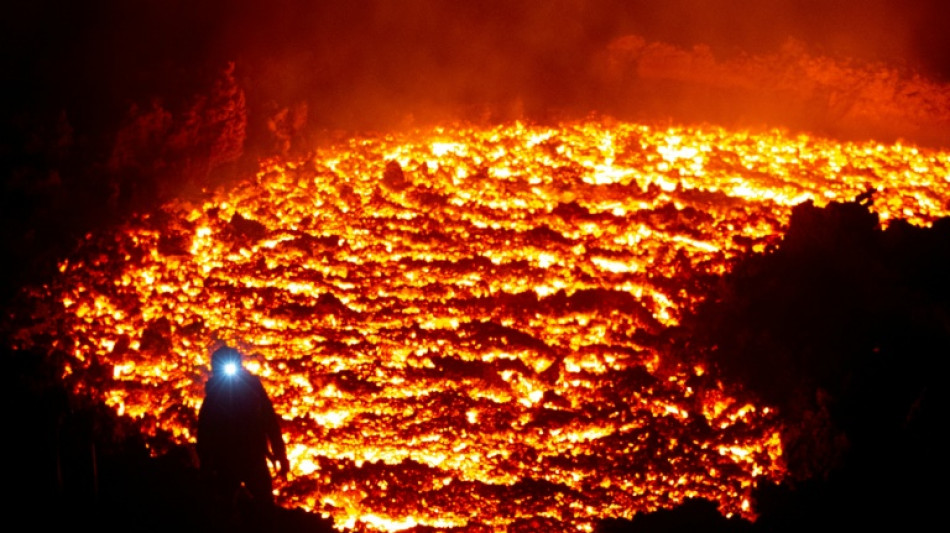
Volcanoes 'hidden source' of CO2 in past climate change: study / Photo: © AFP/File

 BASIS.pro Expands On-Chain Infrastructure with XDC Network Partnership and Zypher DAO as Auto Earn Goes Live
 Samson relishing battle with teen star Sooryavanshi for India spot

 Pickle-flavoured tart? AI inspires Japan's convenience stores

 Macau holds first closed-door national security trial

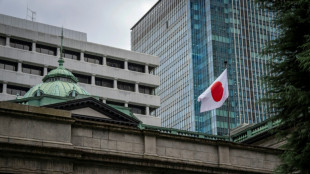 Bank of Japan set to raise rates under pressure from inflation, US

 Zverev, Shelton back on court for Davis Cup qualifiers

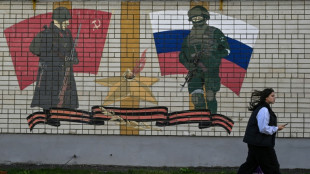 Peace is a 'dangerous' word in Russian city heading to polls

 Meta chief pushes back on AI slowdown calls

 'Resident Evil' film brings video game's ethos to the big screen

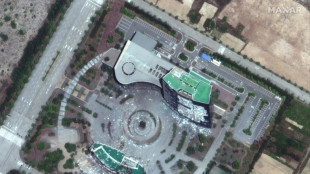 Court orders N. Korea pay Seoul $32.5 mn for blowing up office
 US military buildup in Palau stirs war fears
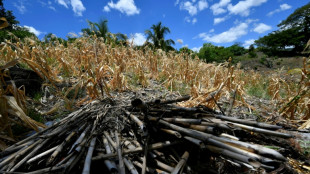
 US Fed to deliver rate decision with markets betting on hike
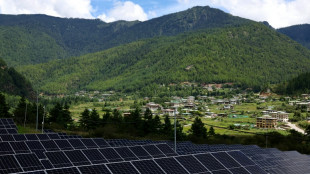
 Saudi, Egypt demand open Red Sea as Riyadh vows response to Houthi attacks

 Capitals say hockey star Ovechkin 'was asked' to film Putin ad
 Spurs in 'tough moment' after League Cup exit as De Zerbi says sorry

 Arteta salutes 'unbelievable' Dowman after Arsenal's teen star sinks Ipswich

 Empty seats as schools reopen in Venezuela's quake-hit Guaira

 Messi set for Argentina farewell in Benin friendly

 Ton-up Brook leads from the front as England hammer Sri Lanka in 1st T20

 AI giants pursue self-regulation as safety fears mount

 Argentina begin life after Messi with Bolivia friendly

 Helen Mirren delves into Patricia Highsmith's mind in 'A Talent for Murder'
 Sanders, Bannon warn of AI dangers in rare US left-right alignment

 US Senate crypto bill collapses amid partisan deadlock
 Raptors confirm Leonard return after Clippers salary cap scandal

Massive fields of magma underneath ancient volcanoes spewed out carbon dioxide long after eruptions on the surface had ended, potentially explaining why past global warming episodes lasted longer than expected, a study said Wednesday.
Humans are emitting far more planet-heating carbon-dioxide (C02) than all the world's volcanoes put together. But scientists hope that by studying climate change in Earth's distant past, they can understand how the world heats up -- and crucially, how it can cool down again.
Scientists have long been puzzled by how long it took Earth's atmosphere to recover from a mass extinction event 252 million years ago that ended the Permian period.
It was the most severe extinction event in our planet's history, wiping out roughly 90 percent of marine species and 70 percent of those on land.
Scientists believe the upheaval was caused by huge volcanic eruptions in Siberia. The eruptions created what are called large igneous provinces -- huge underground regions of magma and rock -- which have been linked to four of the five big mass extinctions since complex life appeared on Earth.
It took Earth's climate nearly five million years to recover.
But according to scientific models, the world should have regrouped much more quickly.
"Earth's natural thermostat seems to have gone haywire during and after this event," said Benjamin Black, a researcher at Rutgers University in the United States and lead author of a new study in the journal Nature Geoscience.
- 'This gives me hope' -
To find out more, the US-led team carried out chemical analyses of lava, used computer models to simulate inner-Earth processes and compared climate records preserved in rock.
Their results suggested that even once volcanic activity had ended during past episodes, magma kept releasing carbon dioxide deep in the Earth's crust and mantle, which continued heating the globe.
"Our findings are important because they identify a hidden source of CO2 to the atmosphere during moments in Earth's past when climate has warmed abruptly and stayed warm much longer than we expected," Black said in a statement.
"We think we have figured out an important piece of the puzzle for how Earth's climate was disrupted, and perhaps just as importantly, how it recovered."
Black told AFP that the process described in the study "definitely cannot explain present-day climate change".
All the world's volcanoes currently "release less than one percent as much carbon to the atmosphere as human activities," he explained.
The type of volcanism the team investigated was last seen on Earth 16 million years ago, Black said, and was so enormous it could "cover the continental United States or Europe half a kilometre deep in lava".
But if the findings are confirmed, it could show that Earth's thermostat is working better than scientists had thought.
"This gives me hope that geologic processes will be able to gradually draw anthropogenic CO2 back out of the atmosphere," Black said.
"But it will still take hundreds of thousands to millions of years, which is obviously a long time for human beings."
I.Stoeckli--VB