Grieving parents fight to make Bulgaria's killer roads safer / Photo: © AFP

 IR-MED and Dice Technologies Announce collaboration to Evaluate and Advance Pressure-Injury Prevention Platform in Japan
 Watts, Pitt, Cruz to light up Spain's top film festival
 Sweden expels Iran embassy employee over anti-Jewish threats
 Toogood Gold's Table Mountain Sits in the Shadow of a Nevada Gold Rush

 MEXC July–August Security Report: 38.66M USDT in Risk Funds Intercepted, Futures Insurance Fund Hits 792M USDT

 'Breathing toxin every day': Indonesians choked by haze feel helpless
 Stocks edge higher ahead of US Fed rate call

 Philippines ex-leader Duterte makes first in-person ICC appearance
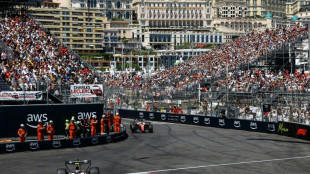 2027 Formula One calendar includes Monaco sprint race
 Palestinians are the real victims, Thunberg tells Ed Sheeran

 Hashim Thaci: From 'George Washington of Kosovo' to Hague convict

 Amnesty says Iran committed 'crimes against humanity' in crackdown on 2022 protests

 EU to ban social media for under 13s, curb access until 15

 Philippines ex-leader Duterte makes first appearance at ICC

 EU chief pitches 'associate member' status for Canada

 English village votes to 'secede' from UK over asylum centre plan

 Wildfires push endangered Sumatran elephants to brink: Indonesian NGO
 Stocks head higher as traders prepare for Fed decision
 English village votes to 'secede' from UK over asylum centre
 Hong Kong unveils plan to align economy with China's goals

 Brazilian voters the latest to eye Bukele security model with envy

 EU chief hosts Canada's Carney in push to 'deepen' alliance
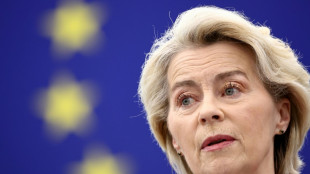 EU chief to unveil social media, gaming curbs for under-15s
 Saudi says Houthis target Mecca, warn of 'red line'

 Asian stocks stutter as traders prepare for Fed decision

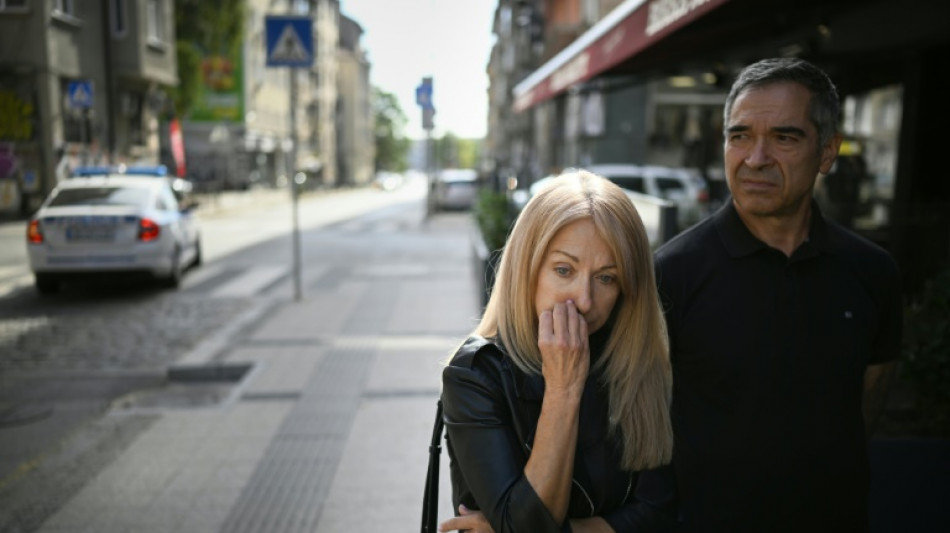
Standing next to a memorial for her 14-year-old son, mowed down by a drunk driver in downtown Sofia a year ago, Nikolina Petkova vowed to work to make Bulgaria's roads less lethal.
"Nothing can bring our Filip back," she said.
"But I am speaking out so that no more parents will wait in vain for their child to come back home."
Bulgaria's roads are ranked as the most dangerous in the European Union, with 82 deaths per one million inhabitants, according to official figures for 2023 published by the European Commission. Sweden has the best figures among the EU's 27 nations with 22 deaths per million.
Filip's father, Krasimir Arsov, is among several grieving parents who blame Bulgaria's high number of traffic deaths on reckless driving, poorly maintained roads and an inefficient justice system.
In September 2023, Filip was run over by an inebriated driver whose speed of 88 kilometres (54 miles) per hour was three times the limit.
The memorial at the crossing where he died has become a place for friends and families of other victims to meet and to demand justice.
"Before the accident I thought that we were living in a normal country," Arsov, a 60-year-old engineer, told AFP.
"But when I spoke to relatives of other victims, I realised that the state is not protecting the lives of its citizens."
- 'Feeling of impunity' -
Since the fatal crash, Filip's parents have been fighting to raise awareness of the issue to bring about change.
"There is nothing that can mend what has happened to us," said 52-year-old Petkova.
But she decried a "feeling of impunity" among offenders, a widespread lack of compliance with the laws and a failure to punish offenders.
"The man who killed our son was convicted of drunken driving 18 years ago, but got away with a simple fine and reoffended," she said.
After several months in pre-trial detention, the driver was put under house arrest. His trial is now under way.
"We must be unrelenting: nothing will change as long as the penalties are not really applied," said Petkova, who studied law.
But the road accidents reported almost daily by media seem to have raised awareness of the problem in the EU's poorest country, which has been gripped by prolonged political turmoil.
Last year, Bulgaria's parliament adopted stricter penalties for anyone found to be driving under the influence of drugs.
The cars of accused drivers are now impounded until trial, even when they have no previous criminal record.
That law could be struck down by courts on the grounds that it violates private property rights, but Petkova stressed that people's lives are also a "fundamental right".
- Thousands of impounded cars -
More than 4,000 vehicles have been impounded by police since the stricter measures were implemented, official statistics show.
If drivers are convicted, vehicles are auctioned off or given to municipalities or ministries for future use.
But official parking lots are overflowing with impounded cars.
"We are trying to find a solution" to move them to bigger lots, said policeman Ivo Momchev.
The head of Bulgaria's road safety agency, Malina Krumova, said the impounding of cars has had a deterrent effect.
The number of road deaths has decreased since 2019, when the agency was founded, she said, while the number of injuries is still in the thousands.
Bulgaria's busy road traffic due to its position as a gateway to the EU is one of the main factors behind the country's high accident rate, said Krumova.
But she also blamed Bulgaria's relative poverty.
Nearly half of the cars registered in Bulgaria are more than 20 years old. Lax safety tests fail to take dangerous vehicles off the roads and the road infrastructure is crumbling.
C.Kreuzer--VB