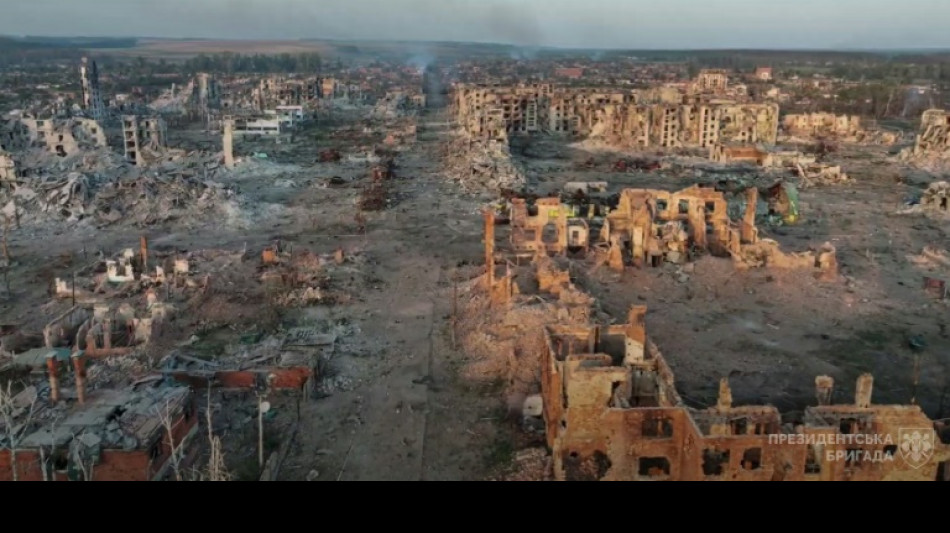
'Wiped off the face of the Earth': How Russia erased a Ukrainian city / Photo: © Armed Forces of Ukraine/AFP

 US House targets data centers as midterm backlash grows

 French ex-minister Dati goes on trial in Renault-Nissan corruption case
 'Being Heumann' captures joy in fight for disability rights
 Retired great Nadal to play in exhibition matches
 IR-MED and Dice Technologies Announce collaboration to Evaluate and Advance Pressure-Injury Prevention Platform in Japan

 Watts, Pitt, Cruz to light up Spain's top film festival

 Sweden expels Iran embassy employee over anti-Jewish threats
 Toogood Gold's Table Mountain Sits in the Shadow of a Nevada Gold Rush

 MEXC July–August Security Report: 38.66M USDT in Risk Funds Intercepted, Futures Insurance Fund Hits 792M USDT

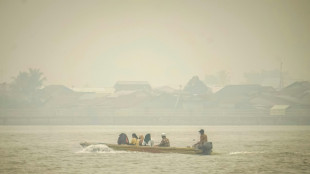 'Breathing toxin every day': Indonesians choked by haze feel helpless

 Stocks edge higher ahead of US Fed rate call

 Philippines ex-leader Duterte makes first in-person ICC appearance
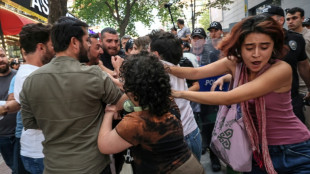
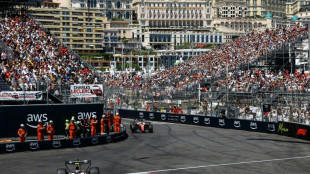 2027 Formula One calendar includes Monaco sprint race

 Palestinians are the real victims, Thunberg tells Ed Sheeran

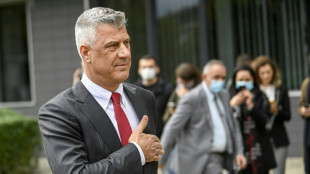 Hashim Thaci: From 'George Washington of Kosovo' to Hague convict

 Amnesty says Iran committed 'crimes against humanity' in crackdown on 2022 protests

 EU to ban social media for under 13s, curb access until 15

 Philippines ex-leader Duterte makes first appearance at ICC
 EU chief pitches 'associate member' status for Canada

 English village votes to 'secede' from UK over asylum centre plan

 Wildfires push endangered Sumatran elephants to brink: Indonesian NGO
 Stocks head higher as traders prepare for Fed decision

 English village votes to 'secede' from UK over asylum centre
 Hong Kong unveils plan to align economy with China's goals
 Brazilian voters the latest to eye Bukele security model with envy

"It barely exists anymore," said the mayor of Vovchansk, an industrial town razed by a Russian onslaught shocking even for the killing fields of eastern Ukraine.
Vovchansk has no great history but its geography could not be more tragic. Just five kilometres (three miles) from the Russian border, drone footage from the Ukrainian military this summer shows a lunar landscape of ruins stretching for miles.
And it has got worse since.
"Ninety percent of the centre is flattened," said mayor Tamaz Gambarashvili, a towering man in uniform, who runs what is left of Vovchansk from the regional capital of Kharkiv, an hour and a half's drive away.
"The enemy continues its massive shelling," he added.
Six out of 10 of Vovchansk's buildings have been totally destroyed, with 18 percent partially ruined, according to analysis of satellite images by the independent open-source intelligence collective Bellingcat. But the destruction is much worse in the city centre, which has been levelled north of the Vovcha River.
AFP and Bellingcat joined forces to tell how, building by building, an entire city was wiped off the map in just a few weeks -- and to show the human toll it has taken.
The sheer pace of the destruction dwarfed that of even Bakhmut, the "meatgrinder" Donbas region city where some of the most brutal killing of the war has been done, a Ukrainian officer who fought in both cities told AFP.
"I was in Bakhmut, so I know how the battles unfolded there," Lieutenant Denys Yaroslavsky insisted.
"What took two or three months in Bakhmut happened in just two or three weeks in Vovchansk."
- Invaded, then freed -
Vovchansk had a population of about 20,000 before the war. It now lives only in the memories of the survivors who managed to flee.
Beyond its factories, the city had a "medical school, a technical college, seven schools and numerous kindergartens," Nelia Stryzhakova, the head of its library, told AFP in Kharkiv.
It even had a workshop that made "carriages for period films. We were even interesting, in our own way," insisted Stryzhakova, 61.
Add to that a regional hospital, rebuilt in 2017 with nearly 10 million euros ($10.8 million) of German aid, a church packed for religious feasts, and a vast hydraulic machinery plant. Once the town's economic lifeblood, its ruins are now being fought over by both armies.
Vovchansk was quickly occupied by the Russian army after it invaded Ukraine in February 2022, but was then retaken by Kyiv in a lightning counter attack that autumn.
Despite enduring regular Russian bombardment, it was relatively calm. Then something very different happened on May 10.
- Badly defended -
Exhausted after weeks of hard fighting 100 kilometres to the south, the Ukrainian 57th Brigade was regrouping near Vovchansk when one of its reconnaissance units noticed something strange.
"We spotted two Russian armoured troop carriers that had just crossed the border," recalled Lieutenant Yaroslavsky, who was leading the unit.
They were the advance guard of one of the most intense Russian offensives since the beginning of the war, with Moscow throwing several thousand soldiers at the city.
"There were no fortifications, no mines" to slow down their advance, Yaroslavsky said, still furious at the "negligence or corruption" that allowed this to happen.
Some "17,000 people lost their homes. Why? Because someone didn't build fortifications," fumed the 42-year-old officer.
"We control the city today, but what we control is a pile of rubble," he added bitterly.
President Volodymyr Zelensky cancelled an overseas trip to rush to Kharkiv, admitting that the Russian army had pushed between five and 10 kilometres into Ukraine.
The people of Vovchansk, meanwhile, were living a nightmare.
- 'Drones like mosquitoes' -
"The Russians started bombing," said Galyna Zharova, who lived at 16A Stepova Street -- an apartment building now reduced to ruins, as images analysed by Bellingcat and AFP confirmed.
"We were right on the front line. No one could come and get us out," added the 50-year-old, who now lives with her family in a university dormitory in Kharkiv.
"We went down to the cellar. All the buildings were burning. We were crammed into basements (for nearly four weeks) until June 3," her husband Viktor, 65, added.
Eventually, the couple decided to flee on foot. "Drones were flying around us like wasps, like mosquitoes," Galyna remembered. They walked for several kilometres before being rescued by Ukrainian volunteers.
"The city was beautiful. The people were beautiful. We had everything," sighed librarian Stryzhakova. "No one could have imagined that in just five days, we would be wiped off the face of the Earth."
The 125,000 books in the library she had run at 8 Tokhova Street went up in smoke.
More than half of the families in eastern Ukraine have relatives in Russia. In Vovchansk, before the war in the Donbas region began in 2014, people crossed the border daily to shop, with Russians flocking to the city's markets.
"There are many mixed families," said Stryzhakova. "Parents, children, we're all connected. And now we've become enemies. There's no other way to put it."
The Russian defence ministry did not respond to AFP's questions asking for its account of what happened in the city.
Mayor Gambarashvili, who was hit in the leg by shrapnel as he oversaw the city's evacuation, shook his head when asked to estimate the number of civilian casualties.
Dozens, no doubt. Perhaps more. There were still around 4,000 people in Vovchansk on May 10, mostly older people, since most families with children had been evacuated months earlier.
- Families divided by war -
Kira Dzhafarova, 57, believes her mother, Valentina Radionova, who had lived at 40 Dukhovna Street in a small house with a charming garden, is likely dead.
Their last phone conversation was on May 17. "At 85, I'm not going anywhere," her mother insisted. Satellite images and witnesses have since confirmed that the house was completely destroyed.
"Since then I know it's over," sighed Kira, who provided DNA for identification, if and when the fighting ends.
In a particularly cruel irony, her mother, a Russian national, had moved to Vovchansk so she could be equidistant between her two children, who had fallen out.
Kira has lived in Kharkiv for 35 years and became officially Ukrainian two years ago. Her older brother, who she believes supports Russian President Vladimir Putin, remained in Belgorod, the family's hometown and the first big Russian city on the other side of the border.
Kira, a psychiatrist, now only refers to him as her "former brother".
AFP was unable to contact him directly.
Volodymyr Zymovsky, 70, is also missing. On May 16, he decided to flee the bombardment in a car with his 83-year-old mother, his wife Raisa, and a neighbour. Zymovsky and his mother were both shot dead, "most likely by a Russian sniper", Raisa said.
Amid the hail of bullets, the 59-year-old paediatric nurse had barely got out of the car when she was grabbed by Russian soldiers and held for two days. She managed to escape, hid in a neighbour's cellar for a night, and eventually fled through the forest.
She recounted her harrowing odyssey in a calm, measured voice. One thing alone seems to matter to her now: finding the bodies of her husband and mother-in-law and giving them a proper burial.
- 'They took my son' -
A rumour has circulated among the survivors that the bodies that littered the streets of Vovchansk for days were thrown into a mass grave. Where and by whom, no one knows.
A handful of civilians still remain in Vovchansk. Oleksandre Garlychev, 70, claims to have seen at least three when he returned to his former apartment on a bicycle in mid-September to retrieve belongings.
Garlychev lived at 10A Rubezhanskaya Street, in a southern part of the city that was relatively spared. He only left on August 10.
Vovchansk's survivors -- and even a few of its officials -- quietly wonder whether it will ever be rebuilt given its proximity to the border, regardless of how the war ends.
Asked whether she could ever forgive her husband's killer, Raisa Zymovska fell silent for a long time. Then, in a whisper, she replied: "I don't know, I really don't. As a Christian, yes, but as a human being... What can I say?"
As for the librarian Stryzhakova, she can no longer bring herself to open a Russian book, even the classics, since her only son Pavlo was killed in the Battle of Bakhmut.
"I know that literature is not to blame, but Russia, all of it disgusts me. They took my son, it's personal."
G.Haefliger--VB