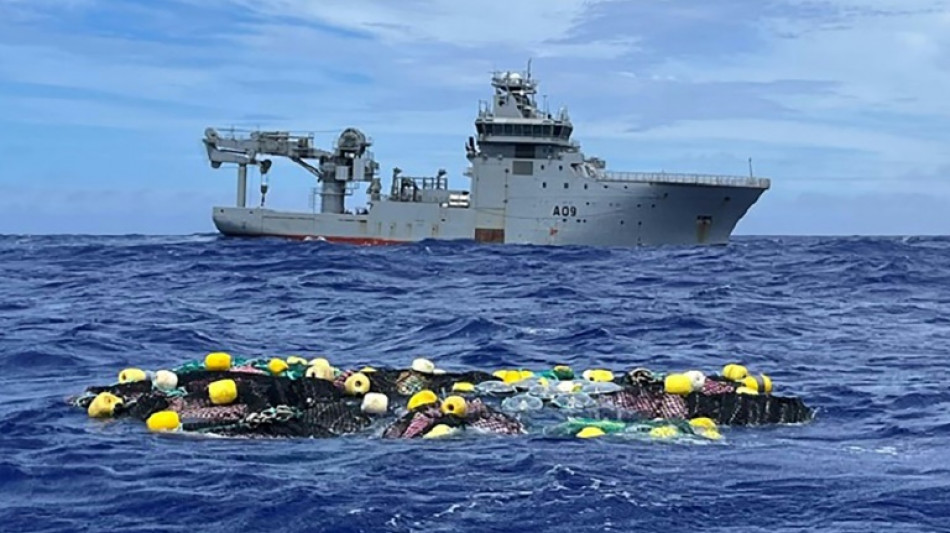
Pacific island nations swamped by global drug trade / Photo: © New Zealand Defence Force/AFP

 Mancini brings nine newcomers into the first squad of his Italy comeback

 Czechs level Davis Cup tie against USA as South Korea eye Finals

 New France boss Zidane confirms Mbappe as captain after naming first squad
 California governor signs order to explore AI 'kill switch'
 Head leads run spree as Australia win Zimbabwe ODI series

 In-form Raphinha wants to finish career at Barcelona
 Warren Buffett steps down as Berkshire Hathaway chairman
 Carrick confident Man Utd can 'work through' tough time

 Mbappe ends Nike partnership to join Swiss brand On

 Liverpool boss Iraola puts Bournemouth love affair on hold
 'A disaster' if Man City do not win says Maresca after flawless start
 Kerry James Marshall: American 'blackness' painter celebrated in Europe

 Spain coach De la Fuente offers 'full support' to people of Ceuta

 Russia seizes assets of Nestle, French firms over West's Ukraine support
 England can build on World Cup 'spirit', says Tuchel

 UNESCO can be 'moderator' in AI debate: chief to AFP

 Infantino 'must go', says German FA vice-president

 Russia seizes assets of Nestle, French firms

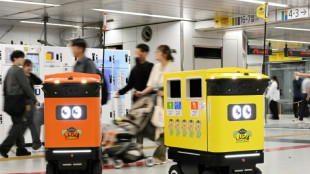 Japan's busiest rail station tests robot bins
 Anthropic says AI systems moving towards building themselves
 Asian stocks boosted by falling oil, yen weakens after BoJ rate hike
 Pakistan court blocks expulsion of Afghan medical college students
 Athletes 'can't take it any more' as Asian Games issues mount
 Allen lights up Bills' new stadium with 41-31 win over Lions
 Afghan medical students in Pakistan hope court stops college expulsions
A surge of drugs is engulfing the paradisal South Pacific, as cartels and triads use far-flung island nations to channel narcotics across the globe, top police and UN officials have told AFP.
Pacific islands such as Fiji and Tonga sit at the crossroads of largely unpatrolled ocean-trafficking routes used to shift cocaine from Latin America and methamphetamine and opioids from Asia.
This illicit cargo is increasingly spilling over into local hands, feeding drug addiction in communities where serious crime had been rare.
"We're a victim of our geographical location. An ideal transit point for vessels crossing the Pacific," Tonga Police Commissioner Shane McLennan told AFP.
"We have a massive ocean territory, and we've got 176 islands that, by and large, are unprotected."
Bricks of drugs are unloaded during stops in sleepy Pacific island ports, where they are repacked en route to lucrative markets elsewhere.
"The information coming our way is that illicit substances are coming through in general cargo that is shipped through Tonga," said McLennan.
"At the moment it's mostly methamphetamine."
Methamphetamine use has become so rampant in Tonga -- a deeply Christian nation of 105,000 people -- that the Global Organized Crime Index likens it to an "epidemic".
"It's a problem here," taxi driver Latimuli Taliauli, 39, told AFP as he waited for a passenger at the tumbledown Talamahu markets in Tonga's capital Nuku'alofa.
"There are some people walking around here that are damaged from the methamphetamine," he added, pointing out a dishevelled man staggering between rows of vegetables and local handicrafts.
- Drug highway -
Data on drug use, addiction and crime is scarce or non-existent in many of the Pacific's developing nations.
But courthouse records show a Tongan legal system clogged with drug users and dealers, from builders and mechanics to accountants and teachers.
A teenage thief and a 20-year-old accomplice appeared before court this year for ransacking the Tonga National Museum and stealing dozens of prized artefacts, a sentencing report obtained by AFP shows.
These treasures were traded away for a single gram of methamphetamine, the report showed, a hit worth as little as US$100.
Recent busts hint at the size of the so-called "Pacific drug highway".
Four tonnes of methamphetamine were seized in Fiji this year, concealed in plastic-wrapped packages labelled "universal tile adhesive".
It put Fiji -- a nation far better known for tourism than trafficking -- on par with the "biggest" seizures reported in global methamphetamine hubs like Thailand or Hong Kong.
Cocaine started trickling through Pacific island nations at least 20 years ago, as Latin American cartels looked to feed Australia's hunger for hard drugs.
Although Australia used only two percent of the world's cocaine by volume, sky-high prices meant that by 2008 it was already the third most lucrative market in the world, according to the United Nations Office on Drugs and Crime (UNODC).
- Spreading poison -
The trans-continental cocaine pipeline has in recent years been flooded with synthetic methamphetamine and the Pacific drug trade now follows two distinct routes.
Smugglers from Latin America and the United States sail through the island chains of Polynesia, en route to Tonga, Fiji and sometimes Samoa.
On the other side of the Pacific rim, drugs cooked in the jungle labs of Southeast Asia flow down through Melanesian states like Palau and Papua New Guinea.
While cash-poor Pacific nations were only ever seen as a transit point for expensive cocaine, locals can more readily afford the cheaper, highly addictive meth.
"From what we have been gathering on the ground, it is not just in urban areas but also in villages and rural areas," Fijian drug outreach worker Kalesi Volatabu told AFP.
"We are seeing lawlessness across the communities, in schools, and the risks and dangers in rural villages where these poisons are being spread."
Court documents seen by AFP reference the murky presence of "organised and sophisticated drug cartels" in Fiji, and "international drug trafficking syndicates" in Papua New Guinea.
Jeremy Douglas, chief of staff at the UNODC, told AFP: "The Pacific is being used by Latin American cartels, Asian syndicates and Triads, Australian and New Zealand bikers, and US street gangs."
Global Initiative, a Geneva-based think tank, singled out Mexico's powerful Sinaloa cartel as "the most prominent in the arena".
- In plain sight -
US Treasury sanctions meanwhile list the 14K triad -- one of Hong Kong's largest organised crime groups -- as a major threat in Palau.
Alongside drugs, the presence of organised crime has spurred money laundering, prostitution, and illegal casinos.
Sometimes, large drug consignments are attached to buoys and left to ride the ocean currents.
New Zealand's navy last year found a three-tonne raft of cocaine bound together with cargo netting.
Police said it had been dropped at a "floating transit point", hiding in plain sight until it could be picked up and sailed to Australia.
"For a long time the Pacific has been a region where not too many outsiders have been engaged," said Australian National University researcher Sinclair Dinnen.
"It's relatively new in this part of the world. But it seems to be increasing."
P.Staeheli--VB