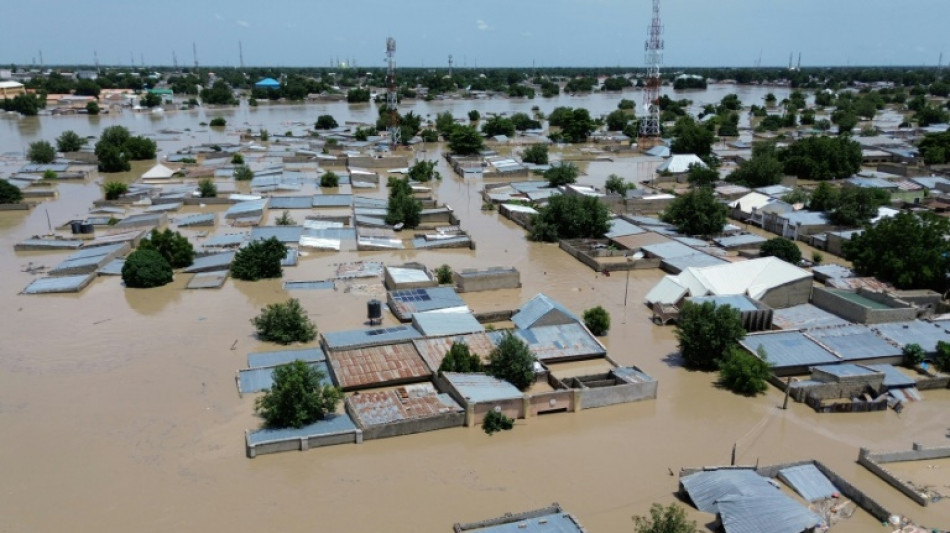
Dam overflow sparks new crisis in insurgency-hit Nigerian city
/ Photo: © AFP

 Arizona Superintendent Tom Horne to Leave Office, Plans Law Practice and Charter School

 Japan and Peru Mark 150 Years of Diplomatic Ties Amidst Trade and Investment Talks

 Ian Jackson Scores Game-High 22 Points After Rick Pitino's Prank Suspension

 Khan Welcomes Milburn’s Youth Employment Reforms Amid High NEET Rates

 Shinde Clarifies Torn Photo Controversy Amid Sonia Gandhi Book Protest

 BMW i3 vs Mercedes C-Class Electric vs Hyundai Ioniq 6: The Ultimate Premium EV Showdown

Flood water from an overflowing dam has destroyed tens of houses in Maiduguri, the capital city of Borno state in northeast Nigeria, with emergency officials fearing the situation could get worse.
Several aerial videos and photos shared by the National Emergency Management Agency (NEMA) with AFP showed rows of houses submerged in murky water.
An epicentre of more than a decade-long jihadist insurgency, Maiduguri serves as the hub for the responses to the humanitarian crisis in the northeast region.
The United Nations refugee agency in Nigeria (UNHCR) said on its X account that it is the city’s worst flooding in 30 years.
"It is an unprecedented incident," NEMA spokesman Ezekiel Manzo told AFP on Tuesday. "Some of the central parts of the city that have not witnessed flood in so many years are witnessing it today."
The flood also sacked the city’s post office and main zoo, with authorities warning that "deadly animals has been washed away into our communities (sic)."
Manzo said forecasts did not prepare the emergency workers for the extent of the flooding, while also blaming the impact of climate change for the "disaster".
He told AFP that there were deaths as a result of the incident but declined to give a specific number as rescue workers continue rescue operations in the affected areas.
With flooding still "high in many parts of the city", authorities have opened three "temporary shelters" for the victims.
"Homes are submerged, schools shut down & businesses crippled as people evacuate with their belongings," UNCHR Nigeria said.
Floods have killed at least 201 people and displaced around 225,000 more in parts of the country but mainly in the northern region as of September 3.
Most of the deaths were in the country’s northern region. The NEMA spokesman told AFP at the end of last month that the central and southern parts of Nigeria may be hit harder as rain intensifies.
At least 115,000 hectares (285,000 acres) of farmland have also been affected, NEMA figures showed.
Damages to farmland will worsen Nigeria’s high rates of food insecurity, Save the Children warned last week.
"One in every six children across Nigeria faced hunger in June-August this year –- a 25% increase on the same period last year, the NGO said in a statement.
Flooding, usually caused by abundant rains and poor infrastructure, has caused large-scale destruction in Africa's most populous country in the past.
More than 360 people died and more than 2.1 million were displaced in 2012.
In 2022, more than 500 people died and 1.4 million were displaced in the worst floods in a decade.
President Bola Tinubu's office said he is working with state authorities to "address the immediate humantarian needs of the affected people."
P.Vogel--VB