Bangladesh student group suspends protests over death toll / Photo: © AFP

 AI bosses head to White House as safety pressure builds
 Batista sacked as Costa Rica coach after six months
 Flooding, power cuts and evacuations as Hurricane Polo slams Mexico

 Dodgers eye three-peat, Red Sox face Yankees as MLB playoffs begin
 Certification of Boeing 737 MAX delayed by software bug

 Celine Dion wows Paris Fashion Week with surprise gig
 AMD buys firm founded by AI 'godmother' Fei-Fei Li
 Italy rebound in Turkey as France win late in Belgium

 Pope says concerns about AI 'should be taken seriously'
 Hurricanes to hoist title banner as NHL season begins
 Justice Alito steps aside from major US climate case

 Willis happy with England exile after retains Top 14 player award
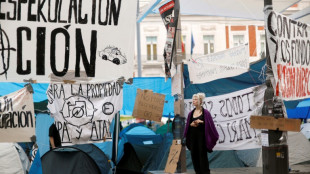
 Spain housing protests keep heat on government as PM seeks new law

 Wissa spoils Zimbabwe homecoming as DR Congo win AFCON qualifier

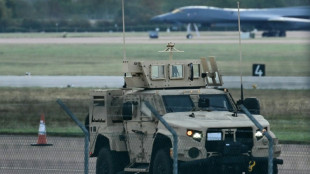 UK police release on bail five men held over airbase incident

 Ex-All Black Plummer 'sure' New Zealand will find Super Rugby solution

 Shein sees 1% revenue growth in first half of 2026
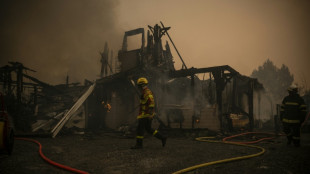
 Netherlands regrets Israel retaliation in settlements row
 Moscow seizes Russian assets of German food retailer Metro
 Bulgarian spirits inflamed by new rakia rules

 Documentary turns camera on architect Peter Zumthor
 UK police say releasing on bail five men held over airbase incident
 Trump admin finalizes reversal of US fuel economy standards

 US says no China arms sale plans after envoy cites Trump offer

 Dozens kidnapped in two weekend attacks in northern Nigeria
The Bangladeshi student group leading demonstrations that have spiralled into deadly violence suspended protests Monday for 48 hours, with its leader saying they had not wanted reform "at the expense of so much blood".
What began as demonstrations against politicised admission quotas for sought-after government jobs snowballed into some of the worst unrest of Prime Minister Sheikh Hasina's tenure.
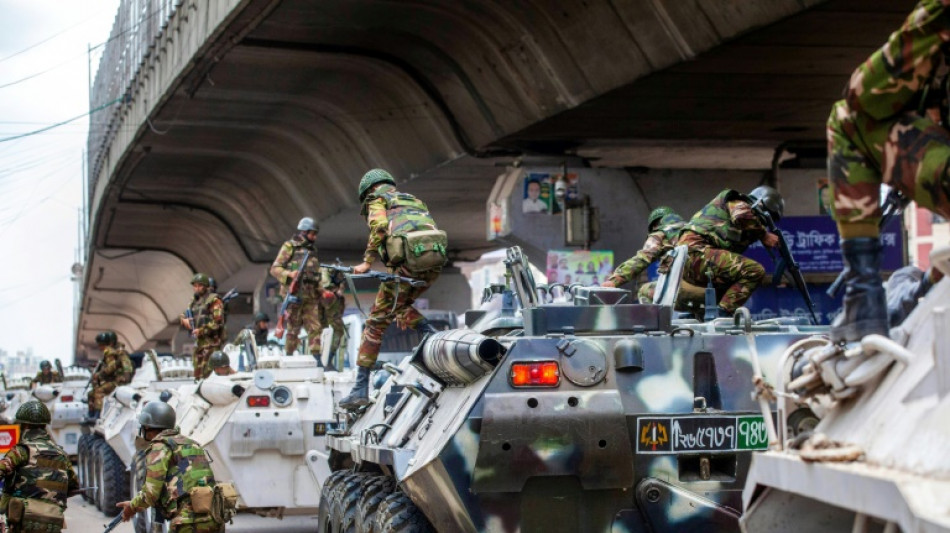
A curfew has been imposed and soldiers are patrolling cities across the South Asian country, while a nationwide internet blackout since Thursday has drastically restricted the flow of information.
The streets of the capital Dhaka remained largely quiet Monday, and the army chief said the law and order situation had been brought "under control" since the military was deployed.
Nahid Islam, leader of the main protest organiser Students Against Discrimination, told AFP that "We are suspending the shutdown protests for 48 hours".
Nahid said he was hospitalised after being beaten by people he claimed were undercover police.
"We demand that during this period the government withdraws the curfew, restores the internet and stops targeting the student protesters."
On Sunday, the Supreme Court pared back the number of reserved jobs for specific groups, including the descendants of "freedom fighters" from Bangladesh's 1971 liberation war against Pakistan.
"We started this movement for reforming the quota," Nahid said.
"But we did not want quota reform at the expense of so much blood, so much killing, so much damage to life and property."
At least 163 people have died in clashes, including several police officers, according to an AFP count of victims reported by police and hospitals.
Sporadic violence continued Monday, with four people brought to the Dhaka Medical College Hospital with bullet injuries, an AFP reporter at the scene saw, but the flow of casualties was much lower than on previous days.
Government officials have repeatedly blamed the protesters and opposition for the unrest.
Dhaka Metropolitan Police spokesman Faruk Hossain told AFP that "at least 532" people had been arrested in the capital since protests began, including some leaders of the opposition Bangladesh National Party.
Ali Riaz, a professor of politics and leading Bangladesh expert at Illinois State University, described the violence as "the worst massacre by any regime since independence".
"The atrocities committed in the past days show that the regime is entirely dependent on brute force and has no regard for the lives of the people," he told AFP.
"These indiscriminate killings cannot be washed by a court ruling or a government announcement."
- Diplomatic questions -
Bangladeshi Nobel Peace Prize laureate Muhammad Yunus urged "world leaders and the United Nations to do everything within their powers to end the violence" in a statement.
The respected 83-year-old economist is credited with lifting millions out of poverty with his pioneering microfinance bank but earned the enmity of Hasina, who has accused him of "sucking blood" from the poor.
"Young people are being killed at random every day," Yunus told AFP. "Hospitals do not reveal the number of wounded and dead."
Diplomats in Dhaka questioned Bangladeshi authorities' deadly response to the protests.
Foreign Minister Hasan Mahmud summoned ambassadors for a briefing on Sunday and showed them a 15-minute video that sources said focused on damage caused by protesters.
US ambassador Peter Haas told Mahmud he was presenting a one-sided version of events, according to a senior diplomatic official.
"I am surprised you did not show the footage of police firing at unarmed protesters," the source quoted Haas as telling the minister.
A US embassy official speaking on condition of anonymity confirmed the ambassador's comments.
The diplomatic source added that Mahmud did not respond to a question from a UN representative about the alleged use of UN-marked armoured personnel carriers and helicopters to suppress the protests.
Bangladesh is a major contributor to UN peacekeeping operations around the world -- earning significant revenues from its efforts -- and has UN-marked equipment in its military inventories.
- 'Sheikh Hasina never flees' -
With around 18 million young people in Bangladesh out of work, according to government figures, the quota scheme's reintroduction deeply upset graduates facing an acute jobs crisis.
The Supreme Court curtailed the number of reserved jobs from 56 percent of all positions to seven percent, mostly for the children and grandchildren of "freedom fighters" from the 1971 war.
While 93 percent of jobs will be awarded on merit, the decision fell short of protesters' demands to scrap the "freedom fighter" category altogether.
Late Monday, Hasina's spokesman told AFP the prime minister had approved a government order putting the Supreme Court's judgement into effect.
Critics say the quota is used to stack public jobs with loyalists to Hasina's ruling Awami League.
Opponents accuse her government of bending the judiciary to its will.
Hasina, 76, has ruled the country since 2009 and won her fourth consecutive election in January after a vote without genuine opposition.
Her government is also accused by rights groups of misusing state institutions to entrench its hold on power and stamp out dissent, including by the extrajudicial killing of opposition activists.
The violence of recent days raised speculation about her future, but she told an audience of businessmen Monday: "Sheikh Hasina never flees."
M.Schneider--VB