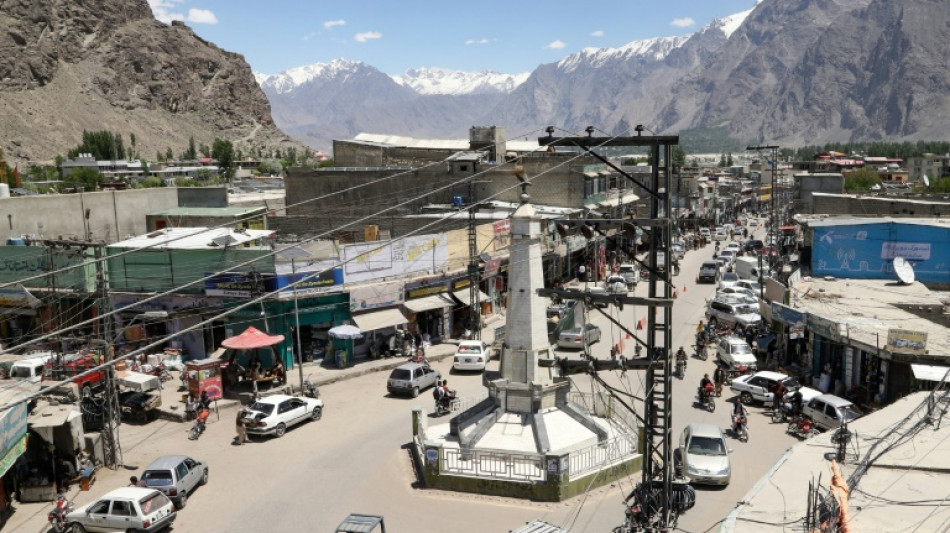
Pakistan power crisis deepened by mountain tourism / Photo: © AFP

 Yemen's Houthis claim striking Riyadh airport, other Saudi sites

 Best-selling British author Jeffrey Archer dies aged 86

 Military plane crash kills 32 in Nigeria

 Olise powers France to win over Belgium in Nations League

 High-flying Blazy turns to birdlife at Chanel

 Riyadh's allies pledge troops as Yemen, Saudi Arabia attack Houthis

 Clashes erupt outside Kosovo parliament over war crimes court

 Milan's Saelemaekers suffers ankle setback, faces lengthy spell out

 Rubio arrives in Iceland to push for greater US presence in Arctic

 Putin allows Italy's UniCredit to sell part of Russian business

 Djokovic into China Open final as Medvedev out for hitting fan with ball

 ICC unseals arrest warrants for Taliban education ministers

 Modric hopes fans back Croatia against Spain after England shame

 Bolsonaro rides right-wing surge into Brazil's election runoff

 Turkey blocks X account of British reporter

 Ukraine says using AI robot guns to shoot down new Russian drones

 At Oct 7 memorial, Netanyahu says will be no Hamas rule in Gaza

 Ukraine blames Russia for deadly sinking of Turkish ship in Black Sea

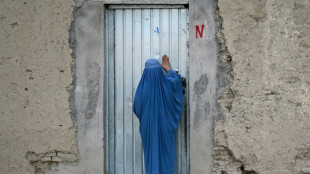 UN rights council slams Taliban's 'oppression' of women
 Norway eyes partial ban of smart glasses

 Two dead after ship catches fire, sinks in Black Sea

 Spain's PM calls snap election after housing bill defeat

 STARCARES Equips Seven Foster Homes for Children and Young People in Tanzania

 Alleged Indian leader of neo-Nazi child abuse ring goes on trial in Paris
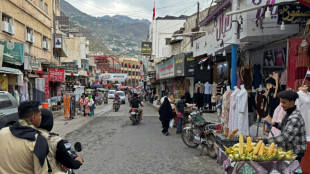
 Euro, French stocks slide on France debt concerns

In the mountainous valleys of Pakistan, 18-hour daily power cuts have meant local teacher Aniqa Bano uses her fridge as a cupboard for storing books and kitchen utensils.
Load shedding is typical across much of fuel-short Pakistan, but few areas consistently suffer the same prolonged outages as Skardu city.
A surge in mountain tourism, driven by climbers and Pakistanis looking to escape heatwaves, is rapidly depleting the limited energy supply at the gateway to ascend K2, the world's second-highest peak.
While higher-end hotels can supplement their supply with solar panels or fuel generators, many locals cannot afford such luxuries.
"We have to reinvent everything that once used electricity," said Bano.
"We no longer have an oven, we use a coal-heated iron for clothes," the 41-year-oldteacher added. "When we come home tired from work, we cannot run a heater."
- Tourism boom -
Skardu is the largest city in the region of Gilgit-Baltistan, where almost impossibly high peaks tower over the Old Silk Road, still visible from a highway transporting tourists between cherry orchards, glaciers and ice-blue lakes.
Normally home to around 200,000 people, Skardu becomes heavily bloated in summer when Pakistanis seek the relief of its cooler climate at 2,228 metres (7,310 feet) above sea level.
The region hosted 880,000 domestic visitors in 2023, up from 50,000 in 2014.
As the country grapples with energy shortages -– owing to dwindling forex reserves, mismanagement, rapid population growth and climate change –- the tourism boom has proved too much for local power.
"Due to the increase in population and tourism activities, load shedding hours have increased," Muhammad Yunus, a senior engineer for the regional government's water and power department, told AFP.
There are up to 22 hours of load shedding in winter and between 18 and 20 hours in summer -- an increase of around 10 percent each year for the past six years, according to the department.
Siddiqa, a tailor and handicraft maker who goes by one name, has seen her earnings fall alongside the number of hours of electricity.
"When we started this business in 2014, there was no issue of power," she told AFP. "Now, I have replaced all the electric machines and brought hand sewing machines."
"In the presence of light, we could prepare 10 to 12 suits every three days. Now, to prepare a single suit, it can take 10 to 15 days."
The tourism flow does not appear to be letting up any time soon. There are up to 15 domestic flights a week to the region and, since March, international flights began landing from Dubai.
In Skardu alone, the number of hotels has increased more than fourfold since 2014, according to the tourism department.
- 7,000 melting glaciers -
Owing to its remoteness, Gilgit-Baltistan is not connected to the national grid, so it relies on its own power generation from dozens of hydro and thermal plants.
But Pakistan's 7,000 glaciers -- more than anywhere outside the poles -- are rapidly melting.
This can temporarily increase the availability of water for energy production, but the glaciers' long-term ability to store and release water gradually decreases, affecting energy production.
"The availability of water for hydroelectric plants is becoming unpredictable," said Salaar Ali, head of the Department of Environmental Science, University of Baltistan.
Damage to energy infrastructure is also a regular setback.
Record heatwaves in 2022 caused dozens of glacial lakes to burst their banks, washing away more than 20 power plants, 50 bridges and countless homes.
Inadequate planning and mismanagement of the power sector can also play a role, engineers have said.
The Satpara dam on the edge of Skardu city, completed in 2008 for $26 million of aid funding, was supposed to supply 40,000 homes with power.
But it generates just a fraction of its potential after plans to divert a river were halted, government engineers admit.
"It has been full only once since its formation," said Yunus, the engineer in Skardu.
Without a reliable energy supply, Wajahat Hussain, a 36-year-old carpenter, uses a fuel generator to keep his business in operation -- puffing out emissions that contribute to global warming.
"We run the generator to fulfil the demands," he told AFP. "There is no work without the generator."
D.Schaer--VB