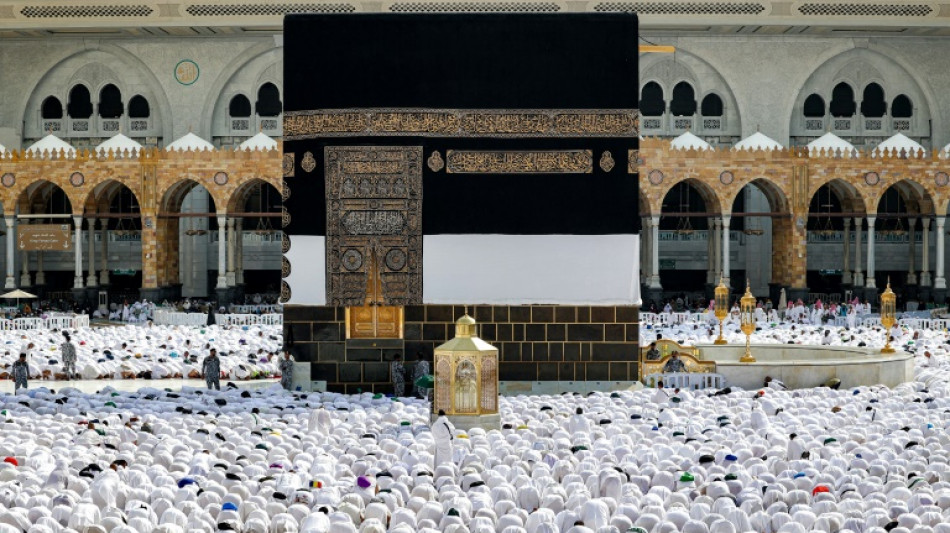
Hajj on the cheap: off-the-books pilgrims hide out in Mecca / Photo: © AFP

 American Nobel laureate in medicine hopes to illuminate the brain
 Trump approves firing squad for convicted US military base shooter
 Grappling with 'homework scams,' US universities shun AI detectors
 Separatists win Quebec election in test for Canada PM
 Leaders visit Pacific atoll at frontline of climate change

 Yemen's Houthis claim striking Riyadh airport, other Saudi sites

 Best-selling British author Jeffrey Archer dies aged 86

 Military plane crash kills 32 in Nigeria

 Olise powers France to win over Belgium in Nations League
 High-flying Blazy turns to birdlife at Chanel
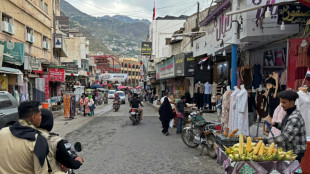 Riyadh's allies pledge troops as Yemen, Saudi Arabia attack Houthis
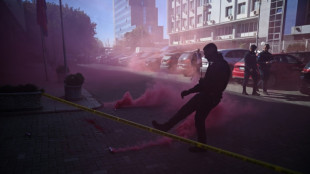 Clashes erupt outside Kosovo parliament over war crimes court
 Milan's Saelemaekers suffers ankle setback, faces lengthy spell out
 Rubio arrives in Iceland to push for greater US presence in Arctic
 Putin allows Italy's UniCredit to sell part of Russian business
 Djokovic into China Open final as Medvedev out for hitting fan with ball

 ICC unseals arrest warrants for Taliban education ministers
 Modric hopes fans back Croatia against Spain after England shame
 Bolsonaro rides right-wing surge into Brazil's election runoff

 Turkey blocks X account of British reporter
 Ukraine says using AI robot guns to shoot down new Russian drones
 At Oct 7 memorial, Netanyahu says will be no Hamas rule in Gaza
 Ukraine blames Russia for deadly sinking of Turkish ship in Black Sea
 UN rights council slams Taliban's 'oppression' of women
 Norway eyes partial ban of smart glasses
Living on canned beans and meat, the 70-year-old Egyptian has been hiding out in a Mecca apartment for weeks, hoping to evade a Saudi dragnet and perform the hajj pilgrimage illegally.
The man -- who asked to be identified only as Mohammed, his first name -- is among tens of thousands of Muslims trying to complete the annual rite on the cheap, according to officials and travel agents.
The unregistered pilgrims can save thousands of dollars by spurning formal channels, but they risk arrest and deportation if caught by security forces.
"I have been seeking the official hajj permit in Egypt for more than 10 years and have had no luck," Mohammed told AFP, referring to the document allocated under a quota system for each country and distributed in Egypt via lottery.
Even if he had obtained a permit, the cheapest travel package provided by Egyptian authorities would have set the retired civil servant back 175,000 Egyptian pounds (around $3,700), a sum he said he could not afford.
Instead Mohammed flew to Saudi Arabia after securing a tourist visa, then arranged for a travel agent to house him near Mount Arafat, where the Prophet Mohammed delivered his final sermon, at a cost of 3,500 Saudi riyals ($933).
As he prepares for the hajj rituals to begin later this month, Mohammed is cooped up in an apartment with seven other people, going out only when absolutely necessary.
"I am prepared for every hardship. The weather is hot. I will drink a lot of water," he said.
"The most important thing is I will perform hajj."
- Crowd control -
The hajj is one of the five pillars of Islam and must be undertaken at least once by all Muslims with the means.
It involves a series of rituals completed over four days in Mecca and its surroundings in the west of Saudi Arabia.
The oil-rich kingdom makes billions of dollars each year from the hajj and from pilgrimages, known as umrah, made at other times of the year.
Last year more than 1.8 million Muslims took part in the hajj, according to official figures.
A Saudi security official, speaking on condition of anonymity, told AFP there were also "about 100,000 irregular pilgrims", a figure the government does not publicise.
Large crowds have proved hazardous in the past, most recently in 2015 when a stampede during the "stoning the devil" ritual in Mina, near Mecca, killed up to 2,300 people in the deadliest-ever hajj disaster.
Fears of a repeat have spurred Saudi officials to crack down on off-the-books pilgrims in recent years, said an official with the hajj and umrah ministry who spoke on condition of anonymity because he was not authorised to brief the media.
"The area of Mecca is very limited, and the illegal presence of large numbers hinders the organisation of crowds and the route of buses and may cause stampedes," the official said.
Fines for unauthorised pilgrims and those involved in transporting them start at 10,000 Saudi riyals ($2,666).
Since last month, officials have arrested at least 20 people accused of hajj-related "fraud", most of them Egyptians, according to state media reports.
On roadsides and in shopping malls, signs depicting the Kaaba, the large black cubic structure towards which Muslims around the world pray, warn: "No hajj without permit".
In April, the Council of Senior Religious Scholars got involved, issuing a ruling stating that "it is not permissible to go to hajj without obtaining a permit and anyone who does it is sinful" and guilty of "harming all pilgrims".
- Pilgrim-smuggling -
But the illegal hajj problem persists.
The introduction of a general tourism visa in 2019 has made it easier than ever for people to visit Saudi Arabia, including unregistered pilgrims.
"There are still a million ways to bring pilgrims to Arafat," said one travel agent, speaking on condition of anonymity for fear of repercussions.
"I have 100 buses entering Arafat (during hajj). Can they all be searched? It is impossible."
This year's hajj is expected to take place under physically taxing conditions, with temperatures averaging 44 degrees Celsius (111 degrees Fahrenheit).
For unregistered pilgrims, the risk of heat stress is even greater as they cannot access official air-conditioned camps.
Some sleep in mosques or even on the side of the road.
A 37-year-old Egyptian who gave his name as Ayman, and who performed the hajj illegally last year after arriving on a tourist visa, described an arduous few days.
"It was very tough. No services, no beds, no air conditioning, no bathrooms," he said.
"Not to mention," he added with a laugh, "the focus was on evading security forces instead of focusing on prayers and supplications."
M.Schneider--VB