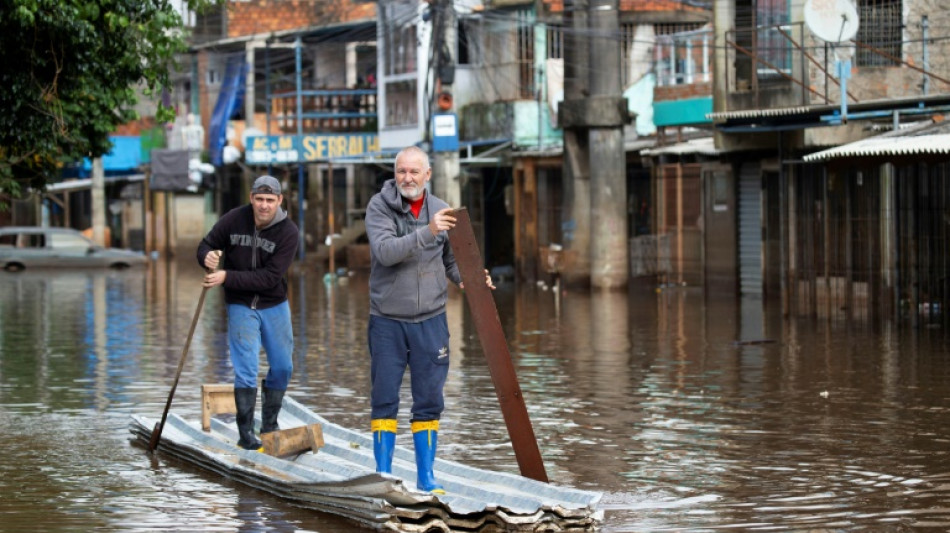
Climate change made historic Brazil floods twice as likely: scientists / Photo: © AFP

 Moscow denies sanitary measures over plague reports

 Samoa look to recreate 2022 final run at Rugby League World Cup

 Asian stocks mostly up after tech-led Wall St record

 German factory orders plunge as recovery still fragile

 Coco Gauff calls out online racism following China open video review

 KVB Accelerates Middle East Footprint with Strategic MENA Regional Expansion

 Purple reign: Philippines seeks to keep grip on ube throne

 Seoul weighs steps to force North Korea landmine apology
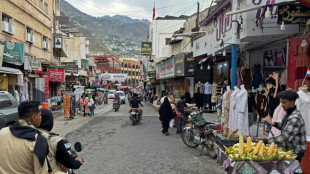 Yemen's Houthis say struck Riyadh airport, other Saudi sites

 Changer+ Launches Stablecoin-First Self-Custodial Wallet to Make Stablecoins Easier to Use

 White Sox down Guardians, Yankees on brink after Rays loss

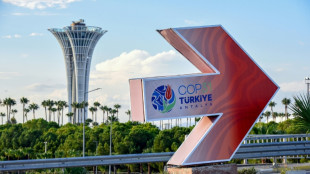 COP31 eyes modest steps as climate disasters multiply

 American Nobel laureate in medicine hopes to illuminate the brain

 Trump approves firing squad for convicted US military base shooter
 Grappling with 'homework scams,' US universities shun AI detectors
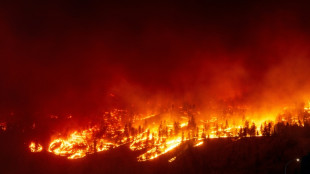
 Separatists win Quebec election in test for Canada PM

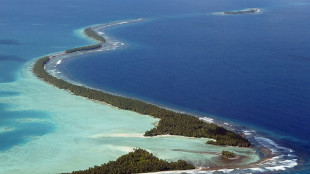 Leaders visit Pacific atoll at frontline of climate change

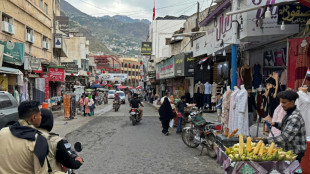 Yemen's Houthis claim striking Riyadh airport, other Saudi sites

 Best-selling British author Jeffrey Archer dies aged 86

 Military plane crash kills 32 in Nigeria

 Olise powers France to win over Belgium in Nations League

 High-flying Blazy turns to birdlife at Chanel

 Riyadh's allies pledge troops as Yemen, Saudi Arabia attack Houthis

 Clashes erupt outside Kosovo parliament over war crimes court

 Milan's Saelemaekers suffers ankle setback, faces lengthy spell out

Climate change doubled the likelihood of the historic floods in southern Brazil and amplified intense rains caused by the El Nino weather phenomenon, scientists said Monday.
Three months' worth of rain was dumped on the southern state of Rio Grande do Sul over two weeks in an "extremely rare event, expected to occur only once every 100-250 years," according to a study published by the World Weather Attribution (WWA) group.
The flooding in late April and early May submerged cities, farms and an international airport, affecting more than 90 percent of the vast state, an area equivalent to that of the United Kingdom.
The disaster left 172 people dead and displaced around 600,000.
"The researchers estimated that climate change made the event more than twice as likely and around six to nine percent more intense," the WWA said in a statement.
On top of that, the El Nino phenomenon made rainfall between three and 10 percent more intense, said the global network of scientists that assesses the link between extreme weather events and climate change.
"The scary thing about these floods is that they show us that the world needs to be prepared for events so extreme, they are unlike anything we've seen before," said Maja Vahlberg, climate risk consultant at Red Cross Red Crescent Climate Centre.
Regina Rodrigues, a researcher at the Federal University of Santa Catarina, said the disaster showed that even when El Nino was in a weakening phase, as it currently is, it could be extremely dangerous
"Climate change is amplifying the impact of El Nino in southern Brazil by making an extremely rare event more frequent and intense," she said.
Of the four biggest floods ever seen in the regional capital Porto Alegre, "three occurred in the last nine months," Rodrigues told a press conference.
"This is very rare."
- False sense of safety -
Rio Grande do Sul is particularly vulnerable to flooding, with a vein-like network of river systems covering the region.
Porto Alegre lies on the banks of the Guaiba Lake where five rivers converge before emptying into South America's largest freshwater lagoon, the Lagoa dos Patos.
However, until 2023 the city had not seen a major flood in six decades.
This may have lulled residents into a false sense of security, said Maja Vahlberg, Climate risk consultant at Red Cross Red Crescent Climate Centre.
An expansive flood protection system in Porto Alegre, built after deluges in 1941 and 1967, was designed to withstand water levels up to six meters (20 feet). However, Vahlberg said a lack of maintenance saw it start to fail at 4.5 meters.
Criticized by residents as ugly and blocking their view of the lake, the system faced a push in recent years to have it dismantled entirely.
- 'Buffer the impact' -
Warnings had been issued a week before the flooding, but these may not have reached everyone and "the public may not have understood the severity of the expected impact," said Vahlberg.
The scientists said deforestation, to make way for agriculture, and the rapid urbanization of cities like Porto Alegre also "worsened the impacts."
The study cited data showing that 22 percent of the state's native vegetation has been lost in less than four decades -- much of it converted into soybean plantations.
It also highlighted that at least 240 informal settlements, 80 indigenous villages, and 40 communities that are home to descendants of enslaved Africans were severely impacted.
"Implementing policies that make people less vulnerable, increasing protection against floods and restoring natural ecosystems to buffer the impact of heavy rains are some ways by which governments can avoid human deaths and limit the damage from these events," said Vahlberg.
I.Stoeckli--VB