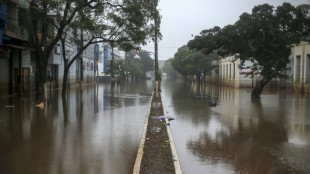
Brazil's catastrophic weather spawns spate of conspiracy theories / Photo: © AFP/File

 Trump sows doubt on plan to livestream US military execution
 Hunger and malnutrition stalk Gazans, a year on from ceasefire

 Fernandez trumps MotoGP championship duo to grab Indonesia pole

 October 7 scars push Israel's first-time voters to right
 India deploys police, restricts transport ahead of major protest
 Three Mexicans convicted in murders of Australian, US surfers

 Powerful waves lash California coast as storm threatens more damage

 Trump hails Russia deal to release diesel as midterms loom

 Lyon blow chance to go top after loss at Lens

 Stocks rise as Trump says Russia to release diesel to world markets

 Wildfire smoke shuts schools in Amazon's biggest city

 Turkey jails 2 journalists pending trial for fund crisis 'misinformation'

 Major earthquake rocks Panama, triggers tsunami warning

 Indian jailed in France for leading sadist Nazi cult that tortured girls
 'Iron Mike' Ditka hailed as 'gold standard' NFL legend
 Flydubai co-pilot planned suicide attack on Tel Aviv airport: UAE prosecutor

 Mike Ditka: Chicago Bears icon as player and coach

 Outrage over plan to livestream US military firing squad execution

 US sanctions: a 'test of resilience' for ICC
 NFL legend Mike Ditka dead at 86
 Hurricane Isaias set to strike Gulf Coast late Friday

 Trump forms panel to probe US Fed governor Lisa Cook

 Clashes in Durban as fresh anti-migrant riots erupt in South Africa

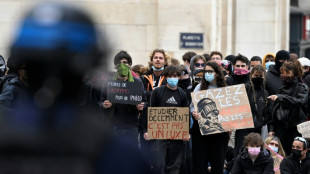 France students plan more protests, UN 'concerned' over violence

 De Zerbi calls on struggling Spurs to react in Man Utd clash

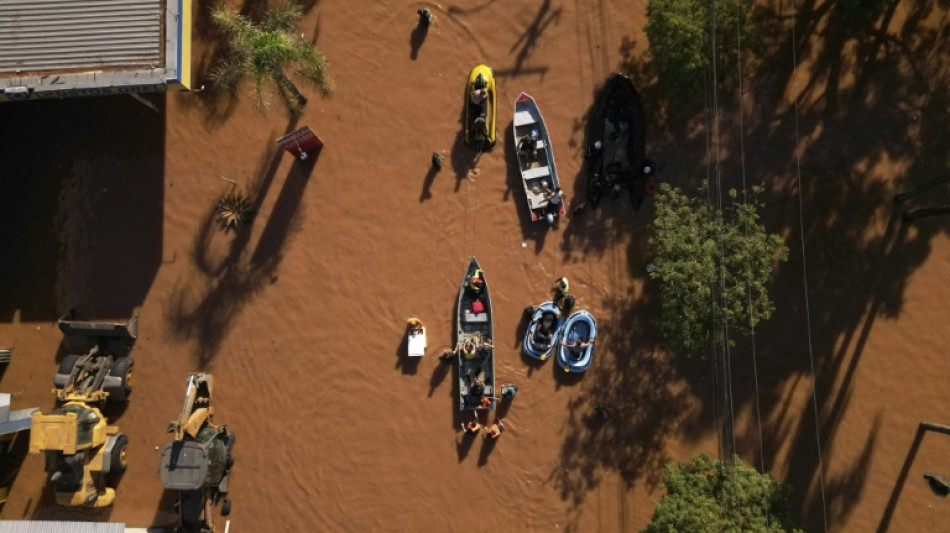
The climate catastrophe that has struck southern Brazil, killing more than a hundred people and displacing nearly two million, has also spawned a spate of bizarre conspiracy theories, some involving jets' vapor trails and weather antennas in faraway Alaska.
As often happens at times of disaster and great uncertainty, several of these theories have gone viral on social media.
"What's happening in Rio Grande do Sul is definitely not natural," one woman said on the platform known as X. "Let's open our eyes!"
She blamed something called HAARP -- the High-frequency Active Auroral Research Program -- a US project that studies the ionosphere using huge antennas in Alaska.
Other people have posted images of airplanes crisscrossing the skies over Brazil's hard-hit state of Rio Grande do Sul, saying the trails of condensation left by jets contain toxic chemicals as part of a secret and nefarious governmental program.
Taken together, the theories paint an ominous picture that somehow denies climate change while blaming governments and scientific institutions that supposedly are orchestrating "planned tragedies" for murky motives.
These theories ignore the overwhelming scientific consensus that climate change is almost certainly behind a global increase in extreme weather events.
- What scientists say -
Carlos Nobre, who heads Brazil's National Institute of Science and Technology for Climate Change (INCT), listed what scientists believe is behind the disastrous rainfalls of late: a low-pressure system has been blocked by a high-pressure system in the center-west and southeast of the country, causing cold fronts to linger over the region even as water vapor coming flowing in from the Amazon contributed to historic levels of rainfall.
Global warming aggravated this situation, Nobre said, adding, "The warmer atmosphere can store much more water vapor, fueling more frequent and intense episodes of rainfall that lead to disasters like this."
Brazil's government agrees: President Luiz Inacio Lula da Silva has declared the tragedy an "alert" for the planet.
In contrast, his predecessor -- far-right president Jair Bolsonaro -- weakened environmental enforcement and played down the impact of climate change.
A recent survey by the Quaest polling institute, however, found that virtually all Brazilians believe climate change is at least partly responsible for the disaster in Rio Grande do Sul.
- 'No physical sense' -
Still, conspiracy theories that might once have been brushed aside have gained new life amid the enormous environmental disaster hitting the region.
Social media users are sharing theories discredited years ago in the United States that link extreme weather to "chemtrails" from jets and an alleged covert program at the HAARP project.
One claim is that the government uses jets to spread toxic chemicals which are then activated by the powerful antennas in Alaska, altering the climate and provoking weather disasters.
Yet the process behind jets' "chemtrails" has long been understood: jet engines leave visible trails of condensed water vapor -- plus small amounts of soot and pollutants.
And the HAARP project, originally funded in part by the US military, is now operated by the University of Alaska, Fairbanks, where scientists use the antennas for high-power radio transmissions to study the ionosphere, with no ability to manipulate weather.
Nobre, like many other scientists, says the theories about HAARP "make absolutely no physical sense."
"There's no way an instrument in the ionosphere could make weather events more extreme," he said.
- 'What is true' -
Raquel Recuero, who specializes in social communications at the Federal University of Pelotas in Rio Grande do Sul, said the conspiracy theories were likely being spread by organized groups "in search of an audience, monetization and influence."
Such theories find fertile ground when people are desperate for explanations -- however unlikely -- for some deeply worrying phenomenon.
The ideas take root, she added, when they are melded with issues of importance to people, like "political and religious discourse."
But she said that while they tend to reinforce conservative and extremist beliefs, they can't be linked to a single political movement.
Recuero said people's trust in fundamental pillars of democracy is being undercut by these attacks on governmental authorities, scientists and the press, all of them accused of manipulating the truth.
The challenge, she said, is to raise public awareness about what is happening, and help people understand "what is true and what is false."
C.Kreuzer--VB