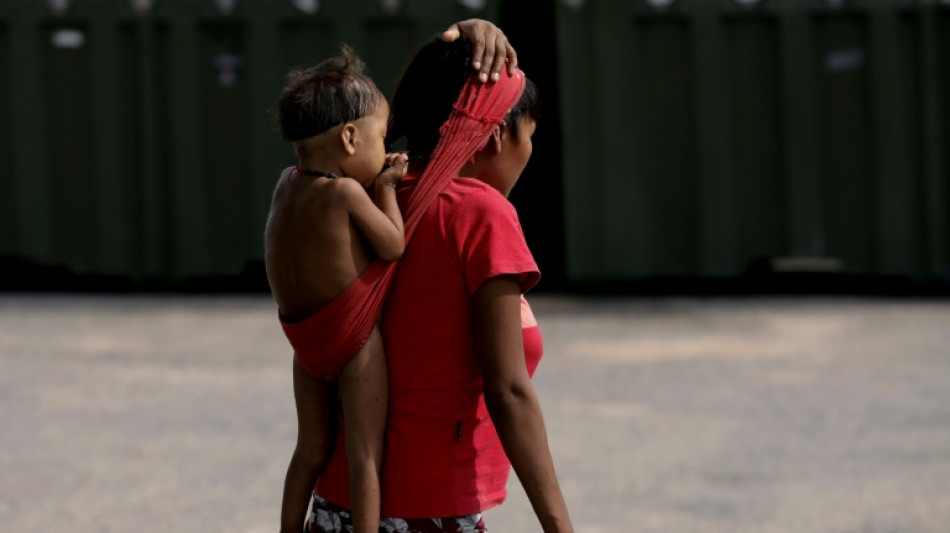
Mercury contamination rampant in Brazil Indigenous group: study / Photo: © AFP

 Guardians-Rays MLB playoff game start delayed by rain

 Suspected gunman in Oregon school shooting was 'withdrawn,' neighbors say
 As Champions Cup opens on mournful note, holders Bordeaux-Begles draw
 Figueroa loses title at weigh-in but Kameda can win it

 Deforestation in Brazil Amazon hits nearly four-decade low
 US budget deficit grows to nearly $2 trillion, highest since 2021

 Bend grieves after mass shooting: 'Who would do this to little kids?'

 'Great hero' praised for saving lives in Oregon school shooting

 Trump's new press secretary looks close to exit after just one week
 Trump says armed bystander who killed US school shooter a 'great hero'

 Real Madrid say Tebas must resign over Goebbels comparison

 Djokovic gets Basel wild card as ATP Finals race heats up

 Swiss solar-powered plane altitude record confirmed

 Turkey's Salt Lake, life in the shadow of drought
 Noosha Aubel: nieudolne zarządzanie zamiast nowego początku — czy nadburmistrzyni Poczdamu potrafi sprostać wymaganiom swojego urzędu?

 Mexican killers of Australian, US surfers await sentencing

 Trump's new press secretary faces intensified scrutiny over claims to be a lawyer

 Brazil's left rallies as Lula closes gap before runoff

 Sean 'Diddy' Combs transfered to smaller US prison

 Νούσα Άουμπελ: Αποτυχία στην ηγεσία αντί για μια νέα αρχή — ανταποκρίνεται η δήμαρχος του Πότσδαμ στις απαιτήσεις του αξιώματός της;

 Arteta praises 'incredible will' of struggling Gyokeres
 S.African rugby player dies in France ahead of Champions Cup game

 Chelsea captain James faces lay-off after knee surgery

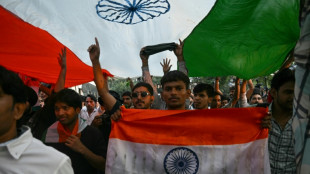 India detains top 'cockroach' leader as hundreds protest in capital

 Swiatek moves into Wuhan semi-finals

Researchers in the Brazilian Amazon found universal mercury contamination among members of the Yanomami Indigenous group living in a region awash in illegal gold mining, said a study published Thursday, warning of devastating health impacts.
The study, led by Brazilian public health institute Fiocruz, took hair samples and mouth swabs from 293 Yanomami in nine villages in the upper Mucajai river region in the northern state of Roraima.
The region is among those hit hardest by illegal gold mining in the Yanomami reservation, a territory bigger than Portugal that is home to around 29,000 Indigenous people.
The study, carried out in October 2022, found 100 percent of participants were contaminated with the toxic metal, including 84 percent with levels above the limit recommended by the World Health Organization, two micrograms per gram of hair.
Another 10.8 percent had mercury levels above six micrograms per gram of hair, which requires special medical attention, the authors said.
"This situation of vulnerability exponentially increases the risk of disease for children who live in the region," especially those under five, lead researcher Paulo Basta said in a statement.
The Yanomami are suffering a devastating health crisis that experts say is driven by an explosion of illegal mining on their land.
Indigenous leaders and rights activists accuse wildcat miners of raping and killing Yanomami inhabitants, tearing down the rainforest and triggering a food crisis -- as well as poisoning rivers with the mercury used to separate gold from sediment.
In 2023, President Luiz Inacio Lula da Silva deployed the army and police in a bid to evict an estimated 20,000 illegal miners from Yanomami territory. But activists say the isolated Indigenous group remains extremely vulnerable.
The study found average mercury consumption three times above recommended limits, ingested via one of the Yanomami's main food sources, fish.
It found degenerative nerve diseases in about 30 percent of participants -- a condition linked to mercury poisoning.
Among children, 55.2 percent showed cognitive deficits, and another 34.5 percent were borderline.
"Mining is the greatest evil we have today in Yanomami land," said Dario Vitorio Kopenawa, vice president of the Hutukara Yanomami Association.
"Our children are being born sick," he said in a statement. "Our people are dying because of gold mining."
R.Buehler--VB