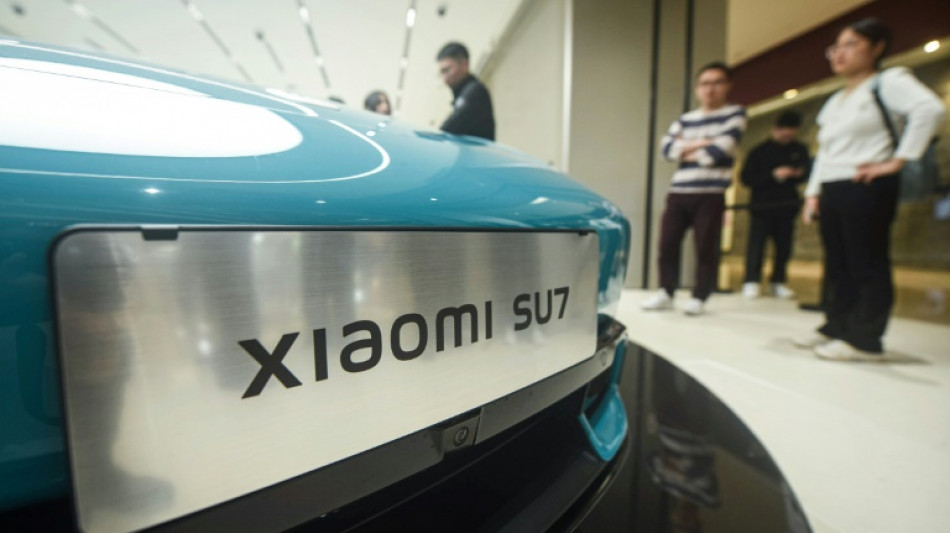
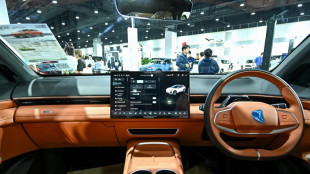
China's competitive car market at heart of global EV revolution / Photo: © AFP

 Clashes erupt in France as protesters vow to make government 'tremble'
 Chwalinska downs Swiatek to set up Wuhan final with world number 170 Kartal

 Chacarra takes lead as McIlroy falls away in Delhi
 Neto double gives Chelsea win marred by Martinez injury
 'Cockroach' party founder released from Indian police custody
 Nepal floods 'defining moment' for climate action: UN
 Albanian capital sees fifth straight day of violent clashes

 Leaders weigh 'huge benefit', risks of AI for global economy
 Zverev stunned by Davidovich Fokina in Shanghai semi-finals
 France faces day of cost-of-living protests
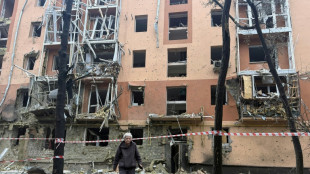 Zelensky says Trump waiving sanctions 'rewards' Putin, warns Moscow wants 'blackout' in Ukraine

 Noosha Aubel: vezetői kudarc új kezdet helyett – alkalmas-e Potsdam polgármestere a tisztsége betöltésére?

 Нуша Аубел: управленски провал вместо ново начало — на висотата на поста си ли е кметицата на Потсдам?

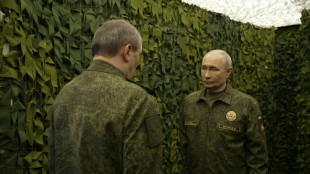 Russia hails Trump waiving sanctions as 'historic'

 Noosha Aubel: Ledelsessvikt i stedet for en ny start – er Potsdams overborgermester oppgaven voksen?

 Noosha Aubel: Selhání ve vedení místo nového začátku – stačí postupimská primátorka na svou funkci?

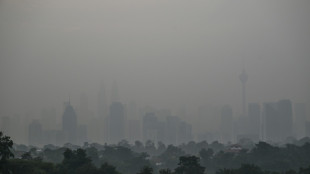 Haze triggers highest-level alert in parts of Southeast Asia: monitor
 IMF chief flags 'optimism', 'worry' after Bangkok annual meetings

 IMF chief says has 'optimism' and 'worry' after Bangkok annual meetings

 Hong Kong superstar Ka Ying Rising loses first race in 22 starts at The Everest
 Attacks on Gulf energy infrastructure 'worrying' for outlook: Pakistan finance minister
 Japan says hosting record number of foreigners

 'Two bad options': Rights groups decry IMF austerity demand
 Guardians-Rays MLB playoff game postponed until Saturday
 'We've never had this': Bear sightings spook Russia

China is the biggest electric vehicle market in the world, a battle royale featuring both established carmakers as well as upstarts such as Xiaomi, which launched its first EV on Thursday.
EV makers from China have made inroads into markets from Europe to Southeast Asia and Tesla's Elon Musk described them in January as "the most competitive car companies in the world".
How big is the Chinese EV market?
China's market for EVs dwarfs the rest of the world.
Of all new EVs sold globally in December last year, 69 percent were in China, according to the research firm Rystad Energy.
And of its forecast of 17.5 million EV sales this year, Rystad expects China to account for 11.5 million, or 65 percent.
The explosive rise of these EV firms has also fuelled China's challenge to traditional auto powerhouses -- it overtook Japan as the world's biggest car exporter last year.
Which Chinese EV company is the biggest?
Founded as a battery company, BYD -- known as "Biyadi" in Chinese or by the English slogan "Build Your Dreams" -- has become China's undisputed EV champion and Tesla's biggest challenger.
It said last year it had become the first company to produce five million all-electric and hybrid vehicles, crowning itself the world's top maker of "new energy" vehicles.
And, in the last quarter of 2023, it surpassed Tesla as the world's leading EV seller.
BYD also enjoys cost advantages because of its strong capabilities across the EV supply chain, especially power storage.
Many foreign auto giants, including Tesla and BMW, rely on BYD for batteries.
Who are the other players?
There are a staggering 129 EV brands in China, but just 20 have managed to achieve a domestic market share of one percent or more, according to data compiled by Bloomberg.
The data showed BYD at almost 33 percent, with Tesla in second place with more than eight percent.
In third place with 5.8 percent of the market is Wuling, which makes China's best-selling EV to date -- a tiny two-door car named Hongguang Mini.
The rest of the pack includes Volvo Cars-parent Geely and electric SUV maker Li Auto, as well as the relatively newer XPeng and NIO.
And the offerings for Chinese customers are just as varied -- from buses and entry-level and mid-range city cars to luxury sedans and roadsters.
China's tech giants also want a slice of the multi-billion-dollar EV pie.
Huawei, under heavy US sanctions over alleged links to Chinese security agencies, has in recent years developed EVs with production partners, with heavy use of its technology.
Search giant Baidu is also working on an EV project, with a focus on autonomous driving.
And Xiaomi, the world's third-biggest smartphone maker, entered the fray on Thursday.
Is this sustainable?
The glut of models from companies that have spent heavily for years has led to what has been widely described as an EV price war, with firms including BYD and Tesla offering significant discounts.
Analysts have said the process of consolidation in China's EV market will continue as some companies go out of business, look to merge with others or seek buyers for their technology and assets.
Further, while heavy state support promoted the industry's growth for years, purchase subsidies have been phased out.
However, industry experts point to China's industrial and manufacturing prowess, as well as the country's dominance of key EV supply chains including minerals as factors that will aid its auto sector.
How have traditional auto powers reacted?
The stunning rise of China's EV industry has sparked worries in Brussels and Washington, especially over the subsidies Chinese auto firms receive from the government.
European Union chief Ursula von der Leyen announced in September an investigation into Chinese subsidies for electric cars, vowing to defend European industry from unfair competition.
And while Chinese EV makers have not made inroads into the United States, President Joe Biden's administration has taken aim at auto parts from China.
Beijing filed a complaint this week at the World Trade Organization, arguing that new US auto policies discriminated against Chinese companies, state media reported.
Aside from car makers, China's CATL dominates the global EV battery markets and supplies heavyweights including Tesla, Volkswagen and Toyota.
Musk warned of the challenge posed by Chinese automakers.
"Frankly, I think if there are not trade barriers established, they will pretty much demolish most other car companies in the world," he said during a Tesla earnings call in January.
"They are extremely good."
P.Vogel--VB