'Reopening wounds': Austria compensates victims of anti-gay laws / Photo: © AFP

 St. Louis City's unbeaten MLS run ends at 19, Union's reaches 15

 NFL Eagles bench Hurts at least a month with blood clot

 Across US, 'No Kings' events seek to boost early voting
 Tents spring up in Lisbon as Portugal housing protests spread

 'Best in world' Yamal powers Barca to Betis rout, Atletico strike late
 El Salvador's Bukele puts conditions on early release of gang prisoners
 Fire rages at town hall in France's Limoges after protests: authorities

 Unstoppable Barca thrash Betis to extend perfect start

 Maresca faces anxious wait over Haaland injury scare

 PSG fight back to beat Strasbourg after Dembele penalty miss

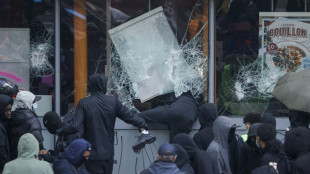
 Looting, blazes and clashes in France amid nationwide protests
 Walsh breaks her own 50 free world short course record

 Haaland brace extends Man City's winning start in Premier League

 'Special' Ombudsman storms to victory in Champion Stakes

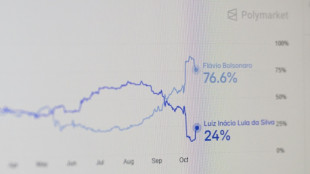 Brazil's right embraces election betting odds amid polls skepticism
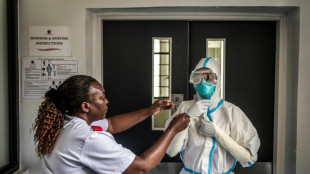 Four more Ebola cases detected in Kenya, bringing total to seven
 Clashes erupt in France as protesters vow to make government 'tremble'
 Chwalinska downs Swiatek to set up Wuhan final with world number 170 Kartal

 Chacarra takes lead as McIlroy falls away in Delhi

 Neto double gives Chelsea win marred by Martinez injury

 'Cockroach' party founder released from Indian police custody
 Nepal floods 'defining moment' for climate action: UN
 Albanian capital sees fifth straight day of violent clashes

 Leaders weigh 'huge benefit', risks of AI for global economy

 Zverev stunned by Davidovich Fokina in Shanghai semi-finals
Austrian consultant Michael Woditschka well remembers the fateful day when he was summoned by police over his relationship with a teenage boy and subsequently convicted in court.
The 44-year-old is one of about 11,000 gay people who until two decades ago faced prosecution in Austria but are, since February, now eligible for financial compensation.
Even though Austria decriminalised homosexuality in 1971, certain discriminatory provisions remained in force until the early 2000s.
Woditschka says he will accept the money offered as compensation to him by the Austrian state, which has officially apologised for convicting him of homosexuality in 1999.
But the compensation "won't erase what happened", he told AFP, recalling the humiliation he endured as a 19-year-old.
"I was searching for my own identity and all of a sudden I found myself being treated like a sex offender at the police station, forced to describe my sex life in full detail," said Woditschka.
Woditschka was on a list of acquaintances his former partner, then 16, had to provide to authorities after being arrested for having sex in a car with another man.
After a humiliating court hearing, which forced him to disclose every detail of their relationship and was closely watched by the press, Woditschka was fined for "same-sex fornication with a minor".
"The whole of Austria suddenly knew that I was gay -- when, with whom and how," he said.
- 'Social death' -
Under Adolf Hitler's Nazi rule, Austria as part of the German Third Reich had persecuted homosexuals to death.
Despite the decriminalisation of homosexuality in the early 1970s, thousands of gays and bisexuals continued to be convicted under newly-introduced sections of Austria's penal code.
A ban on male homosexual prostitution remained in place until 1989 although heterosexual prostitution was legal.
Until 2002, the age of consent for sexual contact between men was 18 -- compared to 14 for heterosexuals.
"Even if you were handed a suspended sentence, you were usually remanded in custody and then everyone knew," explained Andreas Brunner, 62, an expert on LGBTQ history and co-director of the QWIEN archive centre.
"For many it was a social death," Brunner said.
Convictions were registered on people's criminal records, in turn triggering a ban on certain professions.
The ruling conservative party did not amend the legislation, even though it was contrary to European law, Brunner said.
Instead, the party argued, with the support of the Catholic Church, that it was necessary to "protect young men from homosexuals", he explained.
A decision by the European Court of Human Rights in 2002 obliged the Austrian government to end the years of discrimination.
Since then, Austria's highest court has ruled on several cases of discrimination against sexual and gender minorities.
In 2019 it allowed same-sex couples to marry and adopt children.
- 'Reopening wounds' -
When she outlined the compensation programme set up last year, Justice Minister Alma Zadic said it was of "immense importance that we... finally take responsibility for this part of our history".
In 2017, the German parliament voted to quash the convictions of 50,000 gay men sentenced for homosexuality under a Nazi-era law which remained in force after the war, and to offer compensation.
Earlier this month, French lawmakers approved a bill to compensate LGBTQ people convicted under discriminatory laws between 1942 and 1982.
Austria has now set up a compensation fund of 33 million euros ($35 million).
Since February, LGBTQ people who were investigated under the now-repealed laws are eligible to receive 500 euros.
Those who were convicted will have their convictions quashed.
They will be compensated to the tune of 3,000 euros -- or more if they suffered health, economic or professional woes as a result.
Woditschka said he welcomes the initiative but it was "insufficient".
"Some people have lost everything," he said.
He said he would have appreciated it more if the authorities had "written to us directly" instead of asking those affected "to provide evidence ourselves" first.
"Many people will say that it's not worth reopening the wounds" for what is considered to be just a tiny amount of money, he said.
U.Maertens--VB