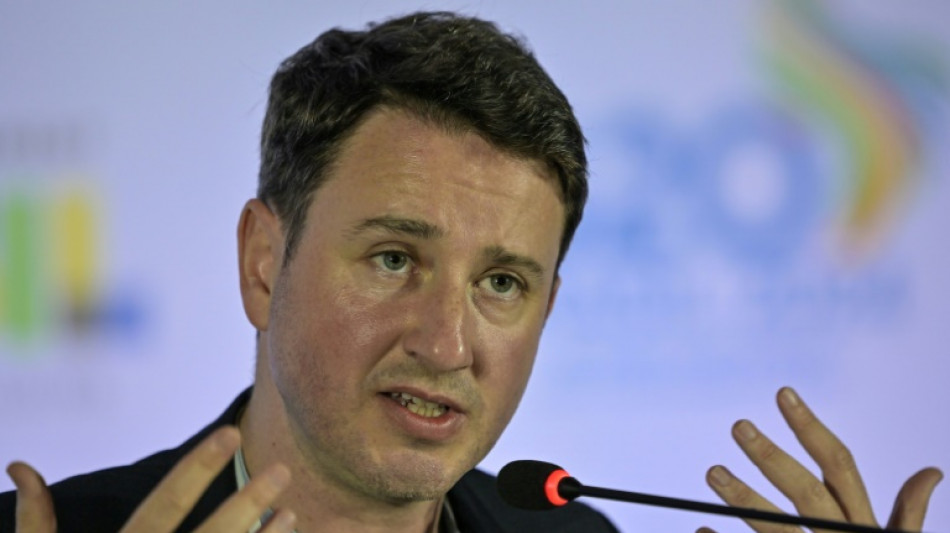
G20 hears a $250-billion-a-year idea: tax the super-rich / Photo: © AFP

 Man Utd thrashed by Como in Champions League horror show

 UN experts urge Meta to safeguard political expression in Brazil election

 Websites go dark worldwide as AI exposes critical security flaws
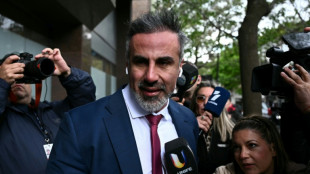 Defense in Maradona death trial seeks acquittal of doctor
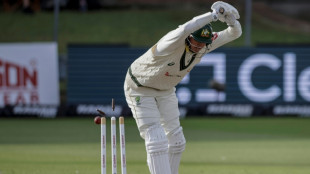 Jansen, Rabada put South Africa in sight of win over Australia

 Low Rhine weighed on German growth: central bank
 OpenAI says its AI agents disabled their own safety monitors
 Alldritt returns as France call up seven newcomers for Nations Championship
 UN issues call to arms to combat off-the-charts El Nino
 Nigeria Ebola case matches DR Congo strain
 Musk's SpaceX helps launch stock market gains
 Rose salutes Bournemouth's past heroes ahead of AC Milan clash
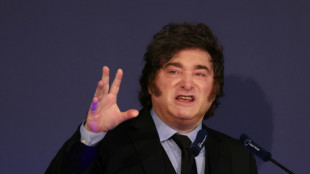 Argentina's Milei calls Spain PM Sanchez a 'dictator' in Madrid visit
 Barca's Olmo injured for a month, misses Clasico
 Impacts of UK's new North Sea gas drilling
 Jansen takes five for South Africa as Australia forced to follow on
 Toulouse v Troyes Ligue 1 game postponed as France gripped by unrest
 PSG winger Kvaratskhelia's season in doubt after torn ACL
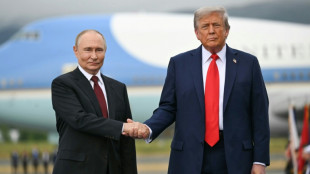
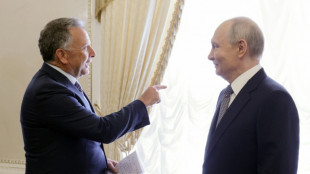 Putin, Witkoff meet in Russia for Ukraine war talks
 Musk's SpaceX helps fuel stock market gains
 Authors urge UK to halt 'draconian' Palestine Action ban as Rooney sales end
 South Korea guides crowd-pulling shark out of canal
 PSG's Kvaratskhelia season in doubt after torn ACL
 President berates countries that 'insult' Indonesia over wildfires
 PSG's Kvaratskhelia set for months out with torn ACL
French economist Gabriel Zucman brought a $250-billion-a-year idea to top policy makers from the world's biggest economies Thursday: slap an international wealth tax on the super-rich.
Zucman, a 37-year-old ex-protege of renowned economist and inequality expert Thomas Piketty, was invited to outline his research on tax evasion by the ultra-wealthy at a meeting of finance ministers from the Group of 20 nations, which is working to address the issue.
In an interview with AFP on the sidelines of the gathering in Sao Paulo, the UC Berkeley and Paris School of Economics professor discussed how billionaires like Elon Musk and Jeff Bezos get away with paying zero income tax, how to change that, and why world leaders need to do it fast to save democracy.
- What is argument for minimum tax on super-rich? -
"There is a growing body of evidence that today's tax systems, instead of being progressive, tend to be sharply regressive at the top of the distribution... The explosion of extreme wealth is one of the defining features of the world economy. It's really in our face. And the fact that these people (billionaires) pay very little in tax has become more and more obvious over the years.
"One concrete proposal is billionaires should pay each year, in income tax, the equivalent of at least two percent of their wealth... Unlike income, wealth is very well-defined.
"There are about 3,000 US-dollar-billionaires globally... That would generate about $250 billion in additional tax revenue worldwide.
"According to the best estimates that we have, developing countries need an additional $500 billion to face the challenges of climate change. So we can get half of that with just this minimum tax on billionaires."
- What was the reaction at G20? -
"Today is really the first time that there has been a discussion like this in a forum like the G20. And I was struck by the fact that many countries expressed support for the view that yes, we should have international agreements about taxing the super-rich, increasing tax progressivity, fighting inequality. I think it's a very positive development.
"It's the very beginning of the conversation. There has to be an inclusive discussion and more studies to flesh out the details."
- Billionaires will hate it. What's your message to them? -
"It's good if they hate it. Because it shows that this will actually make a difference. This is actually the one tax that's going to be very hard for them to avoid. The income tax is very easy to avoid. The inheritance or estate tax, they're also very good at avoiding it. This is something that will be very hard for them to avoid. So yes, they're going to fight.
"But I think what I fear more is the consequences of inaction. I think it is much more risky to continue (the current trend) of rising concentration of wealth, of tax injustice.
"The inequalities we have today... are unlikely to be very sustainable. They are corrosive for democracy."
R.Flueckiger--VB