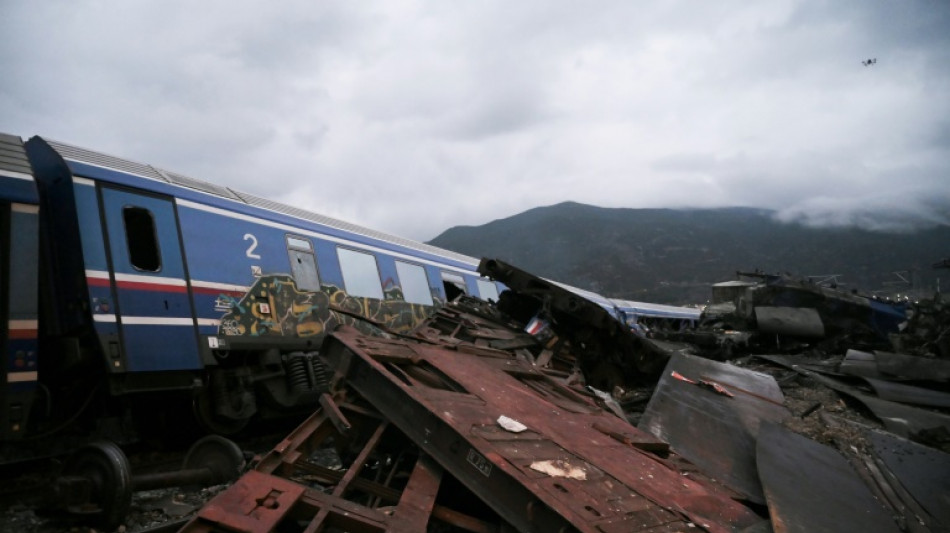
Strikes to mark one year since Greece's worst train crash / Photo: © AFP

 Tesla profits fall on higher spending as 'Elon Inc.' talk builds

 NFL Titans coach says gun incident was 'cry for help'
 Websites go dark as AI exposes critical security flaws

 Man Utd humiliated as Arsenal deny Bayern in Champions League
 Low-budget Brewers and Rays seek first World Series title
 Pitiful Man Utd display heaps pressure on Carrick
 Ohtani surgery 'not on the table': Dodgers chief
 eBay to slash 1,000 more jobs, around 9% of workforce
 Villa tame Viking to stay perfect in Champions League

 Tesla profits drop but top analyst estimates

 Angels drop Suzuki as manager after club's worst MLB season
 Washington orders US embassy staff, families to leave Saudi Arabia

 Musk's SpaceX results lift global stock markets
 NFL boss Goodell: Comfort level 'very high' for Paris game
 Fernandes laments 'mood of defeat' as Man Utd crumble in Como
 Maradona doctor was made 'scapegoat' for his death, Argentine court told
 Man Utd thrashed by Como in Champions League horror show

 UN experts urge Meta to safeguard political expression in Brazil election

 Websites go dark worldwide as AI exposes critical security flaws
 Defense in Maradona death trial seeks acquittal of doctor
 Jansen, Rabada put South Africa in sight of win over Australia

 Low Rhine weighed on German growth: central bank
 OpenAI says its AI agents disabled their own safety monitors
 Alldritt returns as France call up seven newcomers for Nations Championship
 UN issues call to arms to combat off-the-charts El Nino
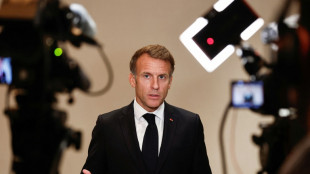
Workers across Greece were set to strike on Wednesday to demand answers a year after the nation's deadliest train crash, which killed 57 people and injured dozens more.
The head-on collision prompted mourning but also days of angry protests that blamed official failings and an unsafe rail system for the fiery crash on February 28, 2023.
A definitive account of what happened and who may be at fault has not been delivered, with investigators in an official enquiry not due to finish questioning until March 8.
"One year on, we are back on the streets to shout that we do not forget," said civil servants' union Adedy. "Those responsible for the tragedy have still not answered for their criminal acts."
Greek civil servants were to stage a 24-hour walkout with other unions, including air traffic controllers, taxi drivers and public transport workers, who are also protesting at the high cost of living.
A memorial service for those lost was held on Sunday, and relatives plan to gather at the crash site on Wednesday.
The disaster happened when a freight train and a passenger train with over 350 people aboard -- mostly students -- collided near a tunnel outside the central city of Larissa.
Passengers described being trapped among smashed carriages and burning debris as the train keeled over. They broke windows to try to escape.
The flames left many bodies charred beyond recognition and one missing woman was never found.
The tragedy prompted three days of national mourning and mass protests in several cities, with demonstrators hurling rocks at the offices of the railway's Italian-owned operating company, Hellenic Train.
But nearly four months later, the conservative government was comfortably re-elected.
In an interview with AFP, Maria Karystianou, who lost her 19-year-old daughter in the crash, said she had "no faith" in Greek justice and would submit her case to the European Court of Human Rights.
Though 34 railway employees and officials face possible charges over the disaster, a trial isn't expected to start before June.
- Allegations of illegal cargo -
Relatives have appointed their own experts to the case, arguing that official investigators wasted time and overlooked vital evidence.
At a press conference on Monday, the relatives' committee of experts said state officials had failed to look into the causes of an intense fire that broke out just after the crash.
"At least five of the 57 people died as a result of this fire," said committee member Giorgos Vlasopoulos.
Karystianou has said there was a "huge" explosion after the collision that gave rescuers chemical burns.
"It is certain the freight train was carrying illegal cargo. We've found substances used to adulterate fuel," she told AFP.
In a speech at the European Parliament this month, she said the government had "tried to tamper with and cover up incriminating evidence".
Potentially valuable CCTV footage was erased two weeks after the disaster without being assessed, and the site was bulldozed and paved over just days after the crash, the family experts said.
Prime Minister Kyriakos Mitsotakis promised one year ago that the tragedy would be "fully" investigated.
"Everything shows that the drama was, sadly, mainly due to a tragic human error," Mitsotakis said in a televised address after visiting the disaster site.
He later apologised for the accident and said he would improve Greece's railway safety.
- Railway plagued by problems -
The transport minister then in charge, Kostas Karamanlis, told a parliamentary committee of inquiry this month that on-duty staff were to blame.
If they had not "serially broken" safety regulations, the crash wouldn't have occurred, he alleged.
Karamanlis, who resigned and was later re-elected as a member of parliament, argued that even automated systems would not necessarily have averted the accident "because these systems need people to operate them".
Safety improvements have since begun but are proceeding slowly and in sections. Several failings that led to this disaster remain uncorrected.
For decades, Greece's 2,552-kilometre (1,585-mile) rail network has been plagued by mismanagement, poor maintenance and obsolete equipment.
"The Tempi catastrophe was the result of state negligence and general corruption, not human error," Lysimachos Papazoglou, who lost his 22-year-old son, told reporters on Monday.
S.Leonhard--VB