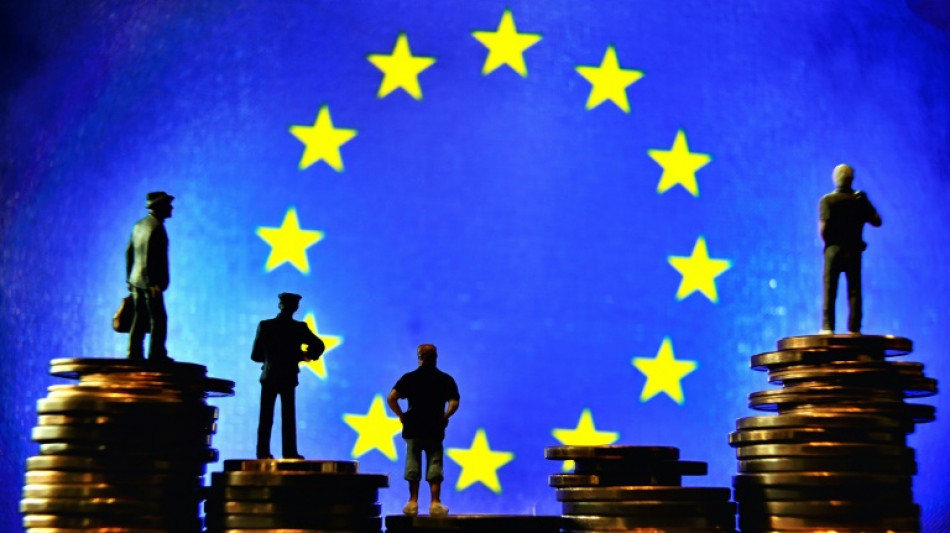
EU reaches agreement on spending rules / Photo: © AFP/File

 Seen and heard at France protests

 White says Fiji can have 'massive' World Cup after beating Japan
 England thrash France 82-0 to keep Rugby League World Cup hopes alive
 Security high as France braces for new protests
 White makes winning start as Fiji edge Eddie Jones's Japan

 Lula, Bolsonaro strike calmer tone in final Brazil election debate

 'How is it possible?': Students protest Indonesian haze
 Israel launches major West Bank operation after soldiers killed
 Typhoon Champi knocks out power to thousands in Taiwan

 As Israeli election nears, campaign turns ugly

 Oscar hopeful 'La Bola Negra' offers lessons about communicating, directors say

 Trapped: Soaring fuel costs hurt Maine lobster industry before midterms

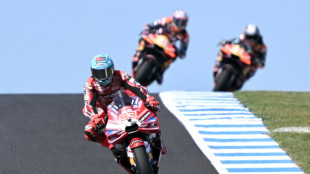 Marc Marquez beats brother Alex to Australian MotoGP pole
 Ebola vaccine trial begins in DR Congo

 Travelling man Wade equals Prem try record

 Rescuers search for seven people in Nairobi building collapse

 Sacha Baron Cohen revives the 'problematic dinosaur' Ali G in new film

 New race in Barcelona tops 17-event '27 IndyCar season
 Neymar backs Flavio Bolsonaro in Brazil election
 Melania Trump says she brokered truce in war-torn Ukrainian city

 Leclerc tops times for Ferrari in opening practice for US Grand Prix
 Bayern Munich coach Kompany in hospital after collapsing

 Signs point to renewed major US military ops against Iran

 European, Mideast foreign ministers push peace and diplomacy at Istanbul talks

 Ex-All Black centre Williams undergoes 'miracle' heart surgery

The European Parliament and member states reached an agreement early Saturday on reforms to EU budgetary rules aimed at boosting investment while keeping spending under control.
The text modernises the current rules, known as the Stability and Growth Pact, created in the late 1990s, which limit countries' debt to 60 percent of gross domestic product and public deficits to three percent.
"Deal!," the Belgian Presidency of the Council of the EU said on social media platform X after 16 hours of talks.
The European Union spent two years making an intensive effort to develop reforms supported by the more frugal member states like Germany and other countries, such as France and Italy, which seek more flexibility.
After much wrangling between Berlin and Paris, the 27 member states struck a deal in December, then began talks with negotiators from the European Parliament.
The text was criticised for its great complexity and derided by left-wing officials as a tool for imposing austerity on Europe.
The negotiators finally reached an agreement early Saturday, in time for the text to be voted on in Strasbourg this spring before the parliamentary break ahead of European elections.
The reforms will be formally adopted after agreement between lawmakers and states.
The agreement will allow member states to apply the new rules to their 2025 budgets.
"The new rules will help achieve balanced & sustainable public finances, structural reforms, foster investments, growth & jobs creation in the EU," the Belgian presidency said.
- Wiggle room -
The former budgetary framework was considered too drastic and was never really respected.
The rules had, however, been suspended since the coronavirus pandemic to give member states wiggle room to spend more during a period of great economic upheaval.
During the initial debates between countries, the battle was fierce over how much those old limits should be relaxed to give more room for investment.
With war raging in Europe and the EU making a green transition push, states led by France argued for allowing more space to finance these key areas, including, for example, supplying critical arms to Ukraine.
While confirming the previous limits on debt and budget deficits, the new agreement allows more flexibility in the event of excessive deficits.
The text provides looser fiscal rules more adapted to the particular situation of each state, allowing big spenders a slower route back to frugality.
The tailor-made approach means each country presents their own adjustment trajectory to ensure their debt's sustainability, giving them more time if they undertake reforms and investments and allowing a less painful return to fiscal health.
Monitoring would focus on expenditure trends, an economic indicator considered more relevant than deficits, which can fluctuate depending on the level of growth.
But Germany and its "frugal" allies managed to tighten this budgetary framework by imposing a quantifiable minimum effort to reduce debt and deficits for all EU countries, despite the reluctance of France and Italy.
These modifications have greatly complicated the text.
"We have a deal! A new economic governance framework was much needed," Dutch MEP Esther de Lange said on X.
"We have ensured that the new fiscal rules are sound and credible, while also allowing room for necessary investments," said de Lange, of the centre-right European People's Party Group.
The reforms are also supported by the EU's Renew liberals and a large majority of the Socialist and Democrat groupings.
The Greens and some S&D elected officials, however, reject it, as do the radical left.
These elected officials have denounced a return to austerity after three years of suspended budgetary rules due to the pandemic and war in Ukraine.
"We need investments in industry, in defence, in the ecological transition, that's the urgency today, it is not to bring economically absurd rules up to date," economist and S&D MEP Aurore Lalucq of France told AFP.
She denounced it as a "political error which will be used by populists to attack Europe".
C.Koch--VB