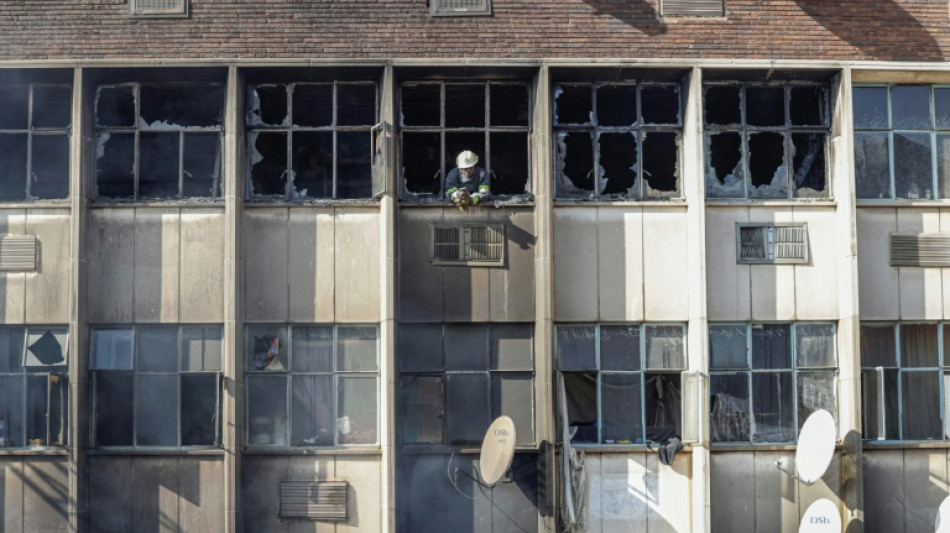
Deadly Johannesburg fire began as murder cover-up, inquiry hears / Photo: © AFP

 French court adjourns trial over 2020 death of delivery driver
 Serbian student movement eyes power after election triumph
 Machado ready to meet Venezuela leader after shock return

 Lula celebrates election win as Brazil markets tumble
 France's Macron accuses social media of sowing discord ahead of election
 Anthropic unveils IPO filing showing soaring sales and AI risks

 US singer Chris Brown avoids jail over London nightclub brawl
 US singer Chris Brown avoids jail over UK nightclub brawl
 Man Utd crisis deepens as Carrick faces axe

 Serbian student movement eyes power after resounding snap poll victory

 Eala breezes past world number 411 in Tokyo opener

 Swedish Centre Party leader says government coalition talks failed
 Barca's big-game defeats pose familiar questions

 Russia says open to mini Ukraine ceasefires, but no let up in war

 Bangladesh measles crisis 'warning sign' of other outbreaks: report

 'Historic victory': World leaders celebrate Lula's re-election
 Stock markets mixed ahead of tech earnings, central bank decisions

 Mother renews anti-bullying appeal a decade after son’s death
 'Historic victory': Leftist leaders in the Americas celebrate Lula's re-election

 African players in Europe: Jackson brace ends City's perfect record

 Argentine police arrest stepfather after pregnant 10-year-old reaches hospital
 Mother dies after rescuing sons from riptide in the Bahamas
 James Blunt reportedly sought extra underwear during Celebrity Traitors filming

 Trump says Canada trade deal coming 'soon'

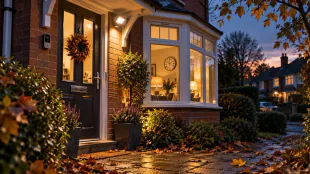 Police urge home-security checks as darker evenings return

A Johannesburg drug user has admitted setting fire to a crowded housing block to cover up a murder, triggering a blaze that killed 77 people, AFP learned on Wednesday.
The 29-year-old South African was detained on Tuesday after coming forward to confess to an enquiry established to investigate the tragedy in August last year, police said.
Separately, a human rights observer who was present at the inquiry told AFP that the man had explained that he started a fire to cover up a murder during a bungled gangland beating.
In August, 77 people including 12 children were killed and scores injured as the blaze ripped through a five-storey building taken over for illegal housing in central Johannesburg.
It was one of the deadliest urban fires around the world in recent years and the disaster sparked a renewed debate about housing in South Africa's run-down inner cities.
Arson was suspected, but the latest details on what may have happened only surfaced when the suspect, apparently wracked with guilt, came forward this week.
According to Andy Chinnah, a rights activist with Amnesty International who was present at the enquiry, the suspect confessed to being a drug user who had befriended a dealer in the building.
He helped "knock people up" if they had a problem with the gang boss, in a room called the "slaghuis" or "butchery" where victims were tied to a chair and beaten.
- Arson and murder charges -
On the day of the fire, Chinnah said, when the suspect "pulled the sack off the victim's head he noticed that the guy was someone he knew".
High on drugs, and fearing that he would be identified, the suspect strangled his victim and then went to a nearby petrol station to buy fuel, before dousing the body and setting it alight.
"As he stood outside and watched the building burn, he said, he saw a child being thrown out from the fourth floor and a woman jumping," Chinnah said.
"He said he then realised what he had done was much bigger than what he intended."
Eventually the fire-starter decided to come to the inquiry to confess, said the activist, who has also been briefed by lawyers for the victims.
A police spokesman said the new suspect would appear in court "soon" on charges of arson, 77 counts of murder and 120 counts of attempted murder.
- 'Wake-up call' -
After the fire, bodies -- many "burnt beyond recognition" -- were discovered piled up at a security gate that was closed, preventing people from escaping the blaze.
Some residents managed to break open a locked fire escape gate and run to safety, while others jumped out windows -- some throwing babies out for safety.
The disaster sparked a renewed debate about housing in the inner cities. During his visit to the site president Cyril Ramaphosa said it was "a wake-up call".
Illegal occupation of abandoned buildings in downtown Johannesburg, which slumped into decay and economic decline in the 1990s, is widespread.
First, international sanctions against the former apartheid regime in the 1980s took a toll.
Then the advent of democracy in 1994 saw many white-owned businesses move out to suburban districts with fenced compounds and private security teams.
City authorities said the municipal-owned, listed building in a crime-ridden area had been turned into illegal housing after being abandoned, possibly run by syndicates who collect rent from occupants.
They estimated that more than 80 "shacks" were set up inside. Most of the people living inside the building were immigrants, according to a resident who spoke to AFP at the scene.
Police raided the building in 2019, arresting 140 foreign nationals, but, in a country struggling with massive crime rates, little changed.
N.Schaad--VB