
Japan quake toll rises to 64 as weather hampers rescuers / Photo: © AFP

 After a long slog to the top, Zverev leaps to No. 1 ranking

 Kuwait traffic authority cautions against hazard lights while driving in rain

 Germany's Zverev becomes tennis world No. 1

 Grealish dropped for Everton's League Cup tie after disciplinary breach
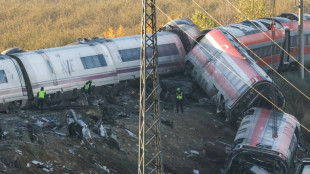
 Kuwait National Guard official visits member injured during training

 Machado says Trump opened 'floodgate to freedom' for Venezuela

 CNN Global Perspectives prepares Doha debut with international speaker lineup

 Qatar Olympic Academy completes record sports management course

 Jazeera Paints showcases housing solutions at Build Your House 2026 in Qatar

 French shooting suspect targeted Muslims, Africans: prosecutor

 Es’hailSat and Arabsat agree broader satellite and broadcasting cooperation
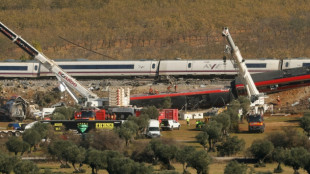
 Qatar and Russia outline plans to expand strategic partnership

 Google drags down Wall Street stocks

 Nations accused of undermining science at UN nature talks

 ECB says has tools to calm markets as French debt worries rise

 ASEAN envoy ends Myanmar trip with no public Suu Kyi meeting

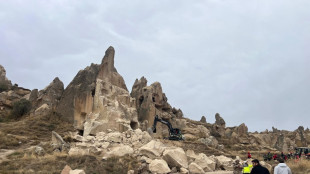 Three dead in rock spire collapse at Turkey's touristic Cappadocia

 CAR tightens border checks as DR Congo Ebola cases rise
 Does White House ask AI to decide policy? Democrats want the receipts

 French businessman Roux de Bezieux takes over 2030 Winter Olympics after leadership turmoil
 Tech jitters pull down Wall Street stocks

 Alaska governor orders probe into election same-name 'spoiler'

 Gang-plagued Haiti sets election dates for 2027
 Neville warns managers can need sacking 'for their own good' as Carrick fights on

 French businessman takes over 2030 Winter Olympics amid leadership turmoil

Japanese rescuers struggled with heavy rain, blocked roads and aftershocks on Wednesday following a powerful earthquake that killed at least 64 people and left tens of thousands without power or running water.
Throughout the Ishikawa prefecture on the main island of Honshu sirens blared as emergency vehicles tried to navigate roads blocked by rocks and fallen trees.
The Noto Peninsula was worst hit by the 7.5-magnitude quake on January 1, with port towns like Wajima and Suzu resembling war zones with roads of mud, flattened homes and sunken boats.
"I can never go back there. It's unlivable now," 75-year-old Yoko Demura said from a shelter in the city of Nanao where she went after her home was reduced to rubble.
"It makes me sad and I will miss it," she told AFP.
There were "almost no houses standing" in one town in the Suzu area, said municipal mayor Masuhiro Izumiya.
"About 90 percent of the houses (in that town) are completely or almost completely destroyed... the situation is really catastrophic," he said, according to broadcaster TBS.
The regional government confirmed 64 people are dead and more than 300 injured, 20 of them seriously, but the toll was expected to rise.
More than 31,800 people were in shelters, and at least 200 buildings had collapsed.
Around 32,800 households were still without power in Ishikawa prefecture, the local utility said. Many cities were without running water.
"More than 40 hours have passed since the disaster. We have received a lot of information about people in need of rescue and there are people waiting for help," Prime Minister Fumio Kishida said after an emergency task force meeting.
The number of military personnel sent to the area was doubled, with more rescue dogs also deployed, he added.
Plenty of food and emergency supplies have arrived in the region, but delivery to communities was being hampered, regional authorities said.
"Our lifelines have been cut off," said Yuko Okuda, 30, from an evacuation centre in the town of Anamizu, down the coast from Suzu.
"Electricity, water and gas -- everything. And as aftershocks keep happening, our house could collapse at any time," she told AFP.
- Minor damage at nuclear plants -
The powerful quake, measured at 7.6 by the Japanese weather office, was one of more than 400 to shake the region through Wednesday morning.
The main jolt triggered waves at least 1.2 metres (four feet) high in Wajima, and a series of smaller tsunamis were reported elsewhere.
Japan experiences hundreds of earthquakes every year and most cause no damage, with strict building codes in place for more than four decades.
Earthquakes have hit the Noto region with intensifying strength and frequency over the past five years.
The high number of aftershocks is a result of the "complex" fault systems below the peninsula, Yoshihiro Ito from Kyoto University's Disaster Prevention Research Institute told AFP.
Japan is haunted by a massive 9.0-magnitude undersea quake in 2011, which triggered a tsunami that left around 18,500 people dead or missing.
It also swamped the Fukushima atomic plant, causing one of the world's worst nuclear disasters.
Minor damage was reported at some nuclear power plants along the Sea of Japan shoreline after Monday's earthquake and aftershocks -- including leaks of water used to cool nuclear fuel and a partial power shutdown at one plant.
The plant operators said there was no danger of damage to the environment or the nuclear power stations themselves.
burs-stu/lb
F.Wagner--VB