China unveils new gaming curbs, sending tech stocks tumbling / Photo: © AFP/File

 Italy inflation surges to 5.4% as economy stalls

 US jury hands win to Bayer in weedkiller cancer case

 Scotland's Kinghorn hails Toulouse move for enhancing career

 Eala aiming to finish season with bang after Tokyo exit

 Bournemouth boss Rose vows to be patient with Kroupi

 Eurozone growth holds up despite energy crunch

 Thousands of students, workers protest in Italy under heavy security

 New Zealand's Phillips hits sublime century in 87-run win over India

 'Get them there alive': Ukraine's railways under Russian barrage

 Dakar Rally moved to Portugal and Morocco following Houthi attacks in Gulf

 German economy logs 0.2% growth, faster than expected

 Crypto platform Binance confirms 'complex' $6.3 bn hack

 Spanish inflation stays at three-year high before election

 Drugs giant AstraZeneca reveals higher profits, savings plan

 French economy 'headed for a wall' as GDP shrinks

 South Korea to prosecute students cheating with smart glasses

 Surging costs of living top US voter concerns

 Basic services, fading loyalties loom over South Africa's vote

 Shock, vindication, regret: Scientists react to AI roiling life's work
 Crypto platform Binance confirms $6.3 bn hack
 Boozer shines as Grizzlies top Blazers in battle of NBA unbeatens

 Jorge Martin confirmed to race at Malaysian MotoGP

 Bayern and Kane host Dortmund after week of 'extremes'
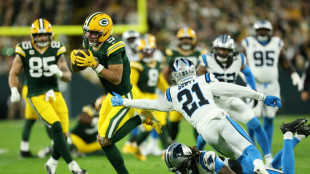 Packers beat Panthers 27-19 as Watson returns from hospital

 Affordable supermarket fashion offers designer-inspired autumn alternatives

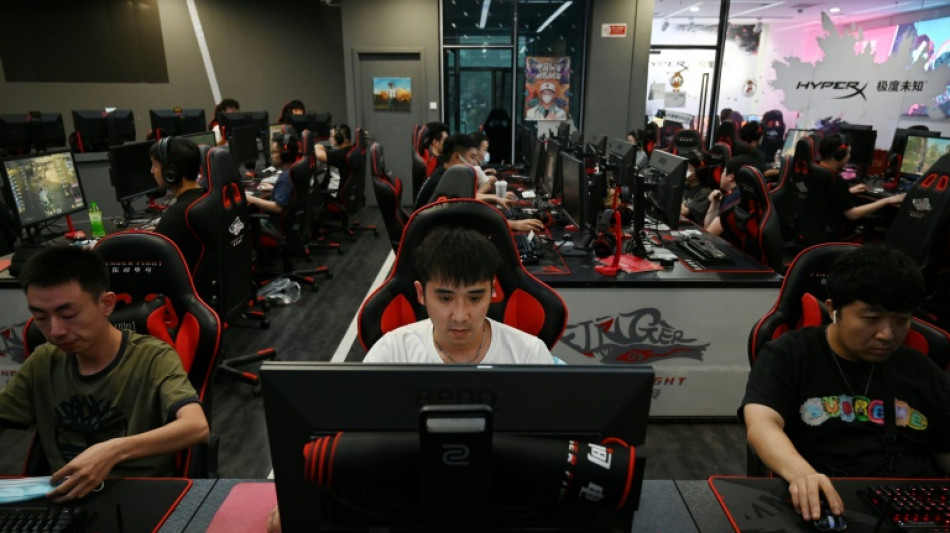
China announced Friday another set of planned curbs on the amount of time and money that people can spend gaming online, triggering a share market sell-off in some of the nation's biggest tech giants worth billions of dollars.
The draft restrictions published online by the government regulator say they are aimed at limiting in-game purchases and preventing obsessive gaming behaviour.
They also reiterate a ban on "forbidden online game content... that endangers national unity" and "endangers national security or harms national reputation and interests".
The news sent shares in tech giants tumbling and wiped tens of billions of dollars off their value, with industry leader Tencent tanking more than 12.0 percent in Hong Kong by the close.
Beijing first moved against the gaming sector in 2021 as part of a sprawling crackdown on Big Tech, including a strict cap on the amount of time children could spend playing online.
An end to a freeze in gaming licences had raised hopes that the focus on the industry had subsided.
The country's top gaming industry body announced last year that China had "solved" the issue of youth video game addiction.
But the draft regulations announced Friday would introduce limits on recharging in-game wallets and abolish features meant to increase gameplay time such as rewards for daily log-ins.
Pop-ups warning users of "irrational" playing behaviour would also have to be introduced.
"The clear signal does indeed seem to be that the wide-ranging tech crackdown is still ongoing, and may even be becoming more aggressive," Michael Brown, a market analyst at broker Pepperstone, told AFP.
Since 2021, children under 18 years old have only been allowed to play online between 8:00 pm and 9:00 pm on Fridays, Saturdays and Sundays during the school term.
Gamers are required to use their ID cards when registering to play online to ensure minors do not lie about their age.
And companies are also prohibited from offering gaming services to young people outside government-mandated hours.
- Shockwaves -
China is the world's largest gaming market, and Tencent is the global leader in the sector in terms of revenue.
The company dominates the Asian market and has invested in game studios across the world.
Friday's news wiped around $54 billion off the company's share value, according to Bloomberg News.
Rival NetEase was down nearly 25.0 percent at close, and XD shed 19.0 percent.
The shockwaves were felt throughout Hong Kong's Hang Seng Index, which dived more than four percent at one point, and was down 1.7 percent by closing.
It had been rallying with global markets on expectations the Federal Reserve will cut interest rates next year.
Other tech firms were also hit, with Meituan off nearly four percent and Alibaba down about two percent.
The plans "seem to have come as a significant shock to the market, with little indication having previously been given that such a move was on the cards", said Pepperstone's Brown.
He suggested they could be seen either as an attempt to shift consumer spending to other parts of the sluggish economy, or as a reaction to high levels of youth unemployment.
The national statistics bureau has not released a youth unemployment rate since June, when joblessness among 16- to 24-year-olds hit a record 21.3 percent.
Zeng Xiaofeng, a vice president at Niko Partners, told Bloomberg the regulations would deal a blow to most games in China.
"Companies will need to overhaul their monetization models, including how they charge money from different tiers of players," he said.
Some independent game studios said the regulations could prove an opportunity.
Cheng Gong, CEO of Chengdu-based Han-squirrel Studio, said studios that focus more on innovation and high-quality user experience might benefit.
"The industry felt a bit like bad money driving out good money in the past," he told AFP.
"Everyone is focusing on getting players to top up more. Only the ones with the most revenues can afford to spend more money on advertising and hence they would get more players topping up in return," he added.
"It's a vicious circle."
P.Staeheli--VB