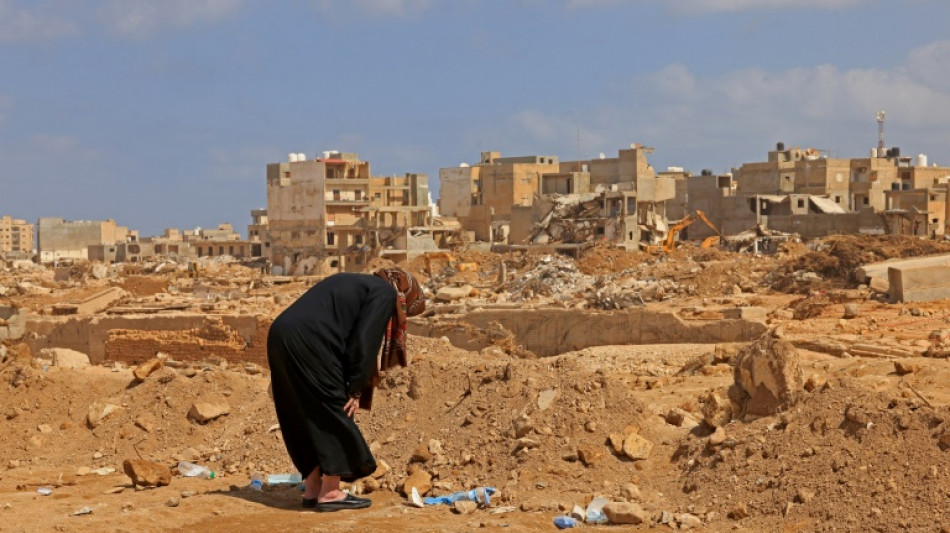
Cities wiped out, or nearly, by disasters / Photo: © AFP/File

 China sports brands score NBA stars to assist global ambitions

 Man dies after setting self ablaze outside UN in New York: police

 VAR 'taking joy' from football says Croatia coach Dalic after loss
 Afghans come home but risk exclusion without any ID

 'Coincidence of life' says Ronaldo after Jota tribute a year from death

 Japan face Italy without banned coach Jones

 Ronaldo, Portugal advance after VAR drama to set up Spain showdown

 AI romance scam impersonating Dubai prince ensnares victims
 Portugal advance in World Cup thanks to last-gasp Ramos winner

 Mission impossible? England take the World Cup high road against Mexico

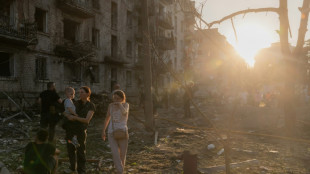 Ukraine, Russia vow escalation as strikes on Kyiv kill 27

 Messi meeting the "game of our lives", says Cape Verde coach

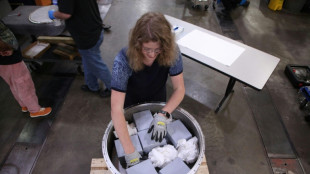 Do not open until 2276: US burying time capsule to mark July 4

 Scaloni warns Argentina that Cape Verde success 'no accident'

 Spain ease past Austria with 3-0 World Cup win

 Endrick says versatility could help Brazil against Norway

 Ghana have 'duty to Africa' to progress at World Cup, says Queiroz

 Former Celtics star Brown in shock over trade to 76ers

 Progress, further delay risk for Boeing Air Force One: report
 US coach Pochettino '200% Argentine' but embraces Americana

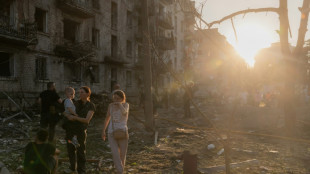 Ukraine, Russia vow escalation after Moscow strikes on Kyiv kill 25

 Prosecutors can review Woods medical records in DUI case: judge

 Japan deploys bear cameras in mountains as attacks surge

 Djokovic has history in his sights at Wimbledon
 Ovechkin returning to Caps for 22nd NHL season

The coastal city of Derna in Libya, devastated by a huge flash flood, joins a grim list of metropolises nearly annihilated by natural disasters since the turn of the century.
But from the debris, many of those razed landscapes have also managed to rebuild and reinvent themselves following years of reconstruction.
- Bhuj, 2001 -
A massive earthquake struck the western Indian state Gujarat on January 26 killing more than 20,000 people, with most victims from the city of Bhuj.
The city was flattened but a massive reconstruction effort has turned it into an economic hub with two new ring-roads, improved sewerage systems and an airport.
The local government bulldozed temples and mosques to widen roads, and the construction of apartments of more than one storey is now forbidden.
- Bam, 2003 -
A quake on December 26 levelled much of the ancient southeastern Iranian city of Bam with 80 percent of its infrastructure damaged or destroyed.
An estimated 26,000-32,000 people died in the disaster of such proportions that Iran allowed its arch-enemy the United States to send planes laden with aid.
The jewel of Bam, a 2,000-year-old citadel, which was the largest mud-brick structure in the world, was nearly completely destroyed.
Today more than 90 percent of the city has been rebuilt.
- Banda Aceh, 2004 -
On December 26 a 9.3-magnitude earthquake off Indonesia's western tip generated a series of massive waves that pummelled the coastline of 14 countries as far apart as Indonesia, Thailand, Sri Lanka and Somalia.
Most of Indonesia's 170,000 victims were in the province of Aceh and its main city Banda Aceh was razed.
More than $6.7 billion was poured into rebuilding Aceh, funding among other things 140,000 new homes, 1,759 schools, 363 bridges and 13 airports.
The disaster also ended a decades-long separatist conflict in Aceh, with a peace deal between rebels and Jakarta struck less than a year later.
- L'Aquila, 2009 -
In the early hours of April 6, a devastating earthquake hit the historic Italian city of L'Aquila, killing 309 people.
Around 20,000 homes were damaged or destroyed.
Over a decade later, the city's elegant buildings and squares spanning medieval, Renaissance and Baroque periods are still being renovated.
Over 8,000 people are still living in temporary housing, most of them in quake-proof apartments.
- Port-au-Prince, 2010 -
A massive quake on January 12 wrecked the Haitian capital Port-au-Prince and the surrounding region.
It killed more than 200,000 people, destroyed the homes of 1.5 million Haitians and shattered much of the country's frail infrastructure.
The disaster tipped Haiti into chaos and destitution.
A cholera epidemic the same year introduced by peacekeepers who arrived after the quake killed more than 10,000 people.
More than a decade later, downtown Port-au-Prince, including multiple government agency headquarters and the presidential palace, have still not been rebuilt and camps built for the displaced have become shantytowns.
- Minamisanriku, 2011 -
The coastal town was one of many in eastern Japan devastated when a 9.1-magnitude undersea earthquake and tsunami struck on March 11, 2011, triggering a disaster at the Fukushima nuclear plant.
Some 620 people died in Minamisanriku, a fishing port of 17,600 inhabitants, and around 60 percent of all buildings were destroyed.
Six years later the town was back on its feet: residents had been relocated and the town hall, schools and hospitals had been rebuilt.
R.Buehler--VB