Argentina's ESMA torture center: hell becomes heritage / Photo: © AFP/File

 China sports brands score NBA stars to assist global ambitions

 Man dies after setting self ablaze outside UN in New York: police

 VAR 'taking joy' from football says Croatia coach Dalic after loss
 Afghans come home but risk exclusion without any ID
 'Coincidence of life' says Ronaldo after Jota tribute a year from death

 Japan face Italy without banned coach Jones
 Ronaldo, Portugal advance after VAR drama to set up Spain showdown

 AI romance scam impersonating Dubai prince ensnares victims
 Portugal advance in World Cup thanks to last-gasp Ramos winner

 Mission impossible? England take the World Cup high road against Mexico

 Ukraine, Russia vow escalation as strikes on Kyiv kill 27

 Messi meeting the "game of our lives", says Cape Verde coach

 Do not open until 2276: US burying time capsule to mark July 4

 Scaloni warns Argentina that Cape Verde success 'no accident'
 Spain ease past Austria with 3-0 World Cup win

 Endrick says versatility could help Brazil against Norway

 Ghana have 'duty to Africa' to progress at World Cup, says Queiroz

 Former Celtics star Brown in shock over trade to 76ers
 Progress, further delay risk for Boeing Air Force One: report
 US coach Pochettino '200% Argentine' but embraces Americana

 Ukraine, Russia vow escalation after Moscow strikes on Kyiv kill 25
 Prosecutors can review Woods medical records in DUI case: judge

 Japan deploys bear cameras in mountains as attacks surge

 Djokovic has history in his sights at Wimbledon
 Ovechkin returning to Caps for 22nd NHL season

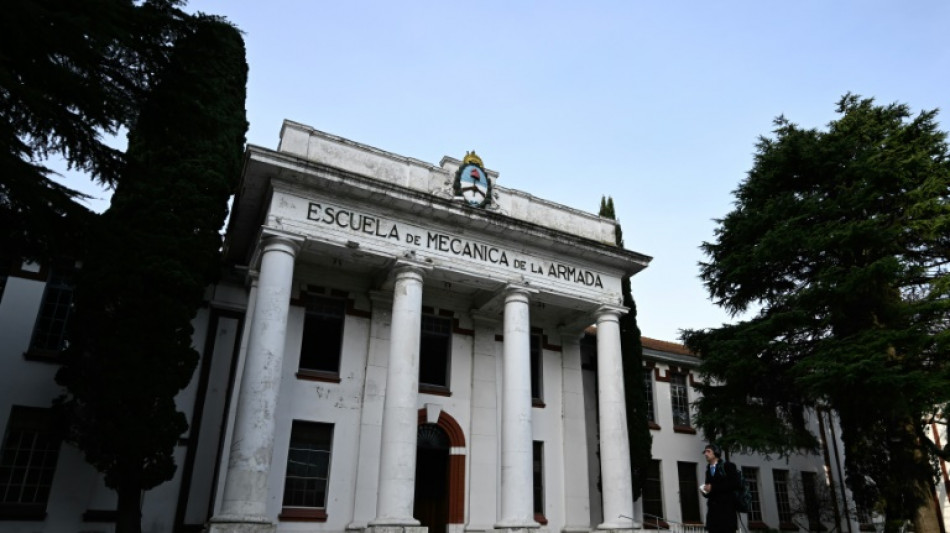
The ESMA, the most notorious murder and torture center among hundreds operated by Argentina's 1976-83 military dictatorship, stands today as a reminder of the brutality humans are capable of.
Inscribed Tuesday on the UNESCO list of World Heritage sites, the center's four-letter acronym still manages to send a shudder down Argentine spines.
The ESMA is emblematic of a tragic period in the South American country's history that left an estimated 30,000 people killed or forcibly disappeared, according to rights groups.
Of those, about 5,000 entered the ESMA. Very few reemerged.
The ESMA, a former navy mechanical school, was the most active of the dictatorship's clandestine detention centers, and the most feared. Its name is an acronym for Escuela Superior de Mecanica de la Armada.
Here, prisoners were tortured, beaten, raped, kept in chains for months on end, hooded -- all in the hopes they would give up other people suspected of being "subversives."
Pregnant detainees had their babies taken and given to families with connections to the dictatorship. Several still don't know their true identities today.
And every week -- generally on a Wednesday -- detainees were rounded up for what they were told were "transfers" but were in fact so-called death flights during which prisoners were thrown out of planes over the River Plate -- both dead and alive.
"The worst of the state terrorism of the last military dictatorship in Argentina was expressed there," President Alberto Fernandez said after the announcement from a UNESCO World Heritage Convention in Saudi Arabia.
- Never forget -
The ESMA today is officially a "Space for Memory and for the Promotion and Defense of Human Rights" -- a reminder of a blemish on history that must never be repeated.
Photographs of hundreds of victims line the walls. Many were mere teens.
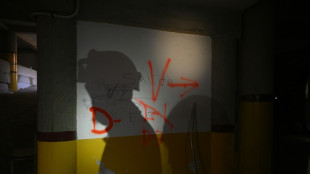
Former detainee Eduardo Giardino, on a visit to the museum he remembers as his personal hell from 32 years earlier, took a tour of "Capuchita" -- the attic where he was held from 1978 to 1980 in an individual cage.
"I asked the museum guides to leave me alone in 'Capuchita'," the 68-year-old told AFP. "I felt the need to lie down on the floor again, to relive it, but... as a free person."
Former soldiers attached to the ESMA and other such centers are still being tried today for crimes they committed there: in total, 1,159 have been convicted to date and another 366 cases are still open.
The ESMA is located in the middle of a vast park in Nunez, a peaceful suburb of the bustling capital.
From inside its walls, inmates remember hearing street noises, school bells ringing, and crowds clamoring at the Monumental Stadium which hosted the 1978 FIFA World Cup final between Argentina and the Netherlands. Normal life seemed so near yet so far away.
- 'It hurts' -
"The building is a... witness" to what happened. "Going through it hurts but it is healthy, because it does not allow us to distort history," said Ricardo Coquet, a 70-year-old survivor of torture.
"Having survived at ESMA is luck. The important thing now is to.. bear witness," he told AFP.
The ESMA's three-storey building was first opened in 1928 as a training center. An officers' mess that later served as the illegal detention center was constructed in 1948.
When the military grabbed power in 1976, the ESMA became the center of the military's most brutal operations against civilian activists or anyone suspected of a "subversive" allegiance.
The site was nearly lost: the post-dictatorship government of Carlos Menem wanted to destroy it in 1998 to erect a monument in its place, but widespread protests stopped him.
And in 2004, Menem's successor Nestor Kirchner announced it would become a memorial museum.
Some 150,000 people visit the ESMA every year, tourists and students alike, and partake in activities for reflection and debate about what happened there.
In its submission to UNESCO for the ESMA to be declared a heritage site, the Argentine government argued it was a "symbol of the genocide" that took place in the country.
"It is incontrovertible proof of the State terrorism that inflicted extreme criminal violence on society at large," said the proposal.
M.Betschart--VB