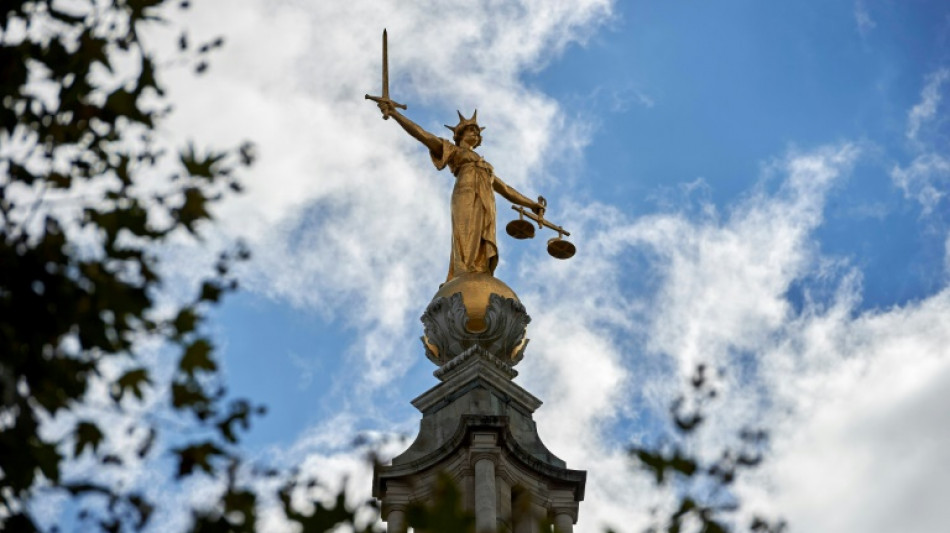
UK criminals to be forced to attend their sentencing / Photo: © AFP

 Wimbledon giving Serena 'as much time' as possible for doubles

 Chinese investors flock to Hong Kong as trading curbs tighten

 Projected 'super typhoon' heads for US Pacific islands

 UN warns of strong looming El Nino

 Hunt for last signs of life in Venezuela quake zone

 Asian markets rise as beaten-down tech stocks enjoy bounce

 David v Goliath as Cape Verde face Messi's Argentina at World Cup

 Nagelsmann quits as Germany coach after World Cup exit: reports

 All Blacks return to Christchurch 'a blessing', says Savea

 'Not a museum': Slovak UNESCO village strains under tourism
 DR Congo opposition builds against presidential third-term bid

 China sports brands score NBA stars to assist global ambitions

 Man dies after setting self ablaze outside UN in New York: police

 VAR 'taking joy' from football says Croatia coach Dalic after loss

 Afghans come home but risk exclusion without any ID

 'Coincidence of life' says Ronaldo after Jota tribute a year from death

 Japan face Italy without banned coach Jones

 Ronaldo, Portugal advance after VAR drama to set up Spain showdown

 AI romance scam impersonating Dubai prince ensnares victims

 Portugal advance in World Cup thanks to last-gasp Ramos winner

 Mission impossible? England take the World Cup high road against Mexico

 Ukraine, Russia vow escalation as strikes on Kyiv kill 27

 Messi meeting the "game of our lives", says Cape Verde coach

 Do not open until 2276: US burying time capsule to mark July 4

 Scaloni warns Argentina that Cape Verde success 'no accident'

Judgescould be given the power to order criminals to attend their sentencing under planned legislation announced Wednesday by the UK's justice ministry.
It comes after offenders in several high-profile trials were not in court to hear their sentence and statements from the victims' families, prompting repeated calls for a change in the law.
Last week nurse Lucy Letby refused to attend her sentencing for murdering seven babies and attempting to kill six other infants.
Under the proposed reforms, which will apply in England and Wales, judges will have the discretionary power to order criminals to attend sentencing hearings, the justice ministry said.
Custody officers will be able to use "reasonable force" to make the criminals appear in the dock or by video link, "meaning every effort will be made for victims and their families to see justice delivered".
Those who continue to resist attending their sentencing despite a judge's order may face an extra two years behind bars, according to the ministry.
This penalty will apply in cases where the maximum sentence is life imprisonment. Typically, anyone sentenced to life has a minimum tariff to serve before they can be considered for parole.
"It is unacceptable that some of the country's most horrendous criminals have refused to face their victims in court," Prime Minister Rishi Sunak said.
"They cannot and should not be allowed to take the coward's way out," he added.
Sunak said the government would submit proposals to parliament in the coming weeks, calling the move "the right thing to do".
"People rightly expect criminals to face up to the consequences of their actions," he added.
- Concern -
Some lawyers have expressed concern about making attendance for sentencing compulsory, citing fears that the use of force could cause injury to defendants or staff, and disrupt proceedings.
The government, which has been accused of underfunding the criminal justice system for years, at the weekend announced plans to impose more whole-life orders for the worst killers.
Currently, 70 prisoners are serving sentences from which they will never be considered for release.
A torture expert called on the UK government to urgently review indefinite sentences imposed under a previous initiative that has now been scrapped.
Alice Jill Edwards, a special rapporteur to the UN on torture and other cruel, inhuman or degrading treatment or punishment, said nearly 2,900 prisoners were still serving such sentences, which were imposed in England and Wales from 2005-2012.
They were given to offenders deemed to pose a significant risk to public safety until they were no longer considered a threat.
"For many these sentences have become cruel, inhuman and degrading," she said, highlighting UK government figures from 2021 that 65 so-called Imprisonment for Public Protection (IPP) prisoners had killed themselves.
"They have been acknowledged by successive UK governments and even described as indefensible by a justice minister -- yet they persist," she added, calling for better rehabilitation.
"As a general rule, indeterminate sentences should be used sparingly and only for the most serious crimes and offenders. Sentencing should be assessed on an individual basis, taking into account all relevant factors."
J.Horn--BTB