
-
 Bayern sign Germany defender Brown until 2031
-
Police hunt for Ukrainian woman over Monaco bomb attack

-
 MEXC's June Highlights: $437 Billion in Trading Volume, Offering Access to 7,000+ US Stocks and ETFs
-
Kenya's abortion taboo is killing thousands of women

-
 Stocks mostly rise as beaten-down tech stocks enjoy bounce
-
Madonna returns to form with dancefloor filler "Confessions II"

-
 Iranian leaders pay respects to supreme leader as Tehran prepares for funeral
-
Dean says Australia final a 'fresh start' for England

-
 Doubles not a 'carnival sideshow' say players amid schedule row
-
Wimbledon giving Serena 'as much time' as possible for doubles

-
 Klopp in 'talks' for Germany job after Nagelsmann exit: federation
-
Chinese investors flock to Hong Kong as trading curbs tighten
-
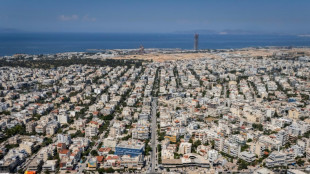 Surging real estate development divides opinion on Athens' riviera
-
Projected 'super typhoon' heads for US Pacific islands
-
 Move over, Messi! Robot footballers thrill crowds in South Korea
-
UN warns of strong looming El Nino
-
 France deaths rose by 30% during heatwave
-
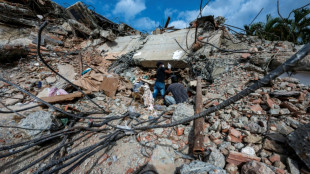
Hunt for last signs of life in Venezuela quake zone
-
 Drones spot sharks 73 times in two days off Sydney beaches
-
Asian markets rise as beaten-down tech stocks enjoy bounce
-
 Supreme leader's body arrives at Tehran religious complex for funeral
-
David v Goliath as Cape Verde face Messi's Argentina at World Cup

-
 Mbappe's French juggernaut face Paraguay, eye World Cup quarter-finals
-
Nagelsmann quits as Germany coach after World Cup exit: reports
-
 Wallabies riding wave of patriotic support against Ireland
-
All Blacks return to Christchurch 'a blessing', says Savea

-
 Belgium opens up Congo archives amid global minerals race
-
'Not a museum': Slovak UNESCO village strains under tourism

-
 Wimbledon clings onto fashion traditions, with a twist
-
DR Congo opposition builds against presidential third-term bid
-
 Death toll from massive strikes on Kyiv rises to 30
-
China sports brands score NBA stars to assist global ambitions

-
 El Nino set to be strong, UN warns
-
Man dies after setting self ablaze outside UN in New York: police
-
 'Inspired millions': Modric praised as World Cup career appears at end
-
VAR 'taking joy' from football says Croatia coach Dalic after loss

-
 Death toll hits 10 in Thai monk procession crash
-
Afghans come home but risk exclusion without any ID
-
 Asian markets rise as beaten tech stocks enjoy respite from selling
-
'Coincidence of life' says Ronaldo after Jota tribute a year from death

-
 'Royal wedding': Swift and Kelce kick off star-studded celebrations
-
Japan face Italy without banned coach Jones
-
 Tajik names for Tajik babies: strict rules leave parents stranded
-
Ronaldo, Portugal advance after VAR drama to set up Spain showdown

-
 From ketchup to car parts, Cuba gets private sector makeover
-
AI romance scam impersonating Dubai prince ensnares victims
-
 'Not easy, but not impossible': Iraq's film industry sees slow revival
-
Portugal advance in World Cup thanks to last-gasp Ramos winner

-
 Farrell flattery primes Ireland for Australia clash
-
Mission impossible? England take the World Cup high road against Mexico

Japan releases water from Fukushima nuclear plant, China furious
Japan began releasing wastewater from the crippled Fukushima nuclear plant into the Pacific Ocean on Thursday, prompting a furious China to ban all seafood imports from its neighbour.
The start of the discharge of around 540 Olympic swimming pools' worth of water over several decades is a big step in decommissioning the still highly dangerous site 12 years after one of the world's worst nuclear accidents.
Live video provided by plant operator TEPCO showed two engineers clicking on computer mouses and an official saying -- after a countdown -- that the "valves near the seawater transport pumps are opening".
Japan has repeatedly insisted the wastewater will be harmless, with its position backed by UN atomic watchdog the International Atomic Energy Agency.
But China has warned it will contaminate the ocean, and immediately responded Thursday by blasting Japan as "extremely selfish".
China then banned all Japanese seafood imports "to comprehensively prevent the food safety risks of radioactive contamination".
Local fisherman in Japan have also voiced opposition to the release.
About 10 people held a protest near Fukushima on Thursday and around 100 others gathered outside TEPCO headquarters in Tokyo.
"It's like dumping an atomic bomb in the ocean. Japan is the first country that was attacked with an atomic bomb in the world, and the prime minister of the country made this decision," said Kenichi Sato, 68, in Tokyo.
- Multiple meltdowns -
Three reactors at the Fukushima-Daiichi facility in northeastern Japan went into meltdown following a massive earthquake and tsunami that killed around 18,000 people in 2011.
Since then, TEPCO has collected 1.34 million cubic metres of water that was contaminated as it cooled the wrecked reactors, along with groundwater and rain that has seeped in.
Japan says that all radioactive elements have been filtered out except the tritium, levels of which are harmless and lower than what is discharged by operational nuclear power plants -- including in China.
Environmental group Greenpeace says that the filtration process is flawed. China and Russia have suggested the water be vaporised and released into the atmosphere instead.
But Japan's analysis is backed by most experts.
"When released into the Pacific, the tritium is further diluted into a vast body of water and would quickly get to a radioactivity level which is not discernibly different from normal seawater," said Tom Scott from the University of Bristol.
TEPCO will carry out four releases of the treated water from Thursday until March 2024.
The first will last about 17 days, though it is expected to take around 30 years for all of the wastewater to be discharged.
With around 1,000 steel containers holding the water, TEPCO has said it needs to clear space for the removal of highly dangerous radioactive nuclear fuel and rubble from three wrecked nuclear reactors.
- Sushi safety -
Even before Thursday's release, China had banned seafood imports from 10 of Japan's 47 prefectures and imposed radiation checks.
Hong Kong and Macau, both Chinese territories, followed suit this week.
China's reaction on Thursday extended its ban to cover all of Japan.
Analysts said that while China may have genuine safety concerns, its strong reaction is also motivated at least in part by its economic rivalry and frosty relations with Japan.
The South Korean government, which is seeking to improve ties with Japan, has not objected, although many ordinary people are worried and there have been scattered protests.
On Thursday police arrested more than 10 people who tried to enter the Japanese embassy in Seoul.
South Korean Prime Minister Han Duck-soo said Thursday that there was "no need to be excessively concerned" about the plan.
Han also criticised what he called a "politically driven" campaign and "fake news" to fan fears.
- 'Future generations' -
People in the Japanese fishing industry also oppose the release, concerned that governments and consumers will shun their seafood.
"I am worried about the future," protestor Ruiko Muto, 70, told AFP in Miharu near the power plant.
"We can't pass on the responsibility of what happened during our generation to the generation of our children and to future generations."
burs-stu/kma
P.Anderson--BTB