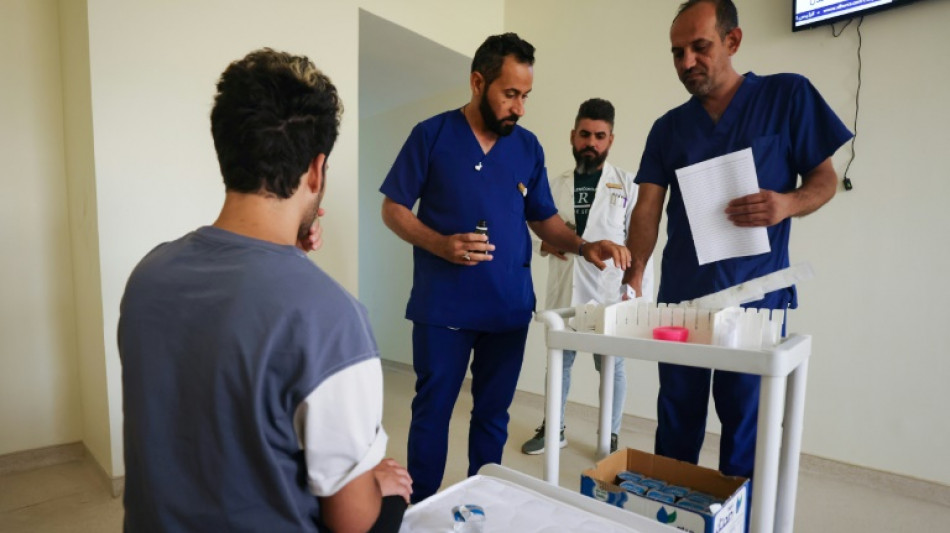
Battling drug crisis, Iraq searches for cure / Photo: © AFP

 Title rivals Djokovic and Sinner advance at Wimbledon

 Ferrari confirm Hamilton staying next year

 Global frenzy over Swift, Kelce's glittering 'royal wedding'

 Three acquitted of 2019 murder of N.Irish journalist Lyra McKee

 Stokes bids farewell to fans after 'mad 15 years'
 One for the history books: what we know about the European heatwave
 Dutch FA to sue over racist slurs after World Cup exit
 Mercedes demos set stage for wave of German auto protests
 Iran leaders pay last respects to Khamenei as mourners gather

 UN issues 'red alert' over 'catastrophe' in Sudan's El-Obeid

 Tour de France to start with team time-trial 'bang'

 Dressed for success: Osaka reaches Wimbledon last 16 for first time

 Bayern sign Germany defender Brown until 2031
 MEXC's June Highlights: $437 Billion in Trading Volume, Offering Access to 7,000+ US Stocks and ETFs
 Stocks mostly rise as beaten-down tech stocks enjoy bounce

 Iranian leaders pay respects to supreme leader as Tehran prepares for funeral
 Doubles not a 'carnival sideshow' say players amid schedule row

 Klopp in 'talks' for Germany job after Nagelsmann exit: federation

 Surging real estate development divides opinion on Athens' riviera
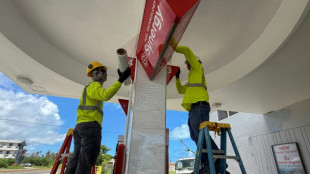
 Move over, Messi! Robot footballers thrill crowds in South Korea

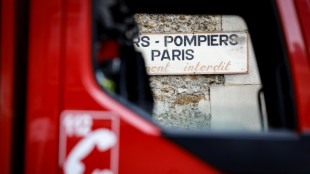 France deaths rose by 30% during heatwave
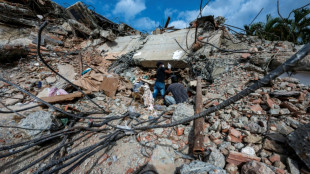
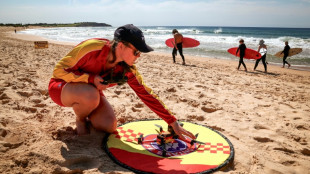 Drones spot sharks 73 times in two days off Sydney beaches
 Supreme leader's body arrives at Tehran religious complex for funeral

 Mbappe's French juggernaut face Paraguay, eye World Cup quarter-finals
 Wallabies riding wave of patriotic support against Ireland

Mohammed has been taking nearly a dozen captagon pills daily for seven years. Now, as Iraq grapples with a major drug crisis, the 23-year-old hopes for a fresh start.
Iraq, which borders with Iran, Syria and Saudi Arabia, has long been a transit country for the region's ballooning trade in the amphetamine-type drug and other narcotics.
But in recent years, Iraq itself has witnesses a dramatic spike in drug abuse, prompting authorities to search for answers, both by cracking down on traffickers and by providing help to addicts.
Methamphetamine, or crystal meth, originating in Afghanistan or Iran, is among the most common drugs in Iraq today, alongside captagon, which is produced on an industrial scale in Syria and trafficked via Iraq to Saudi Arabia and other oil-rich Gulf states where it has gained notorious popularity.
Mohammed, who asked to use a pseudonym, is one of about 40 patients being treated at a rehabilitation clinic which the Iraqi health ministry opened in the capital Baghdad in April.
The young man, from the western Al-Anbar province on the border with Syria, told AFP he had been introduced to captagon, also known as "zero-one", by his work colleagues at a food store.
"It makes you active, gives you energy and keeps you awake," he said of the drug.
Since age 16, Mohammed would take "10 to 12" captagon pills a day, he confessed. Selling for the equivalent of $2 apiece, the stimulant "is everywhere".
Like the other patients at Al-Canal Centre for Social Rehabilitation, he came to the clinic on his own initiative.
After an initial two-week stay, he returned home, but then quickly headed back to the clinic, fearing a relapse.
Captagon, Mohammed said, "leads you either to prison or to death".
- 'Plague' -
Around him, in the laid-back atmosphere of the rehab centre gym, men of nearly all ages were playing table tennis and foosball, some of them smiling. Others were visibly tired or had blank expressions on their faces.
Patients usually stay for around one month at the facility, which also includes a women's wing and offers psychological support. Once discharged, they return for weekly check-ups for a period of six months.
"We host all ages. It starts at 14-15, but most are in their 20s," said the clinic's director, Abdel Karim Sadeq Karim.
The most common substance abuse the facility treats is crystal meth. "From the very first dose, there's addiction," said Karim.
His deputy, Ali Abdullah, called it "a plague that totally destroys individuals", noting a hike in drug consumption in Iraq since 2016.
Iraqi security forces now announce near-daily drug busts and arrests, in operations supported by intelligence and cooperation with neighbouring countries.
Hussein al-Tamimi, spokesman for Iraq's narcotics directorate, told AFP that authorities had detained more than 10,000 suspects between October and June for "crimes related to narcotics -- traffickers, resellers or consumers".
According to the government agency, security forces also seized 10 million captagon pills and 500 kilograms (1,100 pounds) of other drugs including at least 385 kilograms of crystal meth.
A regional meeting hosted by Baghdad in May saw "the creation of a shared database" to exchange information between authorities across borders, said Tamimi.
That meeting also led to "the establishment of weekly contacts between our services and the competent services of Arab states" and of other countries in the region, he added.
- Market transformation -
According to an AFP tally based on official records, at least 110 million captagon pills have been seized across the Middle East this year.
In mid-July, Iraq's interior ministry announced the discovery of a rare captagon manufacturing lab in the country's south.
It was the first such announcement in a country where drug production remains virtually nonexistent.
A Western diplomat stationed in Baghdad told AFP that Iraq's emerging importance for captagon trafficking may be attributed in part to a crackdown in neighbouring Jordan.
Amman has reinforced its borders in a bid to cut off trade routes via its territory and set up a forum to tackle smuggling from Syria, while Jordanian security forces often open fire at suspected drug traffickers.
Until about seven years ago, Iraq had been almost exclusively a transit country, but that has gradually changed as drugs can also replace payment for rights of passage, said the diplomat, requesting anonymity.
The domestic resale that resulted has generated local consumption and "potentially... a real market", the diplomat added, noting the high proportion of young people among Iraq's 43-million-strong population.
Recognising the risks, the government has opened three rehabilitation centres -- in Al-Anbar province, Kirkuk in the north and Najaf in central Iraq -- with plans to expand the scheme to other provinces.
Their aim is to give addicts who have been arrested a place to recover, away from traffickers in prison.
W.Lapointe--BTB