'Day of reckoning': Turkish economy's post-election peril / Photo: © AFP

 Japan beat Italy 27-10 in Nations Championship opener
 Struggling German auto supplier Continental to sell unit
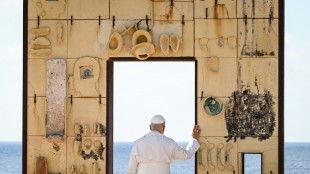 Pope urges Europe to protect migrants in visit to island frontier

 Mass protests in Germany as far-right AfD meets

 France face Philly furnace as World Cup last 16 gets under way

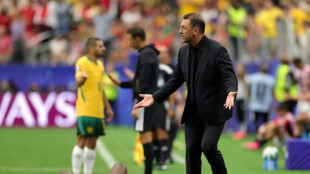 Australia goalkeepers were in dark about World Cup shootout switch

 Billboards, cologne and flowers: Turkish capital gets NATO makeover

 Trump says American identity under 'renewed attack' as US turns 250

 World Cup serves up Wimbledon dilemma: football or tennis?

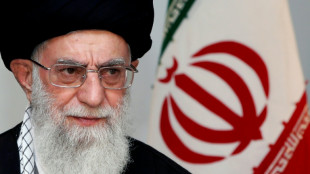 Huge crowds gather as Khamenei funeral ceremonies begin in Iran

 Trump set for Mount Rushmore address as US turns 250
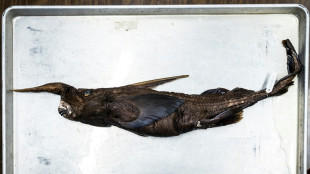 New species of ghost shark may have been found in Costa Rica

 Argentina advance after Cape Verde World Cup scare, Egypt through

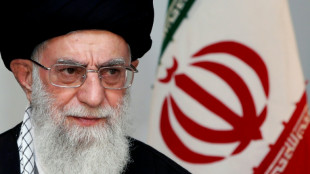 Huge crowds expected as Khamenei funeral ceremonies open in Iran

 Swift and Kelce marry as global stars swarm 'royal wedding'

 Hurdles record-breaker Tharp says 'sky's the limit'
 Salah says 'had to do it' after coolest of penalties in World Cup win

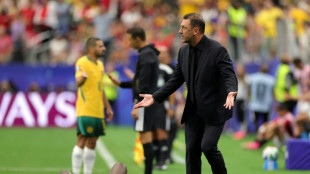 Australia's Popovic on defensive as gamble fails in World Cup exit

 Maiden ton for Udara as Sri Lanka pile on the runs in 2nd Test

 Norway pin hopes on Haaland against Brazil in World Cup last 16

 Egypt down Australia to reach World Cup last 16, Cape Verde face Messi

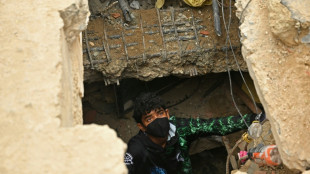 Families demand help with recovering Venezuela's quake victims

 England's Rashford unfazed by high-altitude Mexico World Cup test
 In Brazil, Bolsonaro family airs feud ahead of elections

 Postecoglou links up with Ronaldo at Al Nassr
Turkey's economy is in a double bind: analysts see its current policies leading to imminent peril and the prescriptions incurring massive pain.
President Recep Tayyip Erdogan campaigned round the clock to win the toughest election of his two decades in power in a historic runoff last weekend.
He also poured billions of dollars into campaign pledges -- and tens of billions more into keeping the lira from suffering politically sensitive falls before the vote.
Analysts at Capital Economics think Turkey now faces its post-election "day of reckoning".
Turkey's once-vibrant economy -- driven by relatively cheap labour and a well-oiled banking system -- is confronting a self-inflicted problem few other countries have faced.
Erdogan has waged a lifelong war on high interest rates that he occasionally attributes to his faith in Muslim rules against usury.
He calls high rates "the mother and father of all evil" promoted by a foreign "interest lobby".
Erdogan sped through a series of central bankers before finding one willing to follow through on his desire to slash rates at all costs in 2021.
The results were dire.
- Freefall -
The lira entered a freefall and the official annual inflation rate soon touched 85 percent. The unofficial one estimated by economists -- and believed by most Turks -- neared 200 percent.
Analysts see the most recent period of chaos as the culmination of Erdogan's gradual departure from the prosperous policies of his first decade of rule.
Foreign investors have largely abandoned Turkey because of its political instability and Erdogan's takeover of state institutions that were once run by impartial technocrats.
"The balance sheet so far of Erdogan's two decades in power has been the progressive destabilisation of the economy," Conotoxia investment firm market analyst Bartosz Sawicki said.
"Foreign equity exposure to Turkish bonds is estimated to have declined by around 85 percent since 2013, during which time the lira has lost around 90 percent against the dollar."
Turkey's most immediate problem is that its central bank is running out of cash.
It burned through nearly $30 billion supporting the lira this year alone.
The bank's net international reserves -- a technical measure of how much it has to spend on emergencies -- have dropped into negative territory for the first time since 2002.
"The current setup is just not sustainable," London-based emerging markets economist Timothy Ash said.
- Export competitiveness -
Analysts have two simple solutions: quickly hike interest rates and let the lira float freely again.
Turkey's currency support measures have wiped out the benefits low interest rates gave its loan-dependent producers.
The cars and jewellery Turkey exports in places such as the United States and Europe now simply cost too much.
Analysts at Allianz said the lira has "appreciated by around 35 percent in real effective terms since the unorthodox monetary policy stance took full effect in December 2021".
The lira was hovering near a record 20.3 to the dollar on Tuesday. Analysts at JPMorgan think it could reach the 30 mark if the government stopped intervening.
This would further erode people's purchasing power and potentially require the government to find billions of dollars to spend on new social support measures.
The vicious cycle could be broken by a sharp interest rate hike -- something Erdogan has repeatedly ruled out during the campaign.
Atilla Yesilada, analyst at Turkish consultancy GlobalSource Partners, worries that they country may simply start printing money to pay for the huge hikes in benefits and wages Erdogan promised during the campaign.
- 'Soft capital controls' -
Turkey must also find vast sums -- estimated at roughly $100 billion -- to pay for the reconstruction of cities destroyed by a February earthquake that claimed more than 50,000 lives.
"How any government would finance the reconstruction effort without printing money and leading to hyperinflation is a question that people prefer not to address at this point," Yesilada said.
Analysts agree that Turkey would eventually have no choice but to raise rates.
Emre Peker, Europe director at the Eurasia Group political risk consultancy, said Turkey would first try to contain demand for dollars through "soft capital controls on locals".
But Erdogan could relent and raise rates once March 2024 municipal elections involving Turkey's biggest cities are out of the way.
Allianz said they should go up from the current 8.5 percent to at least 20-25 percent -- the current rate of bank deposits.
But that would create still more problems.
"Raising rates will reduce bank capital," Yesilada warned. "Banks will not be able to lend for a long time."
S.Keller--BTB