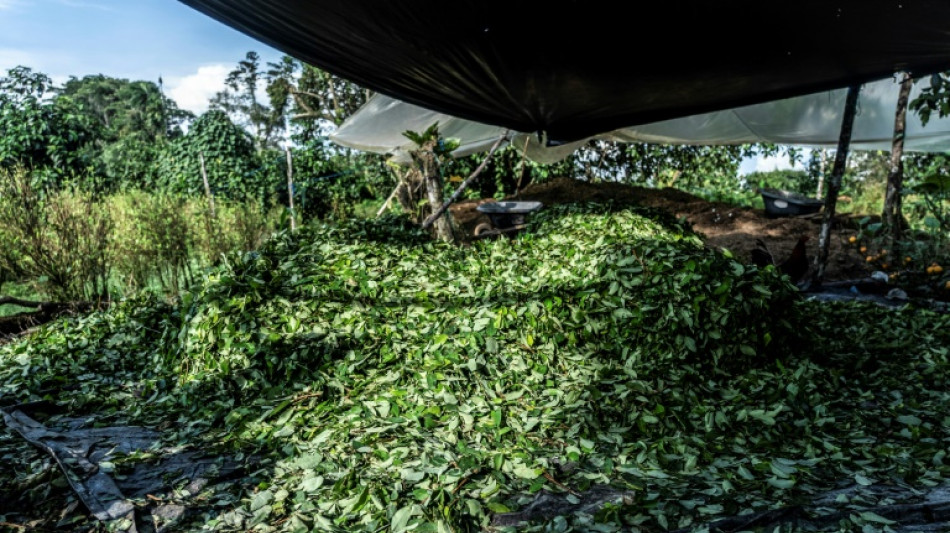
Cocaine price crash a blow for Colombian coca growers / Photo: © AFP

 Ireland pip Australia 33-31 in Nations Championship nailbiter

 Antonelli edges Hamilton in sprint to extend title lead
 Rennie 'relief' as All Blacks tenure begins with narrow win over France

 Europe's baked rice bowl seeks escape from drought

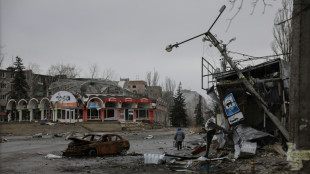 Ukraine says still fighting for eastern stronghold

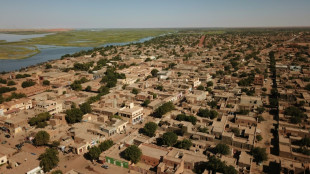 Mali hit by new wave of coordinated attacks

 New Zealand edge France 34-32 in thriller to open Nations Championship

 Pope defends migrants at Mediterranean island frontier

 Pope to defend migrants at Mediterranean island frontier

 US turns 250 as Trump warns of 'attack' on American identity

 Feels like 'victory': Cape Verde celebrates heroic World Cup defeat

 Haaland's stetson, Cape Verde's pride: World Cup last-32 moments

 Colombia overcome Ghana to reach World Cup last-16

 Cape Verde show anything is possible at World Cup with 'big hearts'

 Huge crowds gather as Khamenei funeral ceremonies open in Iran
 Mass protests expected as German far-right AfD meets

 Argentina survive Cape Verde scare to reach World Cup last 16

 England v Mexico World Cup game kickoff time unchanged: FIFA

 McDonald's, bus station convert into Venezuela quake clinics

 'Super typhoon' Bavi heads for US Pacific islands

 England seek end to Australia agony in Women's World Cup final

 President-elect Fujimori hails 'new chapter' for Peru

 Global celebrities pay court at Swift, Kelce "royal wedding"

 Dangerous heat wave roasts America's big birthday party

 Egypt edge Australia on penalties to reach World Cup last 16
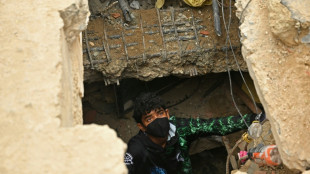
"Carlos," a 36-year-old coca grower in Colombia, is stuck hanging onto kilos of the valuable paste used to make cocaine stashed under his bed.
Normally, the illegal cache would be worth thousands of dollars, but a sudden dearth of buyers has left him high and dry and concerned about the future of his children.
Carlos is not his real name -- the grower wished to remain anonymous for fear of reprisals from armed groups operating near his farm in Llorente in Colombia's southern Narino department, where increasing numbers of small-scale coca producers worry where their next meal will come from.
Their hands covered in scratches, groups of "raspachines" or expert coca pickers, advance at great speed through the sea of green crops in Llorente.
Once harvested, the coca leaves reach Carlos, who cooks them, along with a mixture of chemicals, on a small stove until they yield a white substance.
Cultivating his two hectares had cost him about $660, Carlos told AFP, and normally he would be able to sell the product for about $4,000.
But with a dip in demand and historically low prices, he has so far sold only $154's worth. At the end of the trading chain, the cocaine made with his paste would be worth millions.
"Prices are (very) bad," Carlos told AFP in his small, makeshift lab.
"The only option is to keep it (the paste)," in the hopes that prices, and demand, will pick up.
- Illegal, but crucial -
Experts say the rise of synthetic opioids such as fentanyl, an "overproduction" of coca, changing consumer habits and several recent blows to Colombia's powerful drug cartels could all be contributing to the price drop.
Colombia remains the world's largest producer of cocaine -- of which coca is the main ingredient -- and the United States its biggest buyer.
Coca cultivation is illegal, but a mainstay for many in the South American country of 50 million people.
Some 250,000 Colombian families depend on coca for a living -- about 1.5 percent of the population, according to official figures.
All along the country's Pacific coast, however, coca growers have seen their incomes plummet since the beginning of the year.
The region, under the yoke of armed and violent dissidents of the FARC guerrilla group that disarmed in 2017, is where about 44 percent of Colombia's 204,000 hectares of coca was grown in 2021, according to the UN.
"At this time, the coca economy is not yielding a lot to survive on," grower Nilson Solis told AFP among his crops outside the town of Olaya Herrera, also near the Pacific coast.
Residents say the price for a kilogram of coca paste has dropped from about $695 to $440 in just a few months.
- 'Not a lot' -
It appears ironic that growers are struggling: Colombia broke its own record of land under coca cultivation two years ago, according to the latest available UN report.
Colombian government official Felipe Tascon said rising conflict between drug cartels and other armed groups fighting over resources and terrain may have made it more difficult to move product.
Julian Quintero, head of an NGO working to reduce risk from psychoactive drug use, said "overproduction" is also likely contributing to the drop in demand.
Coca has ever more "alkalinity and yield," which means less of it is needed to produce cocaine, he said.
And Rival drugs such as ecstasy are gaining ground among younger pleasure seekers, Quintero added.
Colombia's new leftist President Gustavo Petro visited Olaya Herrera this month, where he met community leaders and speculated that lower demand may also have to do "with the fact that Americans have changed their consumption, their tastes."
Synthetic opioids such as fentanyl, more powerful and addictive than cocaine, are proliferating in the United States.
Petro has criticized the US-led "war on drugs" that has criminalized and impoverished rural Colombians, and has mooted an amnesty for drug traffickers willing to give themselves up and abandon the trade.
He has also proposed purchasing arable land to redistribute to small farmers to make a living from legal crops, free from the violent yoke of the drug gangs they rely on to make a living.
Meanwhile, farmers like Solis are looking for alternatives as hunger stares more and more coca growers in the face. He is considering taking up illegal logging.
"When we take stock, we have nothing left," he told AFP.
"Barely enough to buy a pound of rice and a little oil."
Y.Bouchard--BTB